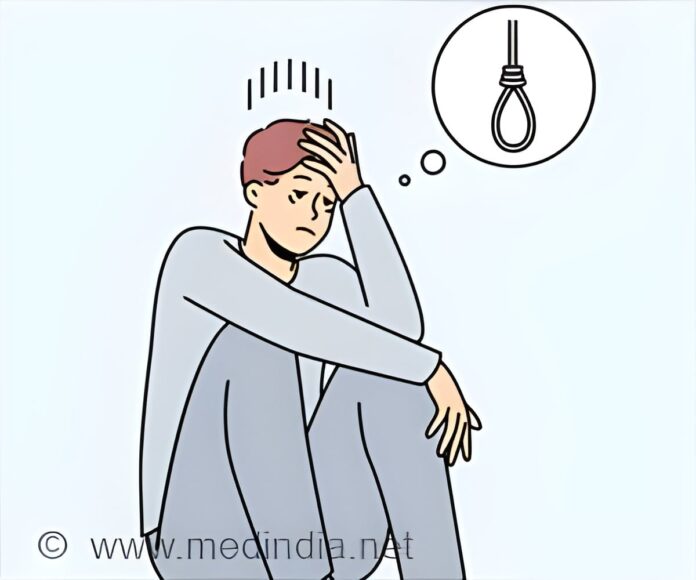
Lowering loneliness cuts suicide risk; social connection helps shield the impact of anxiety and depression.
Loneliness is a critical factor in the development of suicidal ideation, revealed by a new study from Vanderbilt Health, published in JAMA Network Open.(1✔ ✔Trusted Source
Loneliness, Anxiety Symptoms, Depressive Symptoms, and Suicidal Ideation in the All of Us Dataset
Go to source
)
The research suggests that feeling isolated often acts as a bridge, turning symptoms of anxiety and depression into thoughts of self-harm.
Experts believe that by actively reducing loneliness and fostering social connection, we can halt this dangerous progression. With suicide claiming more than 48,000 lives annually in the United States, addressing social isolation is now being recognized as a vital, life-saving step in suicide prevention and mental health care.
Effects of Anxiety and Depression can be Mitigated by Treating Loneliness
The study analyzed survey data collected from 633,000 participants in the National Institutes of Health All of Us Research Program, an effort to advance precision medicine by collecting and evaluating health information, including genomic data, from 1 million U.S. residents.
While depressive symptoms held the strongest correlation with suicidal ideation, followed by anxiety symptoms and then loneliness, the researchers discovered that loneliness “mediated,” or was a factor in much of the association between depression, anxiety and suicidal thoughts.
“This study shows us that by treating loneliness we might be able to buffer some of the impacts that anxiety and depression have on suicidal ideation,” said the paper’s first author, Katherine Musacchio Schafer, PhD, MS, MEd, assistant professor of Biomedical Informatics at Vanderbilt Health.
Social Engagement May Be the Most Accessible Form of Suicide Prevention
Treating depression and anxiety with cognitive behavioral therapy and medication has for decades been a primary approach to reducing suicidal thoughts and preventing suicide. But for many Americans, access to mental health care is limited.
Because of a nationwide shortage of qualified clinicians, the cost of these interventions, and the social stigma associated with receiving care, mental health treatment is often out of reach. A person-centered approach to reducing loneliness that helps people engage with others might be more feasible.
“There is a nationwide shortage in mental health providers, and because of that, findings from our study have very real relevance for everyday Americans,” said Schafer, who is a clinical psychologist with expertise in the intersection of suicide prevention and informatics.
Community Connection and Shared Experiences Can Improve Your Mental Health
“People struggling with anxiety and depression might be able to reduce their risk of developing suicidal ideation by reducing loneliness,” she said.
“That could look like connecting with the people in their community … (and) their loved ones or finding ways to engage in shared enjoyable experiences and activities.”
“People might be able to improve their mental health by reducing loneliness and building connections with the people around them,” Schafer continued. “Even if people cannot access evidence-based mental health care that treats their underlying anxiety and depression, reducing their loneliness may help them feel better.”
Reference:
- Loneliness, Anxiety Symptoms, Depressive Symptoms, and Suicidal Ideation in the All of Us Dataset – (https://jamanetwork.com/journals/jamanetworkopen/fullarticle/2845872)
Source-Eurekalert