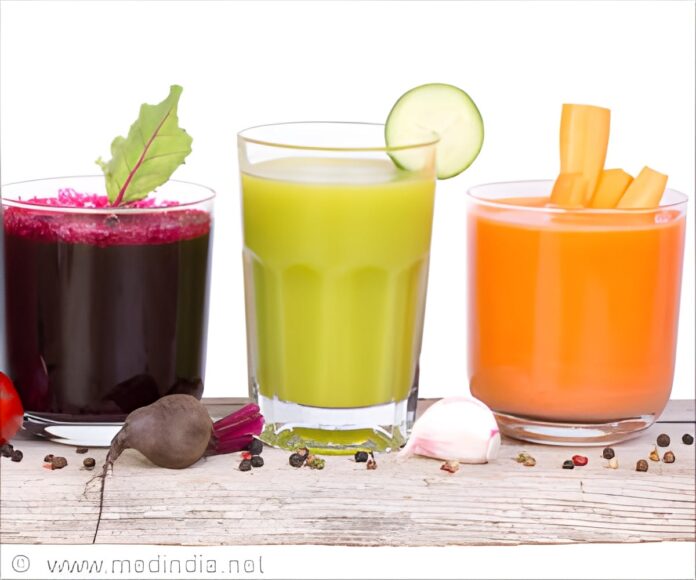
Study compares smoothies, juices, and whole fruits, showing differences in disease risk and metabolic health outcomes.
- Fruit smoothies linked to lower hypertension risk and improved metabolic health indicators
- Fruit juice consumption associated with significantly higher diabetes risk and poorer health outcomes
- Whole fruits and smoothies support healthier BMI, energy levels, and overall lifestyle patterns
Smoothie consumers showed up to 60% lower odds of hypertension, while those consuming fruit juice had a 14.6-fold higher likelihood of diabetes. A cross-sectional study of 443 adults published in Frontiers in Nutrition highlights clear differences between fruit smoothies, whole fruits, and fruit juices in relation to health outcomes (1✔ ✔Trusted Source
Health associations of various fruit forms: solid fruits, juices, and smoothies
Go to source
).
These findings point to measurable differences in chronic disease risk across fruit forms, although they reflect associations rather than cause-and-effect relationships.
Smoothies, Juices, and Whole Fruits, Which Is Better?
This observational study analyzed dietary habits, health status, and individuals were grouped into low fruit consumers, fruit juice consumers, whole fruit consumers, and smoothie consumers.
Each group included approximately 86 to 97 participants. The study did not specify duration and used a convenience sample, primarily representing middle-class adults. Participants consuming mixed fruit forms equally were excluded to ensure clearer comparisons.
Smoothie consumers were more likely to follow healthier lifestyle patterns, including regular physical activity and lower use of tobacco and alcohol.
Smoothies Win, Juice Falls Behind on Health
- People who drank smoothies had the lowest rates of chronic diseases like high blood pressure (19%), high cholesterol (20%), and diabetes (8%)
- Fruit juice drinkers had more health problems, lower energy, and more mental health issues
- After adjusting for other factors, juice drinkers had about 14.6 times higher odds of diabetes, while smoothie drinkers had lower heart and mental health risks
Also, body weight stayed in the normal range for smoothie and whole fruit groups, while juice and low-fruit consumers were more likely to be overweight.
Dietitian Perspective Says Whole Fruits Are Better!
From a clinical nutrition perspective, the presence of dietary fiber is a key factor differentiating smoothies from fruit juices. Fiber slows glucose absorption and supports satiety, which may contribute to improved metabolic outcomes.
Dietitians also highlight that blending enhances nutrient bioavailability, allowing better absorption of vitamins such as vitamin C and folate. However, they caution that smoothies can become calorie-dense if portion sizes are large or if added sugars are included.
Overall, nutrition experts recommend prioritizing whole fruits for daily intake, using smoothies as a practical alternative when needed, and limiting fruit juice consumption due to its lower fiber content.
What Limits These Findings?
The results should be interpreted carefully due to several limitations. Smoothies may be more popular among healthier people than those that directly improve health outcomes because the cross-sectional design does not establish causation.
The study also had some limitations. It relied on what people reported themselves, didn’t clearly track the type and amount of fruit they ate, and used a group that may not reflect the general population. Because of this, the results may not be fully accurate or apply to everyone.
What This Means for Your Daily Diet Choices
The study suggests that whole fruits and fruit smoothies are associated with more favorable health profiles compared to fruit juices. However, these benefits may partly reflect broader lifestyle habits rather than the fruit form alone.
For everyday dietary choices, prioritizing whole fruits remains the most consistent recommendation.
Smoothies may be useful when prepared thoughtfully, while fruit juice intake may require moderation, especially for individuals at risk of metabolic conditions!
Frequently Asked Questions
Q: Are smoothies healthier than fruit juice?
A: Smoothies retain fiber and may support better metabolic health, but benefits depend on ingredients and portion size.
Q: Why is fruit juice linked to higher diabetes risk?
A: Fruit juice lacks fiber, leading to faster sugar absorption and higher blood glucose levels.
Q: Do smoothies help with blood pressure control?
A: An association with lower hypertension risk was observed, but causation is not established.
Q: Is whole fruit better than smoothies?
A: Yes, nutrition experts recommend whole fruits due to intact fiber and minimal processing.
Q: Should fruit juice be avoided completely?
A: Moderation is advised, particularly for individuals at risk of diabetes or obesity.
Reference:
- Health associations of various fruit forms: solid fruits, juices, and smoothies – (https://www.frontiersin.org/journals/nutrition/articles/10.3389/fnut.2025.1626179/full)
Source-Medindia