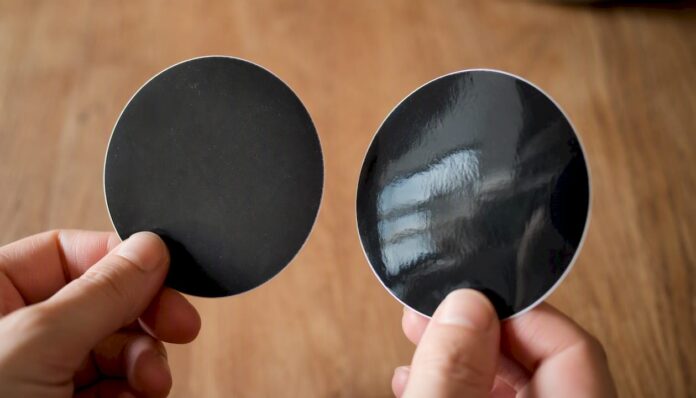
Choose matte for a premium, glare-free look that photographs beautifully and reads as polished in almost any setting. Choose glossy when you want colors to pop hard, you’re applying to outdoor surfaces, or you need maximum sheen for retail shelf appeal. That’s the short version. The longer version depends on three things: where the sticker lives, whether you need to write on it, and how long it needs to last.
Quick finish-to-use-case map:
- Matte: Premium packaging, product labels, photographed merch, text-heavy designs
- Glossy: High-impact retail displays, water bottles, promotional giveaways, car decals
- Either (with UV laminate): Outdoor signage, bumper stickers, long-term surface applications
Key Takeaways
Matte and glossy stickers perform differently across appearance, durability, and writeability, and the right choice depends on surface, exposure, and design intent.
| Point | Details |
|---|---|
| Finish is a laminate, not the base material | Matte or gloss is applied over vinyl, BOPP, or polyester; base material drives durability more than finish. |
| Gloss boosts color, matte reduces glare | Gloss increases perceived saturation; matte photographs consistently and hides fingerprints better. |
| Outdoor lifespan up to five years | Die-cut vinyl with UV-resistant laminate can last up to five years outdoors regardless of finish. |
| Writeability favors matte | Matte accepts ballpoint and felt-tip pens; gloss requires a permanent marker for smudge-free results. |
| Schizophrenic uses matte for merch, gloss for promos | Matte suits the brand’s design-forward, photographed sticker line; gloss is used for high-impact event giveaways. |
Table of Contents
How matte vs glossy stickers actually differ in finish and material
A sticker is a label made from plastic, vinyl, paper, or other substrates with a pressure-sensitive adhesive on the back. The “finish” is a laminate or coating layer applied over the printed surface, not the ink itself. That distinction matters because the base material (vinyl, BOPP, polyester, or paper) and the laminate are two separate decisions, and both affect how a sticker looks, feels, and holds up.
Matte laminate scatters incoming light in multiple directions, producing a soft, non-reflective surface. Gloss laminate reflects light at a consistent angle, creating that familiar shiny, mirror-like sheen. Both can be applied to the same base materials, though specialty substrates like holographic or glitter vinyl typically require a gloss laminate or no laminate at all to preserve their reflective effects.
The finish is the last layer, not the whole sticker. A gloss laminate over cheap paper will fail faster than a matte laminate over outdoor-grade vinyl. Choosing a finish without specifying the base material is like picking paint color before deciding on the wall surface.
How each finish changes color, glare, and the way your design feels
Gloss amplifies color saturation and contrast. Reds look redder, blues look deeper, and photographic images gain a visual punch that matte simply cannot match. Independent print-review coverage confirms that gloss increases perceived saturation while matte reduces glare and tends to photograph more consistently across lighting conditions. Both observations are true and neither cancels the other out.
Matte finishes scatter light, which means no hot spots or glare under direct lighting. That’s a real advantage for stickers placed on retail shelves under fluorescent lights, or for product photography where a glossy sticker would blow out in the shot. Matte also reads as tactilely softer, almost velvety, which many buyers associate with premium or artisan products. Gloss feels slicker and harder, which suits bold, graphic-forward designs.
Glare is the detail most people underestimate until they see it in person. A glossy sticker on a laptop lid under office lighting can make text nearly unreadable from certain angles. Matte eliminates that problem entirely.
- Gloss: higher perceived vibrancy, stronger visual contrast, more eye-catching at distance
- Matte: softer color rendering, no glare, easier to read under varied lighting
- Matte hides fingerprints and small surface marks better; gloss shows fingerprints more readily but repels moisture more easily
- Tactile feel: matte feels soft and premium; gloss feels smooth and commercial
Pro Tip: Order a small test run with the same artwork printed on both finishes, then evaluate them under the actual lighting where they’ll be displayed. Screen previews almost never show glare differences accurately.
Durability: water, UV, scratching, and when lamination actually matters
Finish type alone does not determine how long a sticker lasts. Material and adhesive quality impact longevity more than finish; the base substrate and UV-resistant laminate do the heavy lifting. That said, the laminate type does affect specific durability behaviors.
Gloss laminates tend to repel water and surface oils more readily, making them slightly easier to wipe clean. Matte laminates are more porous at the micro level, which means they can absorb oils from fingerprints over time if unprotected. For outdoor use, a UV-resistant laminate over either finish extends life significantly by blocking the wavelengths that degrade ink and adhesive.
Die-cut vinyl stickers with proper lamination can last up to five years outdoors. That lifespan drops sharply with paper-based substrates or no laminate at all.
| Material + Finish | Typical Outdoor Lifespan | Notes |
|---|---|---|
| Outdoor vinyl + gloss laminate | Up to 5 years | Best for car decals, bumper stickers |
| Outdoor vinyl + matte laminate + UV coat | Up to 5 years | Good for signage, product labels |
| BOPP + gloss laminate | 2–3 years | Common for product and packaging labels |
| Paper + gloss laminate | 6 months | Indoor use only; not waterproof |
| Paper + matte laminate | 3–6 months | Least durable; craft and short-term use |
Scratch visibility is where the finishes diverge noticeably. Gloss laminates show fine scratches more clearly because the reflective surface highlights surface damage. Matte laminates hide light abrasion better since there’s no sheen to interrupt. For stickers on frequently handled items like water bottles or laptop lids, matte tends to look cleaner longer.
- For outdoor or vehicle use: specify outdoor-grade vinyl plus a UV-resistant laminate
- For water bottles and drinkware: BOPP or vinyl with gloss laminate handles moisture best
- For packaging that ships: matte vinyl or BOPP with laminate resists handling marks
- Avoid paper-based stickers for any application involving moisture or extended outdoor exposure
Outdoor lifespan is a ceiling, not a guarantee. A die-cut vinyl sticker rated for five years outdoors will degrade faster if applied to a surface that flexes, collects heat, or isn’t cleaned before application.
Can you write on matte or glossy stickers?
Yes, but the finish determines which tools work. Matte finishes accept ballpoint and felt-tip pens easily; glossy surfaces usually require a permanent marker for reliable, smudge-free results. This matters a lot for product labels, batch numbers, event stickers, or any workflow where someone needs to add handwritten information after printing.
- Matte: Works with ballpoint pens, felt-tip markers, gel pens, and most standard writing tools
- Glossy: Requires a permanent marker (like a Sharpie) or a paint pen; standard ballpoints bead up and smear
- Drying time on gloss is longer; smudging risk stays high for 30–60 seconds after writing
- Pencil does not work reliably on either finish
Pro Tip: If your workflow involves writing on stickers after printing, specify matte finish and confirm with your printer that no topcoat sealer is applied over the laminate. Some printers add a UV sealer that makes even matte surfaces difficult to write on.
Best finish by use case
Finish choice should follow design goals and placement: gloss for bright, attention-grabbing retail and packaging; matte for premium, photographed, or text-heavy brand applications. Here’s how that plays out across common surfaces.
| Comparison Dimension | Matte | Glossy |
|---|---|---|
| Color vibrancy | Softer, more muted | High saturation, punchy |
| Glare / reflectivity | None | High |
| Tactile feel | Soft, velvety | Smooth, slick |
| Durability (with laminate) | Up to 5 years (vinyl + UV) | Up to 5 years (vinyl + UV) |
| Writeability | Excellent (most pens) | Poor (permanent marker only) |
| Best surfaces | Packaging, laptops, product labels | Water bottles, car decals, retail |
| Typical indoor lifespan | 3–5+ years | 3–5+ years |
| Price difference | Minimal for standard laminate | Minimal for standard laminate |
- Water bottles and drinkware: Gloss or BOPP with gloss laminate; handles condensation and repeated washing better
- Laptop lids: Matte; no glare under office or café lighting, hides fingerprints longer
- Product packaging and labels: Matte for premium or craft brands; gloss for retail shelf appeal where vibrancy drives purchase decisions
- Car decals and bumper stickers: Gloss or matte vinyl with UV laminate; both work outdoors, gloss is more traditional
- Promotional giveaways: Gloss for maximum visual impact at events and trade shows
- Merch stickers (apparel, tote bags, accessories): Matte for a design-forward, premium feel that photographs well
Specialty finishes like spot gloss, soft-touch, or holographic either layer on top of matte or gloss or require gloss as a base. These options often increase minimum order quantities and cost, so factor that in before specifying them.
How surface texture, curvature, and adhesive type affect your choice
The surface you’re applying to can override a finish decision. A perfectly chosen matte sticker on a heavily textured surface may lift at the edges within weeks if the adhesive isn’t rated for that substrate. Smooth surfaces like glass, polished metal, and plastic are the most forgiving for both finishes. Textured, porous, or curved surfaces need more attention.
- Glass and polished plastic: Both finishes adhere well; permanent adhesive recommended for long-term placement
- Painted metal (cars, bikes): Outdoor vinyl with permanent adhesive; confirm the paint is fully cured before applying
- Cardboard and kraft paper: Matte pairs better aesthetically; standard permanent adhesive works
- Textured or rough surfaces: High-tack adhesive required; matte vinyl conforms slightly better than rigid gloss laminates
- Curved surfaces (bottles, helmets): Die-cut stickers with flexible vinyl and permanent adhesive; avoid thick, rigid laminates that resist conforming
Adhesive types break down simply: removable adhesives leave little residue and suit temporary applications; permanent adhesives bond strongly and are harder to remove cleanly; high-tack adhesives work on low-energy surfaces like polyethylene or polypropylene. Cold-temperature adhesives are worth specifying for freezer labels or outdoor winter applications.
Pro Tip: Before a large run, apply one test sticker to the actual surface and check adhesion after 24 hours. Edge lift on a curved surface or a textured wall shows up fast and saves you from reprinting an entire batch.
What finish actually costs and how long stickers realistically last
The price difference between matte and gloss laminate on standard vinyl or BOPP is minimal for most print runs. Both finishes use similar laminate weights and production steps, so the cost delta is usually negligible at standard quantities. Price starts to diverge with specialty finishes: soft-touch laminate, spot gloss, or holographic effects add cost and often raise minimum order quantities.
- Standard matte or gloss laminate: Comparable pricing; finish choice alone rarely changes the quote
- Specialty finishes (soft-touch, spot gloss, holographic): Higher cost per unit; often require larger minimum orders
- Die-cut vs. roll stickers: Die-cut costs more per unit but suits complex shapes; roll stickers are more economical for simple shapes in large quantities
- UV-resistant laminate: Adds a modest cost premium but extends outdoor lifespan meaningfully
Outdoor lifespan of up to five years applies to quality die-cut vinyl with proper lamination. Indoor stickers on paper stock may show wear within months. Matching material to environment is the single biggest factor in getting value from a print run.
For indoor applications on quality vinyl, expect a lifespan of three to five or more years with normal handling. Outdoor applications on outdoor-grade vinyl with UV laminate can reach that same five-year ceiling. Paper-based stickers in outdoor or high-moisture environments degrade within months regardless of finish.
How to apply, clean, and remove stickers without ruining the finish
Application technique affects how long any sticker looks good, regardless of finish.
- Clean the surface with isopropyl alcohol and let it dry completely. Oils, dust, and residue prevent adhesive contact.
- Check the temperature. Apply between 50°F and 95°F. Cold surfaces reduce adhesive tack; hot surfaces can cause bubbling.
- Peel slowly from one corner at a 45-degree angle to avoid stretching the sticker.
- Smooth from center outward using a squeegee, credit card, or your fingertip to push out air bubbles.
- Press edges firmly, especially on curved surfaces or textured substrates.
For cleaning, matte and gloss need slightly different approaches. Matte surfaces scratch more visibly under abrasive cloths, so use a soft, damp cloth and mild soap only. Avoid acetone or solvent-based cleaners on either finish. Gloss can handle a gentle glass cleaner, but avoid anything abrasive that would dull the sheen.
Removal is where people cause the most unintended damage. Heat loosens adhesive cleanly. A hair dryer on low heat applied for 20–30 seconds at the sticker edge makes peeling much easier and reduces residue. Adhesive remover (Goo Gone or isopropyl alcohol) handles any remaining residue without damaging most surfaces.

Pro Tip: For old stickers that have been on a surface for years, heat the entire sticker surface, not just the edges, before peeling. This softens the adhesive throughout and dramatically reduces the chance of tearing the sticker or leaving a sticky ghost.
Your ordering checklist before you place a sticker print run
Work through these before you submit a file or request a quote.
- Confirm the application surface (glass, plastic, metal, paper, fabric) and its texture.
- Identify the exposure environment (indoor, outdoor, high-moisture, UV-heavy).
- Decide if you need to write on the sticker after printing. If yes, specify matte.
- Set your color priority. Maximum vibrancy points to gloss; premium or photographic look points to matte.
- Request a physical sample with your artwork on both finishes before approving a full run.
- Specify laminate weight and UV rating if the sticker will be outdoors.
- Confirm adhesive type (removable, permanent, high-tack, cold-temp) based on the surface.
- Check the minimum order quantity, especially for specialty finishes.
Questions worth asking your printer before you finalize:
- What is the exact material SKU and laminate weight for this order?
- What is the UV rating, and what outdoor lifespan do you recommend for this spec?
- What ink type is used, and does it affect writeability on the matte surface?
- What proofing options are available (digital proof, physical sample, press proof)?
- Can I order a small test run before committing to full production?
A physical sample run is always worth the cost. Screen proofs don’t show glare, tactile feel, or how colors shift between matte and gloss. Seeing both finishes in hand under real lighting takes the guesswork out of the decision.
Why Schizophrenic picks the finishes it does
At Schizophrenic, finish decisions come down to one question: what does this sticker need to do? The brand’s schizophrenia stickers are designed to start conversations and carry a message, so the finish has to serve the design without getting in the way.
- Merch stickers (like the Rorschach test stickers): matte finish, because the bold graphic artwork reads more intentionally without glare, and the stickers photograph consistently for social media and product shots
- Promotional stickers for events and giveaways: gloss, because the higher color saturation makes the design pop in a crowded room or on a table full of merch
- Product and packaging seals: matte, because it pairs with the brand’s premium, design-forward aesthetic and reads as considered rather than commercial
The Don’t Be Paranoid. You Look Great. stickers are a good example of the matte-first thinking. The design relies on clear typography and a confident, direct message. Gloss would add shine but would also create glare that competes with the text. Matte keeps the focus exactly where it belongs.
The finish should serve the message, not distract from it. When the design carries real meaning, the last thing you want is a reflective surface pulling attention away from the words.
A maker’s note on choosing your finish
Matte for product labels, gloss for merch drops that need to grab attention fast. That’s the shorthand we use at Schizophrenic, and it holds up across most decisions. But the honest answer is that you won’t really know until you hold both finishes in your hand under the actual light where they’ll live. Order samples. Test them on the real surface. The difference between a sticker that feels right and one that feels off is often just the finish, and that’s a small thing to get right before committing to a full run. If you have questions about custom specifications or want to talk through finish options, reach out directly.
Schizophrenic’s stickers: how to find the right finish for your order
Schizophrenic’s sticker line is built around designs that carry meaning, and the finish is part of that intention. Every sticker is printed on quality material with a laminate suited to its purpose, whether that’s a matte finish for a thoughtful, glare-free look or a gloss finish for a bold, high-impact drop. You can browse the full sticker collection at Schizophrenic and see individual designs like the It’s Not a Delusion, You Are Incredible stickers. If you want to pair your stickers with matching advocacy merch, the mental health t-shirts and hoodies and sweatshirts carry the same bold, message-forward design approach. For custom finish requests or questions about materials, contact the brand directly through the site.
Sources
Recommended
Comments