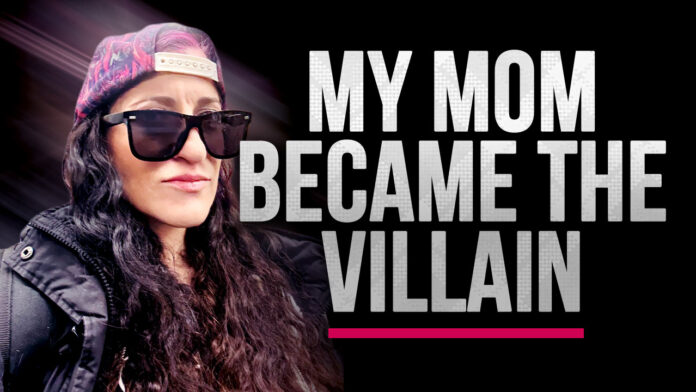
In this new and vulnerable video, Michelle Hammer discusses the irrational beliefs she had about her mother when she was not yet diagnosed with Schizophrenia.
For years, I believed my own mom was against me. I had undiagnosed schizophrenia, and my brain turned the person who loved me most into a threat I had to protect myself from.
This video is a real, unfiltered look at what psychosis does to relationships, not the clinical version, the lived one. I’m walking through the actual delusions I believed, how they felt completely true in the moment, and what it took to see the difference between what my illness was telling me and what was actually real.
If you’ve ever had psychosis, paranoia, or schizophrenia affect how you saw the people closest to you, you’re not alone, and you’re not a bad person for what your brain did without your permission.
For years, I thought my mom was against me. Not worried about me. Not concerned about me. Just working some angle I couldn’t figure out.
I had schizophrenia and I didn’t know it. Every time she tried to help me, I thought she was trying to hurt me, sabotage me, or wanted me dead. I treated her like the enemy. I blamed her for things she never did. I pulled away when she reached out. I made her the villain in a story my brain completely made up on its own.
This is what undiagnosed psychosis does to the people who love you the most.
It took me years to figure out that my mom was never the enemy — it was psychosis. Here are a few of the things my brain convinced me were true. I know some of these sound ridiculous. That’s exactly what undiagnosed psychosis does to you.
“She’s trying to starve me”
Around 9th grade, when I started going really psychotic, I began having these illusions of remembering things from the past. Sometimes at night my parents would say something totally normal, like “kitchen’s closed, time for bed, no more snacks.” My brain rewrote that into: *she’s trying to starve me.*
Does that make sense? Not really. But it made complete sense to me at the time, because I was undiagnosed and unmedicated.
“She’s trying to make me fat”
Then, in the total opposite direction, my mom would ask if I wanted more dinner, and I’d think, *she’s trying to make me gain weight, she wants me insecure, she’s trying to ruin my body.*
That’s schizophrenia and paranoia in psychosis. The person closest to you, the one who’s generous enough to cook you dinner and offer you seconds, becomes the threat. You don’t see it as love. You see it as an attack.
“She’s telling all my teachers my secrets”
I was convinced my mom was talking to every one of my high school teachers, and that they all knew everything about me. This was really thought broadcasting, the belief that people can read your mind. It made me dead silent in class, ashamed, unable to look my teachers in the eye. It’s a huge part of why I did so poorly in school.
“She’s secretly medicating me”
At one point I actually felt happy for a while. And instead of just letting myself feel good, my brain said: *how am I doing so well? She must be doing something.* I became convinced she was putting antidepressants in my food, that the only reason I was in a good mood was because she was drugging me. Even happiness got twisted into evidence against her.
“She can already read my mind”
This one hit the hardest. My psychosis had me constantly hearing how terrible, stupid, and shameful I was — voices telling me I was the worst person alive. I believed my mom could hear all of that too, that she already knew every awful thing about me. So when she asked me questions and I stayed quiet, it wasn’t me being cold. In my head, there was no point answering, she already knew everything.
She just saw a quiet kid who wouldn’t talk to her. What she couldn’t see was a daughter drowning in delusions, convinced her own mother had already judged and condemned her.
Why I’m telling you this
Talking about this now, I realize how lucky I am to not believe any of it anymore. It’s hard to gain insight into your own illness — to look back and recognize your delusions were fake. I wish I could go back and accept help at the beginning instead of believing everyone was out to hurt me. You can’t do things over. But I can talk about it now, and that’s something.
If you’ve ever had to rebuild trust with someone after a mental health episode or a psychotic break — I want to hear about it. Drop your story in the comments.
Michelle Hammer
Michelle Hammer is a well-known schizophrenia activist, mental health advocate, artist, and founder of the brand Schizophrenic.NYC, using her own experiences to challenge stigma and start conversations about mental health. Diagnosed with schizophrenia at age 22 after an earlier misdiagnosis, she turned her journey into purpose by creating a clothing line in 2015 that blends bold design with awareness-raising messaging. Michelle has been featured in the WebMD documentary Voices, which was nominated at the Tribeca X Festival, and her work has appeared in major outlets like Mashable and The Daily Mail, as well as on ABC, NBC, and CBS. Through videos, public speaking, and creative projects, she humanizes schizophrenia, educates audiences about living with the condition, and inspires others to look beyond stereotypes toward understanding and acceptance.
Connect With Michelle
🌐 Website: https://www.schizophrenic.nyc/
📸 Instagram: https://www.instagram.com/schizophrenic.nyc/
🎥 YouTube: https://www.youtube.com/channel/UCR5_ez7c5rhC6mIpcs6tAWg
🎵 TikTok: https://www.tiktok.com/@schizophrenic.nyc