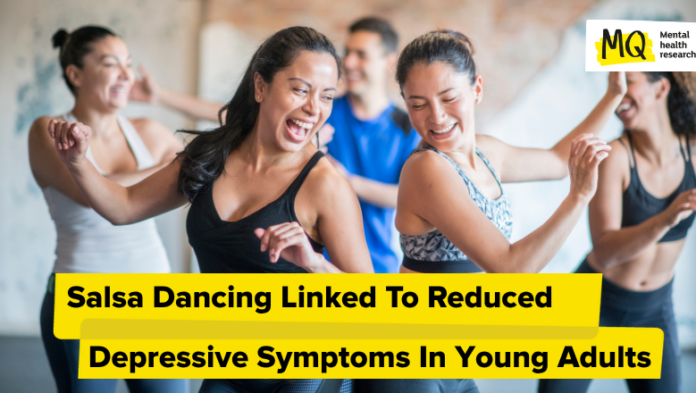
An eight-week salsa programme was associated with significant reductions in depressive symptoms and social anxiety among young adults, suggesting social dance could offer an accessible addition to existing mental health support.
Could salsa dancing support young people’s mental health?
Depression is common among young people, but not everyone finds traditional mental health support accessible or appealing. A new randomised controlled trial led by researchers at the University of Oxford and Oxford Health NHS Foundation Trust suggests that social dance could offer another option.
The study involved 121 people aged 18 to 24 experiencing mild to moderately severe depressive symptoms. Participants were randomly assigned either to an eight-week salsa programme or to a waitlist control group, with their mental health assessed before, during and after the programme.
Salsa was linked to fewer depressive symptoms
Young adults who took part in the salsa classes experienced a significantly greater reduction in depressive symptoms than those in the waitlist group.
By the end of the study, the difference between the two groups was equivalent to a 2.45-point reduction on the PHQ-9 depression scale, exceeding the clinically meaningful threshold.
Participants who took part in salsa also experienced greater reductions in social anxiety and a larger increase in daily happiness.
Lead author Brennan Delattre said:
“The results of this study were encouraging, with young people who took part in the salsa classes showing a significantly greater reduction in depressive symptoms and social anxiety and increases in happiness over time.”
Why might social dance help?
The researchers suggest that salsa combines several elements that could support wellbeing, including physical activity, music, social interaction and structure.
Delattre explained:
“As salsa is physical, social, musical, structured, and often playful, it asks people to engage with others, but within a clear framework: steps, patterns, partner rotation, and a predictable class routine.”
This structure may make social interaction feel more manageable for some people than less structured social settings.
The programme was also developed with input from young people, who helped researchers identify salsa as an appealing and acceptable form of social dance. Participants generally responded positively to the classes, highlighting the friendly instructors, welcoming atmosphere and motivation to attend.