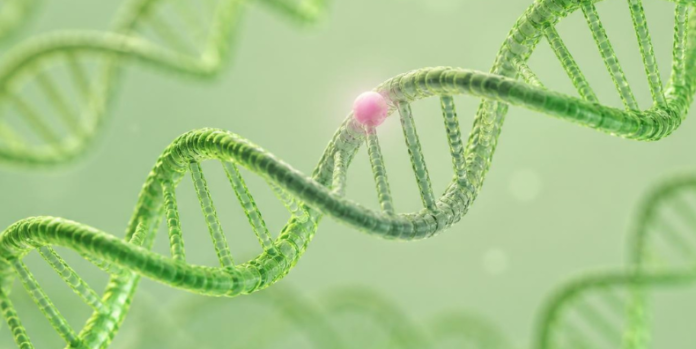
This is the first in a 5-part series on what actually causes bipolar — starting with genes and epigenetics.
What causes bipolar? Research is bringing us closer to understanding that question, with five factors emerging as the main drivers of bipolarity. I’m pleased to share the first in a series of essays exploring these factors and what they might mean for treatment.
But before we dive into the details, here’s a quick look at all five:
- Genes Finally, some bipolar-related genes have been identified with increasing confidence. One codes for a key brain protein. A simple gene test might someday help predict how well lithium might work.
- Brain Metabolism Specific molecular steps toward hypomania and mania are becoming clearer (for example, dopamine-related pathways). Depression is like metabolic “torpor” (not quite hibernation) in animals.
- Brain Inflammation It may be influenced by your gut. Could a “transplant” of gut microbes be a treatment?
- Reward Sensitivity Latching onto the potential for reward and “goal pursuit” drives hypomania and mania. A simple cognitive therapy could lower the risk of recurrence.
- Biological Clock Differences Sleep cycles are less connected to the 24-hour light/dark cycle in people living with bipolar. Having regular daily and nightly routines is a mood stabilizer.
Of course, other factors, like trauma, hormones, social stressors, recreational drugs, and relationship changes, also drive bipolar mood and energy shifts. But it looks like those life experiences affect mood and energy through the five main channels above. Let’s look at genes first — the other four will follow in later essays here.
Genes
Genes are not fate. Whatever genes you may have — or may yet pass to another generation — they do not determine what happens to you or your offspring. They might have some influence, or none at all.
At least 30 genes have now been identified as contributing to bipolarity, some more powerfully than others. The bloodhound’s trail starts there.
‘Gee Whiz’ Studies
When they first appeared in 2013, genome-wide association studies were so remarkable, “gee whiz!” was an appropriate comment (and it’s still a handy way of remembering the acronym, GWAS). These studies were launched when it became possible to read the DNA code in all 23 pairs of human chromosomes.
Researchers compared the complete genetic code of people with a bipolar diagnosis versus the code in people with no such diagnosis. Among thousands of human DNA differences, a few gene variations stood out. People with a bipolar diagnosis were far more likely to have particular gene variants.
Unfortunately, each new GWAS study surfaced new variants, while some that had stood out before did not. So there was no clear path toward definite “bipolar genes.” That is, until now.
One Gene Example
Recently, a few genetic variants have been consistently identified in GWAS studies. The next step is to determine what those genes do, to see if they could indeed be involved in bipolarity. For example, a gene that encodes a protein involved in brain function would be a better candidate for further study than one involved in muscle contraction.
Meet AKAP11. It has risen above the noise in several different GWAS studies. Just months ago, the AKAP11 gene was shown to code for a protein that helps neurons communicate and survive. When the gene’s function is blocked, lithium can partially “rescue” that function. The researchers said their results “underscore lithium’s potential as a therapeutic agent for patients carrying AKAP11 loss-of-function variants.”
What does that mean?
It means we might be getting closer to a lab test. Not a “Do you have bipolar?” test. Rather, a test to help decide whether to use lithium. More precisely, a test that would provide an estimate of the chances that lithium could be of benefit. Swab your own cheek, and a not-too-expensive lab test could tell you.
We’re Not There Yet
Real-world research is still needed before we should use a cheek swab to guide treatment. Does the test really work better than just trying lithium? What about simply starting lithium at a very low dose to make sure it doesn’t cause any problems, then gradually increasing the dose until it works, while making sure it still doesn’t cause problems at each step up? This approach is for out-patients, when we’re not in a big hurry. On an in-patient unit, a cheek swab could really help. But it will be expensive, at least for a while, so we need evidence that it really improves outcomes before using it.
Modifying Gene Action: ‘Epigenetics’
First, an example. Suppose Kayla has a gene version that makes her more likely than her sister Sharon to produce high levels of stress hormones when life is unpredictable. She could be more likely to develop post-traumatic stress disorder (PTSD) symptoms if both of them were physically abused growing up.
But suppose these sisters grow up within a really safe and supportive family. Evidence suggests that even though Kayla carries a “gene for PTSD,” she wouldn’t be at any greater risk than Sharon — even if they both have traumatic experiences later in life. Kayla’s early childhood experiences modified her DNA, making her less vulnerable.
How is this possible? Not by changing Kayla’s DNA code, but by dialing certain genes’ actions up or down. Imagine that Kayla’s stress response is governed by six major hormones. Three help her stay calm, and three others trigger fight-or-flight responses. Now imagine that growing up in Kayla’s safe and supportive family put some “gum” on the DNA for one of the alarm hormones, so that hormone can’t be produced — or is made in much smaller quantities. That would shift Kayla’s stress response system toward calmer reactions.
Had Kayla grown up in a violent household, alarm hormones might have dominated her stress response. That could have been a good thing when she was young, helping her escape, physically or emotionally. But later in life, she’d have to work harder to calm herself when facing a stressful situation like a job interview.
To summarize: Life experiences place gum — tiny blocking molecules — on a person’s DNA, or remove them. These changes in gene activity can even be passed on to the next generation. Yet they can be changed again by a child’s own environment.
Back to Bipolar
I apologize if this simplification of genes and the gum metaphor trivializes your experiences of stress. The idea is to see bipolar as something that could emerge, but doesn’t necessarily emerge, simply because of which genes you have.
Just as important: “Bipolar genes” are not vulnerability genes. We don’t know what they really do — and certainly not how they interact with each other, or with life experience. But as we’ll see in a later essay on “reward sensitivity,” bipolarity is associated with creativity, the ability to pursue goals (sometimes big goals), and other strengths. So remember: Bipolar-related genes are not “bad” genes. They carry some powerful gifts as well. And genes are not destiny.
Progress at Last
Progress! We’re finally seeing clear progress in understanding what causes bipolar. This essay looked at genes and epigenetics. In the next several essays, I’ll summarize what’s going on with the other four threads. Thanks for reading — come back for more!