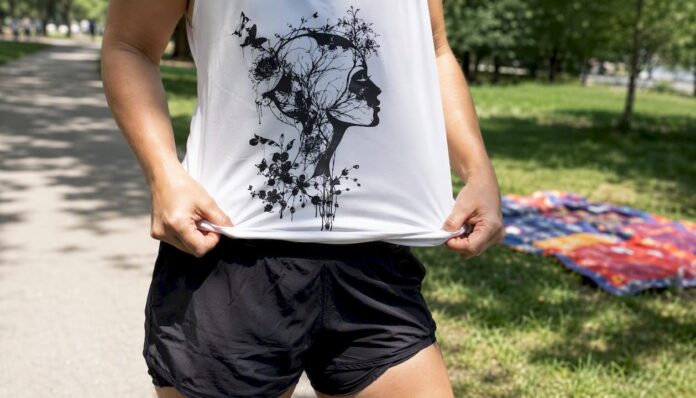
For a mental health awareness walk, your best outfit combines easy mobility, breathable fabric, and at least one visible advocacy element. You don’t need a perfect look. You need one that gets you out the door.
Here are three ready-to-wear options you can pull together right now:
- Comfort athletic: Moisture-wicking leggings or biker shorts, a soft advocacy tee, supportive sneakers, and a crossbody bag for your essentials.
- Casual go-as-you-are: Your favorite jeans or joggers, a clean cotton tee with a mental health message, and whatever shoes you already walk in.
- Statement advocacy look: A bold mental health graphic tee or hoodie layered over fitted leggings, with a pin or button on the chest and a tote bag that carries your message.
The single most important item to grab: supportive, already-broken-in shoes. Everything else is secondary.
Key Takeaways
Comfort-first, visible advocacy outfits are the most effective mental health walk outfits because they remove barriers to participation and put the message into public space.
| Point | Details |
|---|---|
| Comfort comes first | Wear broken-in shoes, breathable fabric, and a non-restrictive fit to stay focused on the walk. |
| Visible advocacy matters | A graphic tee, pin, or tote bag puts mental health into public space and starts real conversations. |
| Layer for the weather | Pack a zip-up hoodie or packable rain jacket so changing conditions don’t cut your walk short. |
| Groups need inclusive sizing | Order extended sizes from the start and collect sizes with a form, not a guess. |
| Schizophrenic for walk-ready gear | Tank tops, tees, hoodies, and buttons designed with lived experience behind every message. |
Table of Contents
What are the best mental health walk outfit styles?
Five distinct looks cover nearly every mood, body type, and event tone. Pick the one that fits you today.
Supportive athleisure
Moisture-wicking leggings or biker shorts, a breathable tank top, a zip-up hoodie, and cushioned running sneakers. Add a fanny pack or crossbody for storage. Matching athleisure sets are especially practical here because they photograph well and eliminate the “does this go together?” question entirely.
- Leggings or biker shorts (moisture-wicking)
- Advocacy tank top or fitted tee
- Zip-up hoodie or lightweight jacket
- Cushioned sneakers
- Fanny pack or crossbody bag
Casual go-as-you-are
Jeans, joggers, or cotton shorts paired with a comfortable tee. This is the most accessible look and the most honest one. As one walker put it, consistent walking matters more than a perfect outfit — familiar, comfortable clothing actually helps you stick with the habit.
- Joggers, jeans, or cotton shorts
- Soft cotton tee (plain or advocacy-printed)
- Lightweight sneakers or walking shoes
- Small tote bag
Statement advocacy tee set
A bold graphic tee or hoodie from a mental health clothing brand, paired with solid-color bottoms so the message reads clearly. This is the look that starts conversations. Keep the bottom half simple so the top does the talking.
- Graphic advocacy tee or hoodie
- Solid leggings, joggers, or chinos
- Clean white sneakers
- Mental health pin or button on the chest
Weather-ready layered outfit
A moisture-wicking base layer, a light long-sleeve shirt, and a packable rain jacket or vest. Works for spring walks when the weather can shift mid-route. Tuck a compact umbrella into your tote.
- Moisture-wicking base layer
- Long-sleeve shirt (advocacy print optional)
- Packable rain jacket or vest
- Trail sneakers or waterproof walking shoes
Low-effort polished look
A matching set in a solid color (forest green reads well for mental health awareness), a structured tote, and clean sneakers or loafers. Add a single advocacy pin to the tote strap. This works for walkers who want to look put-together without athletic gear.
- Matching top and trouser set (green, teal, or black)
- Clean sneakers or loafers
- Structured tote with one advocacy pin
- Simple bracelet or awareness wristband
Pro Tip: Iron-on patches and fabric markers are a fast, affordable way to add a mental health message to any plain item you already own. A single phrase on the back of a jacket or the front of a tote takes under five minutes and costs almost nothing.
| Style | Key Pieces | Best For |
|---|---|---|
| Supportive athleisure | Leggings, advocacy tank, zip hoodie, sneakers | Long-distance or high-energy walks |
| Casual go-as-you-are | Joggers or jeans, cotton tee, walking shoes | Low-pressure community walks |
| Statement advocacy tee set | Graphic tee, solid bottoms, pin | Conversation-starting and photos |
| Weather-ready layered | Base layer, long-sleeve, packable jacket | Spring or variable-weather events |
| Low-effort polished | Matching set, tote, loafers | Organizers or speakers at the event |
How do you dress practically for a long mental health walk?
Comfort-first choices protect your focus and your mood. When your feet hurt or your shirt is soaked, the walk becomes about managing discomfort instead of connecting with the people around you.
Fabric guidance:
- Moisture-wicking synthetics (polyester, nylon blends) work best for high-output walking or warm weather. They pull sweat away from skin and dry fast.
- Soft cotton or cotton-blend fabrics are better for mild temperatures and shorter events where breathability matters more than performance. They also feel gentler against skin for people with sensory sensitivities.
- Avoid heavy denim, stiff waistbands, or anything that restricts your stride.
Footwear checklist:
- Wear shoes you have already broken in. New shoes on a long walk are a blister guarantee.
- Choose a sneaker with arch support and a cushioned sole. Trail runners work well on uneven terrain.
- Wear moisture-wicking socks, not cotton. Cotton holds moisture and causes friction.
- Bring a small strip of athletic tape or a blister bandage in your bag for any hot spots that develop mid-walk.
Accessibility and body-positive fit:
- Avoid elastic waistbands that dig in during extended movement. Drawstring joggers or leggings with a wide, flat waistband are more comfortable for most body types.
- If you use a mobility aid, prioritize non-restrictive tops and bottoms that don’t bunch or catch. A crossbody bag keeps hands free.
- Adaptive clothing with magnetic closures or side-zip options is worth considering for anyone who finds standard closures difficult.
Pro Tip: Wear your planned outfit for a 20-minute test walk at least two days before the event. Any rubbing, bunching, or restriction will show up immediately, and you’ll have time to swap the item.
What accessories actually amplify your advocacy at a walk?
Small accessories carry a lot of weight. A single pin on a jacket lapel or a tote bag with a clear message can open a conversation that a plain outfit never would. The key is clarity: your message should be readable from six feet away and affirming in tone.
High-impact, low-effort accessories:
- Mental health buttons and pins on the chest or lapel (most visible placement)
- Tote bags with a printed slogan (readable from a distance, doubles as storage)
- Awareness bracelets or wristbands on the wrist
- Hats or beanies with embroidered text or a small logo
- Scarves in awareness colors (green for mental health) during cooler walks
For accessorizing mental health events, placement matters as much as the item itself.
| Accessory | Best Placement | Readability at Distance |
|---|---|---|
| Pin or button | Left chest, lapel | Good (2–4 feet) |
| Tote bag | Carried or over shoulder | Excellent (about 10 feet) |
| Bracelet | Wrist | Low (close contact only) |
| Hat with text | Top of head, front panel | Good (about 4 feet) |
| Scarf | Draped over shoulders | Moderate (depends on print size) |

Slogan guidance: Keep messaging affirming and specific. “Mental health matters” and “End the stigma” read clearly and invite conversation. Avoid ambiguous phrases that could be misread without context. Slogans printed in bold, high-contrast text on a light background are easiest to read at a distance.
On sustainable materials: When possible, choose advocacy apparel printed with water-based or discharge inks on organic cotton. These methods keep the fabric soft and breathable during long events, and they align with broader wellness values many walkers share.
How do you coordinate outfits for a group or team walk?
Group coordination doesn’t require matching uniforms. A shared color, a consistent logo placement, or a single matching item (same tee, different bottoms) creates visual cohesion without restricting individual expression.
- Choose a color anchor. Green is the recognized mental health awareness color. Teal and purple are also used for specific conditions. Pick one and communicate it clearly to your group.
- Decide on one shared item. A matching tee or hoodie is the most common choice. It reads as a team in photos and at a distance.
- Finalize artwork at least three weeks out. Custom print orders typically need 10–14 business days for production plus shipping time.
- Collect sizes with a form, not a guess. Send a size chart with your order request. Include extended sizes from the start.
- Order 10–15% extra. Last-minute additions and size swaps are common. Extra stock also works as handouts or fundraiser items.
Bulk-order checklist for organizers:
- Confirm print method (water-based or discharge ink for comfort)
- Request a physical sample before full production
- Include sizes XS through 3X or beyond in your initial quote
- Clarify the return or exchange policy for misprints
- Budget for shipping both ways if samples are involved
Inclusive sizing increases participation. When people can’t find their size in the group order, they often opt out of the matching look entirely, which reduces the visual impact of the team.
What should you pack for a mental health awareness walk?
Day-of pack list:
- Water bottle (at least 20 oz for a standard community walk)
- Sunscreen (SPF 30 or higher)
- Government-issued ID
- Phone, fully charged
- Cash or card for donations or merchandise
- Athletic tape or blister bandages
- Light snack (granola bar, nuts)
- Earphones (optional, for motivation between stops)
- Compact umbrella or packable rain layer
A crossbody bag or small belt bag keeps your hands free and your essentials accessible without disrupting your outfit. Seasoned walkers often use a tote for merch and a crossbody for valuables, which also works as a small storage system for a belt or crossbody for essentials during power-walking segments.
| Weather Condition | Add to Your Outfit |
|---|---|
| Sunny and warm | Sunhat, UV-protective layer, extra water |
| Overcast and cool | Light fleece, packable vest |
| Rain likely | Packable rain jacket, waterproof shoes |
| Cold morning, warm afternoon | Zip-up hoodie you can tie around your waist |

Safety reminders: Know the route before you start. Walk with a buddy when possible. Save the event organizer’s phone number. If the walk has accessibility accommodations, confirm them in advance so you can plan your outfit and gear accordingly.
Why does what you wear to a mental health walk actually matter?
Visible advocacy clothing does something a private commitment cannot: it puts mental health into public space. When you wear a message on your chest, you normalize the conversation for everyone who sees it. That matters in a culture that still treats mental illness as something to hide.
Calm notes that starting with just 10–15 minutes of daily walking and building gradually is more effective for mental health than any single intense session, because consistency is what creates lasting benefit. That same principle applies to advocacy: showing up regularly, visibly, matters more than any one perfect outfit.
BetterHelp describes “dopamine dressing” as a mood-supportive practice, but is clear that wardrobe choices alone don’t treat mental health conditions. Wearing a green tee to a walk is a meaningful act of community and solidarity. It isn’t therapy, and it doesn’t need to be. Use style as a supportive practice, not a substitute for care.
Schizophrenic, founded by Michelle Hammer, a New York City schizophrenia activist, builds every product around this idea. Clothing and art as conversation-starters, not cures. The goal is to make it easier for people to say the words out loud, and to feel less alone when they do. Understanding what a mental health clothing line actually stands for helps you choose pieces that carry real meaning.
Ethical guidelines: Avoid slogans that sensationalize symptoms or use clinical language in ways that could feel alienating. “You are not alone” lands differently than a phrase that reduces a condition to a punchline. Respect the diversity of experiences in your community.
What wearing the right outfit taught me about showing up
Comfort and inclusion aren’t afterthoughts in advocacy. They’re the foundation. When someone feels like they can’t participate because they don’t have the right gear, or because nothing in the group order fits them, we’ve already created a barrier where there shouldn’t be one. The most powerful thing about a mental health walk is that it belongs to everyone. Your outfit should reflect that. Wear what moves you, literally and figuratively. Share your look, tag your community, and keep showing up. Every visible act of solidarity adds to something larger than any single walk.
Schizophrenic has walk-ready advocacy pieces for every style
Schizophrenic carries the specific items that make mental health walk outfits work: advocacy tank tops for warm-weather walks, graphic tees with bold messaging that reads clearly at a distance, hoodies and sweatshirts for cooler events, and mental health buttons that work as affordable handouts or personal accessories. Every piece is designed by Michelle Hammer with lived experience behind the message, not just a slogan on a shirt.
For groups and organizers, Schizophrenic offers bulk-order options with inclusive sizing. Reach out directly through the site to discuss group pricing, size ranges, and custom quantities for your walk or fundraiser. Browse the full collection and find the pieces that fit your team’s look at Schizophrenic.
Sources
Recommended
Comments