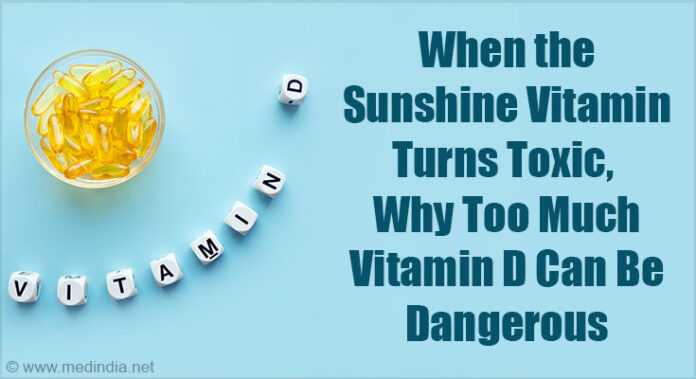
Excess vitamin D intake can cause harmful calcium buildup, increasing risks of kidney damage, and toxicity, especially with improper supplement use.
- Excess vitamin D raises calcium absorption, leading to dangerous deposits in arteries or soft tissues
- Vitamin D toxicity cases in the US increased by 1600 percent from 2005 to 2011
- The safe upper limit is 100 mcg i.e 4,000 IU per day unless a medical team recommends more
Excess vitamin D can trigger dangerous calcium buildup in the body, leading to serious complications including kidney damage and, in rare cases, life-threatening outcomes (1✔ ✔Trusted Source
Taking too much vitamin D can cloud its benefits and create health risks
Go to source
).
For years, scientists have cautioned that not everyone requires vitamin D supplements, and that high doses can sometimes become toxic, particularly for young children and older adults.
Rising Supplement Use and Awareness of Risks
As vitamin D supplements gain popularity, it is increasingly important for both patients and healthcare providers to understand appropriate dosing and potential risks. Although adverse effects are uncommon, their frequency is increasing, and in severe situations, they can pose a threat to life.
Excessive vitamin D increases calcium absorption in the body, which may result in hypercalcemia. This condition causes calcium to accumulate in arteries or soft tissues, raising the likelihood of kidney stones, disrupting bone metabolism, and triggering symptoms such as nausea, vomiting, constipation, fatigue, muscle weakness, and bone pain.
Severe Outcomes Linked to Vitamin D Toxicity
Most individuals recover from vitamin D toxicity once supplements are stopped and treatment such as intravenous fluids or medications to lower calcium levels is provided. However, in rare untreated cases, toxicity can lead to kidney failure requiring hemodialysis or even fatal intestinal bleeding.
Some evidence also indicates that older adults with elevated vitamin D levels in their blood may face a higher risk of falls.
A 2018 review conducted in the United States highlighted “considerable complacency” regarding the toxic potential of vitamin D. Experts have yet to reach a consensus on the exact threshold at which vitamin D intake becomes excessive.
Sunlight Source and Nutritional Role of Vitamin D
The review authors noted that the surge in interest surrounding vitamin D, partly fueled by popular literature promoting high-dose intake, has likely contributed to the growing number of toxicity cases (2✔ ✔Trusted Source
A review of the growing risk of vitamin D toxicity from inappropriate practice
Go to source
).
Vitamin D is commonly referred to as the “sunshine vitamin” because it is naturally produced in the body through sunlight exposure. Approximately 90 percent of an individual’s vitamin D requirements are met this way, with the remainder obtained from foods such as fatty fish and fortified dairy products.
The vitamin plays a crucial role in calcium absorption, immune function, cell growth, metabolism, and neuromuscular activity. Long-term deficiency has been associated with neurological disorders, autoimmune conditions, bone diseases, and cardiovascular issues.
Debate Over Supplement Benefits and Risks
Despite its importance, the effectiveness of vitamin D supplements remains debated. Some findings suggest potential benefits such as slowing aging, improving cognitive function, or reducing depressive symptoms, while others question these outcomes.
Moreover, supplementation carries risks, particularly when used incorrectly to address deficiency. Many toxicity cases stem from dosing errors during treatment.
Daily Overdose Due to Prescription Misunderstanding
In one reported case, an 80-year-old man mistakenly consumed a high-dose weekly vitamin D tablet every day after it was prescribed by a naturopathic practitioner. Fortunately, his hypercalcemia resolved after the error was identified and the supplement was discontinued.
Children are also vulnerable. In 2016, Denmark’s national health authority recalled a supplement containing 75 times the recommended vitamin D level after around 20 children developed toxic effects from its use.
Similar trends have been observed in the United States. Between 2000 and 2014, over 25,000 cases of vitamin D toxicity were reported. From 2005 to 2011, cases surged by 1600 percent, with many involving children and teenagers.
Although no deaths were recorded during this period, five cases resulted in serious medical complications. Experts advise careful monitoring of intake levels. According to guidance reviewed by physician and journalist Mallika Marshall from Harvard Medical School, most individuals taking supplements do not require more than 15 to 20 micrograms (600 to 800 international units) daily.
Intake above 100 micrograms (4,000 international units) per day should generally be avoided unless recommended by a healthcare provider. Starting with fortified foods is considered a safer approach for those with deficiency.
As with any supplement or medication, consulting a medical professional before starting or stopping use remains essential.
In conclusion, while vitamin D is essential for overall health, excessive intake, especially through supplements, can lead to serious complications, making proper dosing and medical guidance crucial.
Frequently Asked Questions
Q: How does too much vitamin D hurt the body?
A: It raises calcium absorption, which can cause dangerous calcium deposits in arteries or soft tissues, leading to kidney stones, bone pain, nausea, and muscle weakness.
Q: Can vitamin D toxicity be fatal?
A: Yes, in rare cases if left untreated, it can lead to kidney failure requiring hemodialysis or cause fatal intestinal bleeding.
Q: How many vitamin D toxicity cases were reported in the US?
A: From 2000 to 2014, more than 25,000 cases were reported, and from 2005 to 2011, cases increased by 1600 percent.
Q: What is the safe upper limit for daily vitamin D intake?
A: Unless your medical team recommends it, avoid taking more than 100 mcg (4,000 IU) per day, which is considered the safe upper limit.
Q: Who is most at risk from vitamin D toxicity?
A: Young kids, older adults, and people who accidentally take high-dose supplements too frequently are most at risk.
References:
- Taking too much vitamin D can cloud its benefits and create health risks – (https://www.health.harvard.edu/diet-and-nutrition/taking-too-much-vitamin-d-can-cloud-its-benefits-and-create-health-risks)
- A review of the growing risk of vitamin D toxicity from inappropriate practice – (https://bpspubs.onlinelibrary.wiley.com/doi/10.1111/bcp.13573)
Source-Medindia