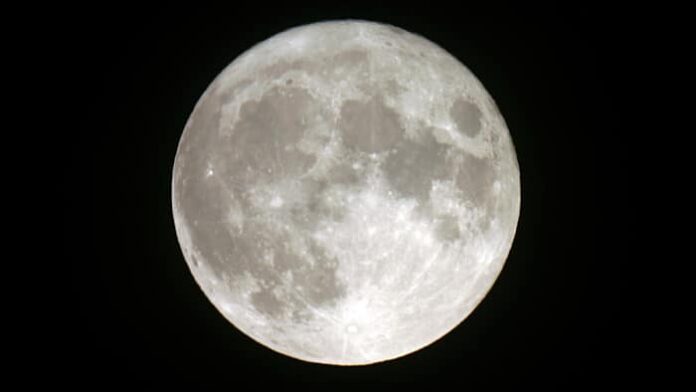
The moon’s gravitational pull is the primary cause of ocean tides and the biological rhythms of a variety of organisms. So, is it a stretch to ask if there’s a connection between bipolar disorder and the moon? I don’t think so, but let’s get another opinion.
Well, sleep loss can trigger mania, so Wehr’s team’ looked at whether patients with rapid-cycling bipolar disorder have amplified reactions to this lunar sleep rhythm.
Introduction
When I saw an articles titled “Does the Moon Trigger Bipolar Cycling?,” I was all over it. There were three major reasons…
- Bipolar disorder doesn’t get the research and attention it deserves
- I’m a neuroscience geek
- It was written by psychiatrist Chris Aiken, MD
Dr. Aiken is a busy man. In addition to writing and teaching at Wake Forest University and NYU schools of medicine, he’s Director at Psych Partners and Editor-in-Chief of The Carlat Report.
Let’s see what he has to say in his article, dated August 5, 2026…
“Does the Moon Trigger Bipolar Cycling?”

The same force that affects ocean waves also alters body temperature, sleep, and circadian rhythms.
Dr. Aiken begins with the work of psychiatrist, research scientist, and author Thomas Wehr. In 2018, Dr. Wehr noticed that mood cycling synchronized with lunar rhythms in bipolar disorder. Based on his observation, Wehr helped develop dark therapy for mania.
Aiken shared that when he saw Wehr’s paper, he thought he must have pinned the cause on the blue light of the full moon. After all, he reasoned, there’s a correlation between a full moon and psych ER visits. And full moons were once held responsible for werewolf myths and the term “lunatic” (I’d never put that together — you?).
Lunar gravitational tides
Aiken soon figured out Wehr had something else in mind — lunar gravitational tides. It seems the same force that affects ocean waves also alters body temperature, sleep, and circadian rhythms.
As you may know, “healthy” people sleep a little less and fall asleep a little later as the moon approaches its full and new phase. It’s a 15-day rhythm called the semi-synodic cycle.
Well, sleep loss can trigger mania, so Wehr’s team’ looked at whether patients with rapid-cycling bipolar disorder have amplified reactions to this lunar sleep rhythm.
Dr. Wehr’s study
In Dr. Wehr’s 2018 study, “Bipolar mood cycles associated with lunar entrainment of a circadian rhythm,” three patients with rapid-cycling bipolar disorder whose manic switches recurred near full or new moons were tracked for 122 to 805 days each.
Daily sleep-onset and sleep-duration records were aligned to each patient’s nearest lunar syzygy (fascinating, tap the link) and averaged across patients. Also tested was whether mania or sleep disruption came first.
Results
Sleep duration shortened by about an hour and sleep onset moved about 40 minutes later as syzygies approached — an amplified version of the pattern seen in healthy people.
Aiken points out that in one patient, sleep delay predicted mania days later; in another, mania and shortened sleep were tightly linked the same day. Mediation analysis suggested sleep disruption explained roughly 10% of the mood-lunar link in one patient, with a bidirectional, self-reinforcing (two factors continuously strengthen each other over time) pattern in the other.
Takeaways

Dr. Aiken recommends blue light blocking glasses to deepen sleep, worn 1-3 hours before bed and followed by a pitch dark bedroom.
Okay, takeaways: Since Dr. Aiken was addressing clinical psychiatric professionals, he was referring to practice implications. By the way, reading the inside scoop can be interesting and helpful.
Blue light may not be the only reason full moons affect mental health. Aiken followed his observation with a quote from Hamlet (by Hamlet): “There are more things in Heaven and Earth, Horatio, than are dreamt of in your philosophy,”
So who really knows the whole story?
Dr. Aiken recommends blue light blocking glasses to deepen sleep, worn 1-3 hours before bed and followed by a pitch dark bedroom. The strategy worked in a few controlled trials of insomnia, and may prevent bipolar episodes as well.
When it comes to balancing gravitational tides? The good doctor admits he has no idea.
What else is waiting to be discovered?
Earlier, I said there are three major reasons I was all over Dr. Aiken’s’ article: bipolar disorder doesn’t get sufficient research and attention, my neuroscience geekness, and Dr. Aiken wrote it.
After spending a lot of time with the piece, a couple more thoughts came to mind. Sure, the subject matter isn’t a cure for depression, but it illustrates how pieces to the emotional and mental illness puzzle are being put together.
Finally. It may be taken for granted by some, but I think the moon being involved in our mood, sleep, etc. is a true wonder. I mean, what other wonders — miracles — “out there” are waiting to be discovered?
How do you feel about it?
I encourage you to check out Dr. Aiken’s original article on Psych Partners: “Does the Moon Trigger Bipolar Cycling?”
I mentioned that we’ve featured the work of Dr. Aiken before. Take a look at “New treatments for mental illness: Proliv™Rx.”
And please review the Chipur emotional and mental illness info and inspiration titles on the articles page — or by category below, right sidebar on desktop. We’ll both appreciate it.

After a decades-long wrestling match with emotional and mental illness, Bill finally found his professional and personal passion – life’s meaning. He wanted to lend a hand to those struggling as he did, so off he went to grad school at age 49 and earned his counseling credentials. He continues his service through Chipur and other projects.