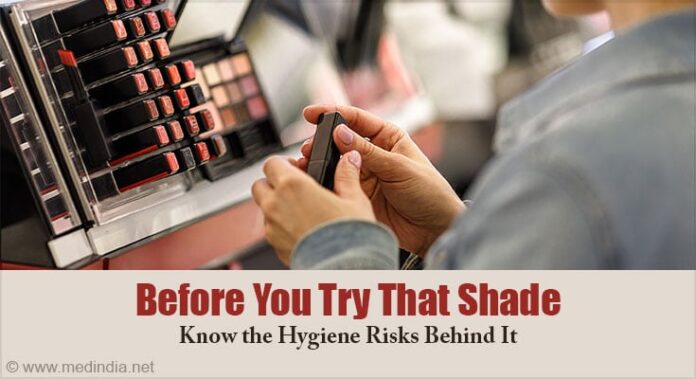
Using store makeup testers on lips may expose users to viruses and bacteria; safer hygiene practices can help lower infection risk.
- Shared lipstick testers may carry bacteria and herpes simplex virus
- Indirect exposure through contaminated products is biologically plausible
- Safe hygiene practices can help reduce infection risk
Shared lipstick testers used in cosmetic stores may pose a hygiene concern, particularly as an estimated 50 to 80 percent of adults globally carry herpes simplex virus (HSV) (1✔ ✔Trusted Source
Herpes simplex virus
Go to source
).
A recent reported case has raised questions about whether repeated use of shared lip products could increase exposure risk. While herpes transmission primarily occurs through direct skin-to-skin contact, experts note that contaminated surfaces may serve as a potential, though less common, route under specific conditions.
Can Shared Lipstick and Makeup Testers Transmit Herpes Simplex Virus?
Current evidence comes mainly from observational contamination studies rather than direct clinical transmission research.
A two-year observational analysis of cosmetic testers collected from retail environments reported widespread microbial contamination. The study did not involve human participants and therefore did not include sample size or population demographics. It also did not measure herpes transmission specifically.
Key findings from contamination studies include:
- All tested cosmetic samples showed microbial presence
- Higher contamination levels were observed during peak usage periods
- Products repeatedly applied to skin or lips had greater microbial load
These findings suggest that shared cosmetic products can act as carriers of microorganisms. However, direct evidence linking lipstick testers to herpes transmission remains limited.
How Herpes Simplex Virus May Persist on Contaminated Cosmetic Surfaces
Herpes simplex virus (HSV) is a common lifelong infection, with HSV-1 typically responsible for oral herpes such as cold sores. The virus spreads mainly through direct contact with infected saliva or lesions.
HSV survival outside the body is generally short. However, under moist conditions, the virus may persist briefly on surfaces. Repeated contact with saliva and skin, as seen with shared lipstick testers, may allow temporary contamination of these products.
Common symptoms of oral HSV infection include:
- Blisters or cold sores around the lips
- Painful ulcers in or around the mouth
A large proportion of individuals infected with HSV remain asymptomatic, which may increase the likelihood of unrecognized exposure.
Which Makeup Habits Increase Risk of HSV-1 and Skin Infections?
Certain behaviors can increase the likelihood of contamination and potential exposure in cosmetic settings:
Differences in hygiene practices across retail environments may further influence contamination levels. Although these behaviors increase theoretical risk, direct cause-and-effect evidence linking makeup testers to herpes infection is currently limited (2✔ ✔Trusted Source
Can Screens Rewire Your Toddler’s Brain? Virtual Autism Explained
Go to source
).
Evidence-Based Hygiene Practices to Prevent Infection From Makeup Testers
Experts recommend practical steps to reduce exposure to potential pathogens:
- Use disposable applicators when available
- Avoid applying testers directly to lips or face
- Test products on the back of the hand instead
- Do not share personal cosmetics or tools
- Clean makeup brushes regularly to reduce microbial buildup
These measures are consistent with general infection prevention practices and dermatology guidance.
Available evidence indicates that shared lipstick testers can harbor microorganisms, including bacteria and potentially viruses.
Although herpes transmission through cosmetic products is not well established, indirect exposure remains biologically plausible in settings with repeated use and inadequate hygiene. Adopting safe testing practices and avoiding direct contact with shared products can help reduce risk and support better skin health.
Frequently Asked Questions
Q: Can herpes spread through shared lipstick testers?
A: Indirect exposure is possible if the product is contaminated, although this is not a common transmission route.
Q: Is using makeup testers in stores safe?
A: Risk can be reduced by using disposable applicators and avoiding direct contact with lips or face.
Q: How common is herpes simplex virus infection?
A: HSV affects approximately 50 to 80 percent of adults globally, often without noticeable symptoms.
Q: Can bacteria spread through cosmetic testers?
A: Yes, shared makeup products can carry bacteria such as staphylococcus and E. coli.
Q: Who should avoid makeup testers?
A: Individuals with active cold sores, cuts, or skin infections should avoid shared cosmetics and consult a dermatologist if needed.
References:
- Herpes simplex virus – (https://www.who.int/news-room/fact-sheets/detail/herpes-simplex-virus)
- Can Screens Rewire Your Toddler’s Brain? Virtual Autism Explained – (https://www.healthandme.com/health-wellness/can-screens-rewire-your-toddlers-brain-virtual-autism-explained-article-153989527)
Source-Medindia