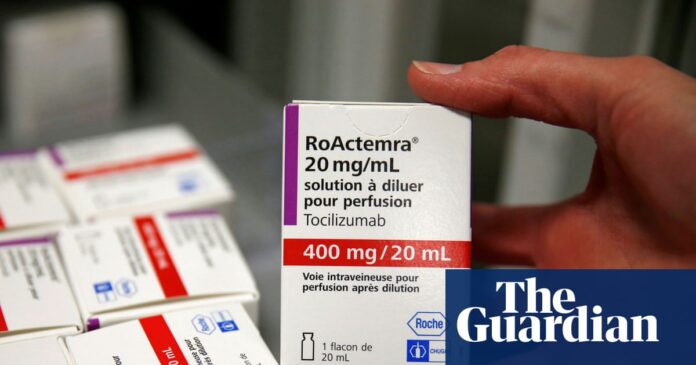
Immunotherapy could be used to treat depression among patients who have not responded to conventional antidepressants, according to the results of an early clinical trial.
Researchers at the University of Bristol investigated whether tocilizumab, an anti-inflammatory drug commonly used for immune conditions such as rheumatoid arthritis, could improve symptoms of difficult-to-treat depression.
About one in three people with depression do not get better while taking the main forms of medical treatments available, which are based on targeting chemicals in the brain. Approximately one in six adults across the UK will experience moderate to severe depressive symptoms within their lifetime.
Tocilizumab works by blocking the IL-6R receptor. This prevents the receptor from binding to cells, thus preventing the inflammatory signals that are linked to autoimmune conditions.
The trial involved group of 30 people with moderate to severe depression who had not responded well to standard antidepressants. The participants were randomly assigned either tocilizumab or a placebo over a four-week period.
Although the results showed little statistical evidence for significant difference between the two groups, as expected for a small study, participants who received tocilizumab seemed to experience greater improvements over time across several measures compared with those given a placebo, including overall depression severity, fatigue, state anxiety and quality of life.
Golam Khandakar, a professor of psychiatry and immunology at Bristol medical school and senior author of the study, said the trial represented an “important milestone” in the development of new treatments for depression that was especially difficult to treat.
“This is one of the first randomised controlled trials to test immunotherapy for depression, the first to test IL-6R as the treatment target, and the first to use a targeted approach to select patients most likely to benefit, and to show that it works,” added Khandakar, who is an investigator at the MRC integrative epidemiology unit at the university.
Participants in the trial treated with tocilizumab were also more likely to achieve depression remission than those in the placebo group, at 54% compared with 31%. This increased likelihood was also significant, as it equated to a number needed to treat (NNT) of 5, meaning an additional five patients would need to be treated to make one patient better. By contrast, the NNT for SSRIs – the most common first-line antidepressant for patients with moderate to severe depression – is about 7, indicating that immunotherapy could be more likely to make patients feel better.
The researchers said that, although the trial had involved a small number of people, it provided early evidence that forms of immunotherapy could help reduce the symptoms of depression.
Dr Éimear Foley, a senior research associate in immunopsychiatry at the MRC integrative epidemiology unit and co-author of the study, said: “Depression is estimated to affect around 10-20% of people worldwide during their lifetime, yet for many patients current treatments do not work well enough.
“Our study moves us closer to more tailored depression care, where treatments are chosen to better fit a person’s biology. This will help us to provide the right treatment to the right patients at the right time.”