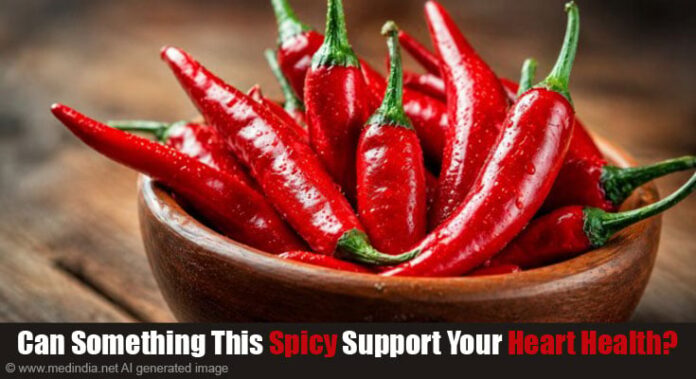
Large global studies suggest capsaicin-rich chilli peppers may support heart health and longevity, but causation is not yet proven.
- Regular chilli pepper consumption linked to 26% lower cardiovascular disease mortality and 23% lower cancer mortality risk in large global studies
- U.S. NHANES cohort study shows 13% lower all-cause mortality risk among chilli pepper consumers over nearly 19 years
- Capsaicin in spicy foods may support heart health, metabolism, and vascular function, though evidence remains observational
People who regularly eat chilli peppers may have a lower risk of dying from cardiovascular disease, cancer, or any cause, according to multiple large observational studies involving over 570,000 participants (1✔ ✔Trusted Source
The Association of Hot Red Chili Pepper Consumption and Mortality: A Large Population-Based Cohort Study
Go to source
).
A U.S. cohort of 16,179 adults followed for nearly 19 years found a 13% lower adjusted all-cause mortality risk, while global pooled data linked chilli consumption to a 26% lower cardiovascular death risk and 23% lower cancer-related deaths.
However, these findings show association, not cause and effect, and should not be interpreted as proof that chilli peppers extend life.
Do Chilli Peppers Lower the Risk of Death from Heart Disease?
Observational studies suggest that regular chilli pepper consumption is linked to a lower risk of cardiovascular mortality, though causation has not been established.
A pooled analysis of studies across multiple countries found that people who regularly consumed chilli peppers had a 26% lower risk of death from cardiovascular disease compared to those who rarely consumed them. These findings were consistent across diverse populations, strengthening the overall signal while still remaining observational.
What Does the NHANES Study Say About chilli Pepper Consumption and Mortality?
Data from the NHANES III cohort show that chilli pepper consumers had a lower risk of death from any cause over long-term follow-up.
The study tracked 16,179 adults for a median of 18.9 years and recorded 4,946 deaths. Mortality was lower among chilli pepper consumers (21.6%) compared to non-consumers (33.6%). After adjusting for lifestyle and health factors, chilli consumption remained associated with a 13% lower all-cause mortality risk.
Are Chilli Peppers Linked to Lower Cancer and All-Cause Mortality?
Large observational datasets suggest that chilli pepper consumption is associated with reduced cancer mortality and overall mortality.
Across more than 570,000 participants globally, regular consumers showed a 23% lower risk of cancer-related death and a 25% lower risk of death from any cause. However, these findings cannot confirm that chilli peppers directly reduce cancer risk.
Does Eating Spicy Food Reduce Vascular Disease Risk?
Some evidence suggests that regular spicy food intake may be linked to a modest reduction in vascular disease risk, particularly heart-related conditions (2✔ ✔Trusted Source
Spicy food consumption and risk of vascular disease: Evidence from a large-scale Chinese prospective cohort of 0.5 million people
Go to source
).A 2024 prospective cohort study involving nearly 486,000 adults found that people consuming spicy food at least once a week had a 3% to 5% lower risk of vascular disease, especially ischemic heart disease. No clear association was observed for stroke risk.
How Does Capsaicin Affect Heart Health and Metabolism?
Capsaicin, the active compound in chilli peppers, may influence biological pathways linked to heart health and metabolism.
Research suggests capsaicin may help reduce inflammation, lower oxidative stress, improve blood vessel function, and support cholesterol metabolism. It may also activate Transient Receptor Potential (TRP) channels, which are involved in regulating metabolic and vascular processes.
Can Chilli Pepper Consumption Be Recommended for Disease Prevention?
Current evidence does not support recommending chilli peppers as a proven strategy for disease prevention.
All available studies are observational, meaning they cannot establish cause and effect. People who eat chilli peppers regularly may also have healthier diets or lifestyles overall. In addition, studies vary in how spicy food intake is measured, and no standard intake recommendation exists.
Until randomized controlled trials are available, these findings should be interpreted as promising but not definitive.
References:
- The Association of Hot Red Chili Pepper Consumption and Mortality: A Large Population-Based Cohort Study
– (https://pmc.ncbi.nlm.nih.gov/articles/PMC5222470/) - Spicy food consumption and risk of vascular disease: Evidence from a large-scale Chinese prospective cohort of 0.5 million people
– (https://pubmed.ncbi.nlm.nih.gov/39030074/)
Source-Medindia