• Institute Update
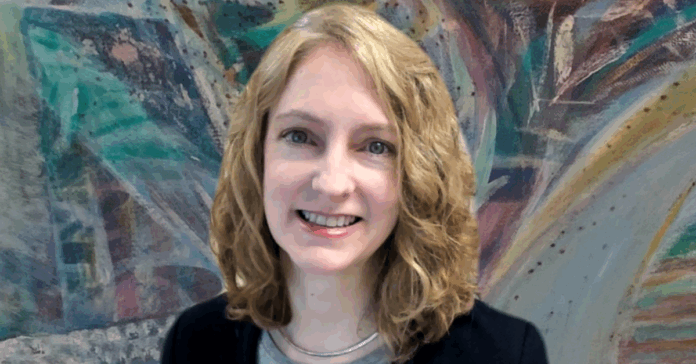
This spring, Sarah Hollingsworth “Holly” Lisanby, M.D., Director of the Division of Translational Research (DTR), will depart NIMH to join Arizona State University (ASU) as Founding Dean of the new ASU School of Medicine and Advanced Medical Engineering.
Upon joining NIMH in 2015, Dr. Lisanby led the merger of two separate divisions to form a new Division of Translational Research, an integrated entity spanning translational mental health research across the lifespan. Since 2015, Dr. Lisanby has overseen a significant research funding portfolio, shaped the national agenda for mental health research, and fostered collaboration between the institute’s extramural and intramural research programs.
Under Dr. Lisanby’s leadership, NIMH’s Division of Translational Research launched several new programs to advance an integrative research portfolio that bridges a range of research domains, including computational psychiatry, social neuroscience, statistical methods, neuromodulation, neurotherapeutics, and translational genomics. Dr. Lisanby has also held significant roles in The Brain Research Through Advancing Innovative Neurotechnologies® Initiative, or The BRAIN Initiative®, as co-lead of a team focused on large-scale neural recording and modulation devices and as architect and co-leader of the NIH BRAIN Brain-Behavior Quantification and Synchronization Program .
In addition to her extramural roles, Dr. Lisanby served as the founder and Director of the NIMH Intramural Research Program’s Noninvasive Neuromodulation Unit. This transdisciplinary research program has focused on unpacking the mechanisms of noninvasive neuromodulatory treatments to develop safer, more effective, and personalized interventions for treatment-resistant depression and autism spectrum disorder. Dr. Lisanby’s key accomplishments include pioneering magnetic seizure therapy as a rapid-acting treatment for depression. She has authored over 330 publications and is recognized as a leading figure in the field of neuromodulation.
Dr. Lisanby serves on the U.S. Food and Drug Administration Neurological Devices Advisory Panel and has held key senior leadership positions in professional organizations, including serving as Chair of the American Psychiatric Association Task Force to Revise the Practice of Electroconvulsive Therapy (ECT) and President of the International Society for ECT and Neurostimulation. Before coming to NIMH, Dr. Lisanby also served on the NIMH Board of Scientific Counselors.
Dr. Lisanby has received numerous national and international awards, including the Distinguished Investigator Award from the Brain Behavior Research Foundation, the Max Hamilton Memorial Prize from the Collegium Internationale Neuro-Psychopharmacologicum, the Gerald R. Klerman Award from the National Depression and Manic Depression Association, and the Eva King Killam Research Award from the American College of Neuropsychopharmacology.
Prior to her arrival at NIMH, Dr. Lisanby was the J. P. Gibbons Professor of Psychiatry at Duke University and the first woman to be selected as Chair of the Duke University Department of Psychiatry and Behavioral Sciences. A board-certified psychiatrist, Dr. Lisanby received her dual B.S. degrees in Mathematics and Psychology and her M.D. at Duke University.
Dr. Lisanby’s passion for advancing mental health, commitment to innovative research, and leadership will be deeply missed at NIMH.