A study of Canadian military veterans, public safety personnel and healthcare workers found that an innovative trauma therapy reduced symptoms of PTSD, depression and anxiety, with improvements lasting up to a year after treatment.
A different approach to treating PTSD
Post-traumatic stress disorder (PTSD) can be difficult to treat, particularly for people who have not responded to conventional trauma-focused therapies. A new study published in Brain and Behavior suggests that an approach called Multimodal Motion-Assisted Memory Desensitisation and Reconsolidation, or 3MDR, could help.
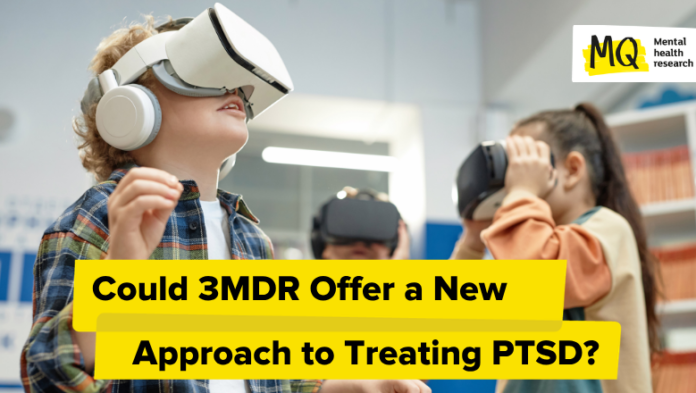
3MDR combines elements of established treatments, including exposure therapy and eye movement desensitisation and reprocessing (EMDR), with walking and an immersive virtual environment.
During treatment, patients walk on a treadmill towards personally selected images connected to their traumatic experiences. Music and other sensory cues are used to help bring memories and emotions to the surface. With support from a therapist, patients then describe their thoughts, feelings and physical reactions rather than avoiding the traumatic material.
The approach is designed to help people engage with memories they might otherwise find difficult to face, while supporting the processing of those memories and reducing their emotional impact.
Testing the therapy across different groups
3MDR was initially developed for military personnel and veterans experiencing combat-related and treatment-resistant PTSD. The new study explored whether it could also benefit public safety personnel, such as police officers, firefighters and paramedics, as well as frontline healthcare workers.
The researchers followed 48 Canadian participants who had clinically significant PTSD symptoms. Seventeen were military veterans or active military members, while the remainder were public safety personnel and healthcare workers. Twenty-two participants met the criteria for treatment-resistant PTSD.
Participants received 3MDR over a period of 10 to 14 weeks. Their PTSD symptoms were assessed before and after treatment, while depression, anxiety, difficulties with everyday functioning and resilience were also measured.