SPOTLIGHT on What Matters
Have you seen our online interactive website, Connecting People Connecting Support online Occupation Matters? This website was designed to help you embed health promoting activities into your daily routine. Whether you are visiting this website because you have been told that you have mild-cognitive impairment, have been given a diagnosis of dementia, or want to keep well by taking steps to maintain good brain health, there is something here for everyone.
We are a group of occupational therapists and designers who have come together to share resources and activities online for people with dementia, their family members and supporters.
We have created a clear accessible structure which mirrored the elements of the Occupational Therapy peer support group, Journeying through Dementia (Craig et al 2023) that includes Chat (ideas to promote conversation) Try (examples of things to engage in) Play (puzzles to promote stimulation and memory) and finally a link to More resources to explore.
The resources and activities you find on this website have been tried, tested and recommended by people with dementia. We have designed, created and uploaded 32 themes with the addition of printable resources for you to download, posting the resources at @ScotJtDementia on a Monday and Friday. However, during the next few months, we are going to share a bit more detail on some of the resources that you could use day to day. In this week blog our SPOTLIGHT is on
WHAT MATTERS.
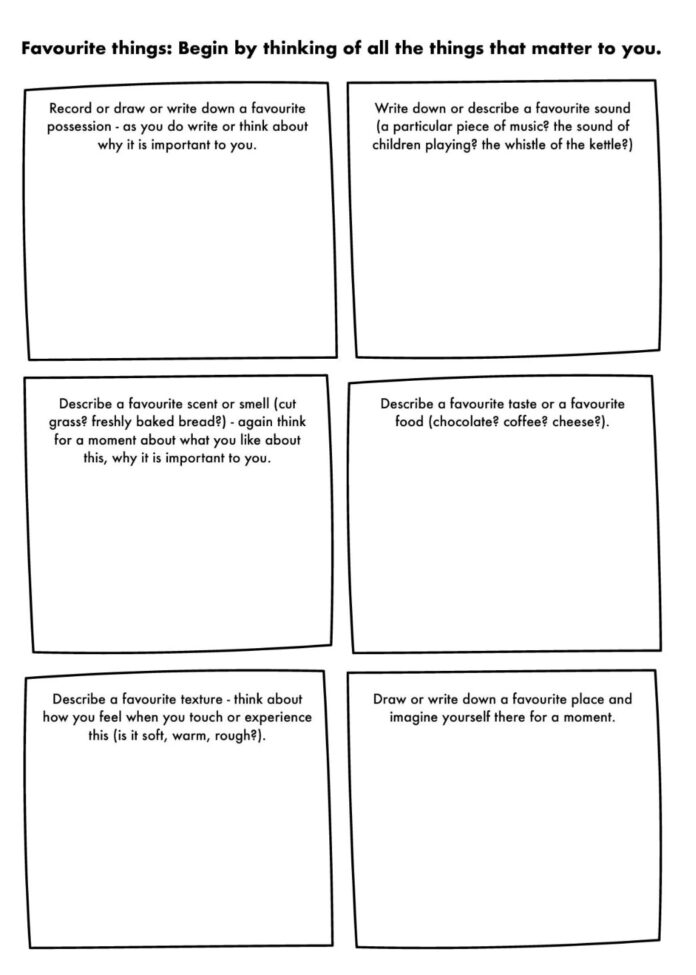
Building things that you find meaningful into your daily routine is really important for mental and emotional wellbeing. Here we invite you to spend time thinking about those activities that offer a sense of purpose and bring enjoyment.
Click here for conversation starters.
- What are the small things during the day that you look forward to?
(for example, a morning cup of tea, coffee? A phone-call from a friend?) - What are the things that motivate you or give you a sense of purpose?
- What brings you joy?
- Imagine that a friend gives you an envelope and says they have organized for you to receive the most amazing present you can imagine. What would that present be?
- What is your heart’s desire?
Click here to try activities.

Try to build activities you find meaningful into your routine. Examples could be: talk to a friend on the phone, watch a favourite TV show, spend 10 minutes a day listening to music, walk around my garden or enjoy a morning cup of tea. Print out the timeline below and plot your daily meaningful activities to help maintain a routine that works for you.
Click here to play a game.
A word search just for you…
Click here for more online resources
Questions for reflection
- what have you liked about the What Matter resource?
- what would make it even better.
We hope that you have enjoyed reading this blog and exploring our interactive website.
Leave any comments or feedback on our resources on the blog comment section or email us at AHPDementia@alzscot.org
Reference
Craig C., Fisher H., Gray A., Hunter E., 2023 Journey through Dementia. in Maclean F., Warren A., Hunter E., and Westcott L., Occupational Therapy and Dementia Promoting Inclusion, Rights and Opportunities for People Living with Dementia. Jessica Kingsley Publishers London.