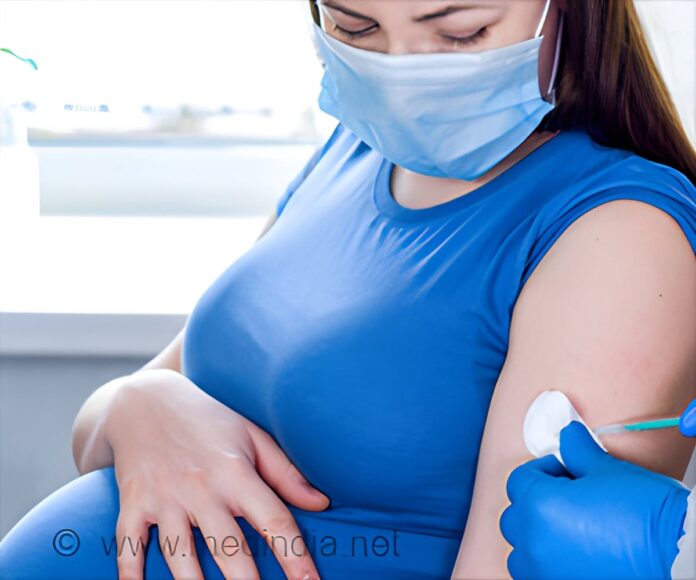
Maternal vaccination at 28 weeks gives infants 85% RSV protection. Even shots 10 days before birth cut hospital risk by 50%.
New clinical evidence has unveiled a powerful defense for newborns against seasonal respiratory threats by RSV (respiratory syncytial virus).
The largest real-world analysis of its kind, presented at the European Society of Clinical Microbiology and Infectious Diseases (ESCMID) Global 2026, confirms that maternal RSV immunization acts as a primary safeguard, slashing infant hospitalization rates by more than 80%.(1✔ ✔Trusted Source
RSV maternal vaccine cuts baby hospital admissions by up to 85%
Go to source
)
The UK Health Security Agency (UKHSA) study emphasizes that timing is everything; administering the RSV vaccine at least 14 days before delivery ensures optimal antibody transfer. This breakthrough is especially vital for preterm infants, who face the highest risk of severe bronchiolitis.
By aligning with WHO guidelines to vaccinate during the third trimester, mothers can provide their babies with an immediate immune shield, drastically reducing the chances of emergency medical care during their most vulnerable first months of life.
Maternal Vaccination 14 Days Before Birth Slashes Infant Hospitalization Risk
RSV is a common virus that can cause severe respiratory illness in infants and young children, including lower respiratory tract infections (LRTIs) such as bronchiolitis and pneumonia.(2✔ ✔Trusted Source
The disease burden of respiratory syncytial virus in Infants
Go to source
)(3✔ ✔Trusted Source
The disease burden of respiratory syncytial virus in Infants
Go to source
)(4✔ ✔Trusted Source
European Lung Foundation (ELF). (n.d.). Acute lower respiratory infections
Go to source
)It is a leading cause of infant hospitalization worldwide, with early-life infection linked to potential longer-term effects including recurrent wheeze or asthma, repeat hospital admissions and impaired lung health.(5✔ ✔Trusted Source
World Health Organization. (n.d.). Global Influenza Programme: Respiratory Syncytial Virus Surveillance
Go to source)(6✔ ✔Trusted Source
World Health Organization. (2025). WHO outlines recommendations to protect infants against RSV – respiratory syncytial
Go to source)(7✔ ✔Trusted Source
World Health Organization. (2025). Respiratory syncytial virus (RSV)
Go to source)
In England, a national maternal RSV vaccination program was introduced on 1 September 2024, offering the Bivalent Prefusion F vaccine to pregnant women from 28 weeks’ gestation.
To evaluate its impact on infant hospitalizations due to RSV-associated LRTI, researchers from the UK Health Security Agency (UKHSA) conducted a retrospective cohort study using linked national datasets, including NHS maternity records, immunization data and hospital and laboratory data.
The analysis included 289,399 infants born between 2 September 2024 and 24 March 2025, representing around 90% of births in England during this period.
Across the study population, 4,594 RSV-associated hospitalizations were recorded. Although infants born to unvaccinated mothers made up 55% of the total cohort, they accounted for 87.2% of hospitalizations.
In contrast, infants whose mothers were vaccinated at least 14 days before birth had a markedly lower risk of hospitalization, with vaccine effectiveness estimated at 81.3%, relative to the unvaccinated group.
Why Early Vaccination is Best: Optimal RSV Protection for All Infants, Including Preterm
Lead author and UKHSA epidemiologist Matt Wilson commented, “As the largest study to date examining the impact of this vaccine on infant hospitalization, these findings provide robust evidence that vaccination offers substantial protection against severe illness in young infants.”
“We found a clear relationship between timing and protection, with effectiveness increasing as the interval between vaccination and birth lengthens, reaching close to 85% when vaccination occurs at least four weeks before delivery.”
He continued, “While at least two weeks are typically needed for optimal protection, infants born 10 to 13 days after vaccination had around 50% fewer hospital admissions compared with those whose mothers were unvaccinated, whereas no reduction was seen when vaccination occurred less than 10 days before birth.”
“This reinforces the importance of vaccinating as early as possible within the recommended window, while also showing that even when given later in pregnancy, some protection is still possible from around 10 days before birth, although earlier vaccination remains preferable.”
The study also investigated outcomes in preterm infants. Vaccine effectiveness was estimated at 69.4% in preterm infants, when allowing at least 14 days between vaccination and birth.
Addressing RSV Bronchiolitis to Lower Infant Mortality in Every Nation
“These findings are particularly important for preterm infants, who are among the most vulnerable to severe RSV infection,” added Wilson. “With sufficient time between vaccination and birth, we saw good levels of protection in these babies. Giving the vaccination early in the third trimester, as recommended by the World Health Organization, could protect most preterm infants.”
Looking ahead, Wilson said that further work is needed to assess the impact of the maternal RSV vaccination program on infant hospitalizations at a population level and to better understand how protection changes later in infancy. He added that UKHSA will be looking at maternal vaccination and monoclonal antibody immunization effectiveness in very preterm infants, for whom both are recommended.
He also emphasized the potential for wider global impact, explaining, “While survival from RSV bronchiolitis is high in high-income countries, it remains a major cause of infant mortality in low- and middle-income countries.”
“These findings underscore the potential benefits of wider rollout of maternal RSV vaccination globally in line with the World Health Organization’s recommendations.”
References:
- RSV maternal vaccine cuts baby hospital admissions by up to 85% – ( https://www.gov.uk/government/news/rsv-maternal-vaccine-cuts-baby-hospital-admissions-by-up-to-85)
- The disease burden of respiratory syncytial virus in Infants – (https://pubmed.ncbi.nlm.nih.gov/37610444/)
- The disease burden of respiratory syncytial virus in Infants – (https://journals.lww.com/co-infectiousdiseases/fulltext/2023/10000/the_disease_burden_of_respiratory_syncytial_virus.13.aspx)
- European Lung Foundation (ELF). (n.d.). Acute lower respiratory infections – (https://europeanlung.org/en/information-hub/lung-conditions/acute-lower-respiratory-infections/)
- World Health Organization. (n.d.). Global Influenza Programme: Respiratory Syncytial Virus Surveillance – (https://www.who.int/teams/global-influenza-programme/global-respiratory-syncytial-virus-surveillance)
- World Health Organization. (2025). WHO outlines recommendations to protect infants against RSV – respiratory syncytial – (virus. https://www.who.int/news/item/30-05-2025-who-outlines-recommendations-to-protect-infants-against-rsv-respiratory-syncytial-virus)
- World Health Organization. (2025). Respiratory syncytial virus (RSV) – (https://www.who.int/news-room/fact-sheets/detail/respiratory-syncytial-virus-(rsv)#:~:text=Respiratory%20syncytial%20virus%20(RSV)%20is,access%20to%20supportive%20medical%20care)
Source-Eurekalert