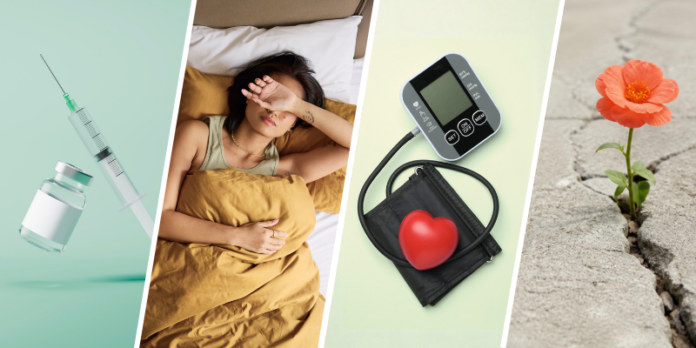
New research is opening up fresh possibilities for living well with bipolar disorder. Five recent studies explain what’s on the horizon and what you can do now.
Key Takeaways
- Long-acting injectable medications may reduce hospitalizations and make treatment easier for those who struggle with daily pills.
- Emerging clinical trials are exploring new treatments for severe depression that haven’t responded to traditional medications.
- Research suggests that managing sleep, blood pressure, and daily routines may help protect brain health.
Imagine you’re deep in bipolar depression, and none of the medications you’ve tried have helped. You and your doctor keep searching for something that works — and slowly, new options are emerging. Across the globe, researchers are testing fresh approaches: Long-acting medications, new treatments for depression that haven’t responded to standard care, and practical strategies for protecting brain and body health along the way. We walk through five recent studies that could help shape the future of bipolar disorder care — and what their findings mean for you today.
Long-Acting Injectables Linked to Fewer Hospitalizations for Mania
Oral antipsychotics can be game-changers, but needing to take a pill every day can leave their benefits out of reach for those who need them most. An international research team compared these daily medications with long-acting injectable antipsychotics, which are given once every few weeks to months. They reviewed health records for more than 2,000 people with bipolar disorder in Hong Kong who had used both at different times to compare how the same person fared on each.
The results, recently published in The American Journal of Psychiatry, showed that during injection periods, people had 15 percent fewer emergency room visits and a 21 percent lower risk of overall hospital admissions. For psychiatric concerns, injectables reduced hospitalizations by 33 percent, cutting the risk of hospital stays for manic episodes almost in half and dropping the risk for mixed episodes by more than two-thirds. Hospital stays for depression, physical health problems, and heart problems were similar on both types of medication, suggesting no increased risk with long-acting injectables.
What This Means for You
- If it’s hard to be consistent with daily oral antipsychotics, long-acting injectables may be a good alternative. Ask your prescriber whether one makes sense for you, especially for preventing mania.
- Early side effects may ease. Stiffness and tremor increased during the first 90 days after starting long-acting injectables, then leveled off.
- Results may not apply to everyone. This observational study found fewer hospital stays overall on long-acting injectables, but it can’t prove cause, and your experience may differ.
Ketamine Shows Promise for Bipolar Depression That Hasn’t Responded to Other Treatments
Ketamine infusions are used for treatment-resistant major depression, but they’ve been studied far less in treatment-resistant bipolar depression. In a randomized clinical trial published in JAMA Psychiatry, Canadian researchers tested its effectiveness and safety in 63 adults with bipolar 1 or 2 disorder whose depression hadn’t improved with at least two medications. Participants were randomly assigned to four infusions over two weeks of either ketamine or midazolam (an active placebo used to keep participants from guessing their assignment). Everyone stayed on their usual mood stabilizer or antipsychotic medications, so this study tested ketamine as an add-on treatment, not by itself.
Depression scores dropped more with ketamine than with the control. About 35 percent of the ketamine group saw their symptoms cut in half, compared with 12 percent of the midazolam group. No one in this trial developed mania, hypomania, or psychosis. Ketamine’s advantage lasted about a week after the final infusion, after which symptoms gradually returned.
What This Means for You
- Ketamine may help when other treatments haven’t. Participants had already tried an average of about six medications during their current depressive episode without significant relief.
- The risk of mania looked low in this setting — but with an important caveat. No one developed full-blown mania or psychosis in this trial. However, everyone remained on mood stabilizers or antipsychotics and was closely monitored throughout. This study cannot tell us what might happen to someone using ketamine on their own or without that close supervision.
- Benefits may fade after treatment stops. Symptoms gradually returned after the last infusion, so ongoing infusions may be needed — and the long-term effects of repeated ketamine use are still not well understood.
- This was a small, short study. Larger, longer trials are needed to confirm these results.
A Note of Caution
Ketamine is not currently approved by the U.S. Food and Drug Administration (FDA) for treating bipolar disorder, and it should never be used on your own. It carries real risks — including dissociation, increased blood pressure, and, at high doses, potential for misuse. If you’re interested, talk with your psychiatrist first, and pursue treatment only in a clinic that offers a thorough mental health evaluation, a confirmed diagnosis, and careful medical monitoring during and after each session. Never seek ketamine outside a licensed, supervised clinical setting.
Sleep Patterns Between Mood Episodes Tied to Memory and Mental Speed
Sleep problems and thinking difficulties often linger between mood episodes, but few studies have measured both directly. In a new study published in the International Journal of Bipolar Disorders, French researchers tracked sleep in 40 adults with bipolar 1 or 2 disorder whose moods had been stable for at least three months. Participants wore an activity tracker for 21 days, then took a 15-minute test of memory, word skills, and mental speed.
Findings linked different sleep patterns to different thinking skills. Taking longer to fall asleep was tied to weaker working memory and slower mental processing. Waking more at night was tied to slower word-finding. But more sleep wasn’t necessarily better: Longer sleep sessions (from first falling asleep to finally waking for the day) were linked to lower overall test scores, and more time actually asleep was linked to weaker word recall.
What This Means for You
- Different sleep problems may affect thinking in different ways. Trouble falling asleep, more nighttime waking, and sleeping too long were each linked to different thinking difficulties, so all are worth mentioning to your doctor.
- Check with your care team before changing sleep habits. Sleeping too little or too much can affect mood.
- More research is needed. This small study found links to specific thinking difficulties, but it can’t show that sleep causes them.
- Sleep hygiene can still be helpful now. Existing research and clinical practice suggest that good sleep habits can support symptom management.
The Connection Between Blood Pressure and Brain Blood Flow in Youths With Bipolar Disorder
Adults with bipolar disorder tend to have higher blood pressure. That’s a heart health risk, and research suggests it may affect brain health, too. To understand whether these are connected for youths with bipolar disorder, Canadian researchers checked blood pressure and used magnetic resonance imaging (MRI) to measure brain blood flow (a marker of brain health) in 144 people ages 13 to 20, including 76 with bipolar disorder. Their findings appeared recently in the Journal of Affective Disorders.
Among youths with bipolar, higher blood pressure was linked to lower blood flow in brain areas involved in mood and thinking. The link was much weaker among youths without the condition, despite similar blood pressure levels. Most readings for both groups were in the normal range, suggesting even modest increases may be meaningful.
What This Means for You
- Blood pressure may reveal clues about brain health in bipolar disorder. For youths with the condition, higher readings were associated with reduced blood flow to key brain areas.
- Future research is needed to clarify whether improving blood pressure could help brain health. This study found a connection, but it can’t show that blood pressure causes these changes or that lowering it would help.
- Ask about blood pressure checks. Because of their increased risk of early heart disease, experts already recommend regular monitoring for young people with bipolar disorder.
What Resilience Looks Like in Bipolar Disorder
Bipolar disorder has no cure, but living well with it is possible, and resilience may help. Resilience means flexibly responding to life’s challenges, according to the American Psychological Association (APA). But general research on resilience and how to boost it may not fit chronic health conditions like bipolar disorder. So researchers in Spain asked 39 adults with bipolar whose moods had been stable for at least six months what resilience means for them and what helps.
Their insights, published in the Journal of Affective Disorders, point to resilience as an ongoing process rather than an endpoint. Participants said mood episodes are part of living with bipolar disorder, not a failure of resilience, and that trying to adapt counts, even when it doesn’t work. They identified acceptance of the diagnosis, self-awareness, routines, humor, and supportive relationships as key, while stigma and rejection made resilience harder.
What This Means for You
- A mood episode doesn’t mean you’ve failed. Participants saw episodes as part of living with an ongoing health condition.
- Build your own toolkit. Steady routines, strategies for managing emotions, and the cultivation of optimism and humor helped participants cope.
- Lean on people who understand. Family, friends, and caring clinicians can help you notice mood shifts.
- Resilience may look different during depression or mania. All participants were between mood episodes.
Editorial Sources and Fact-Checking
bpHope follows strict sourcing guidelines to ensure the accuracy of its content, as outlined in our editorial policy. We use only trustworthy sources, including peer-reviewed studies, board-certified medical experts, people with lived experience, and information from top institutions.