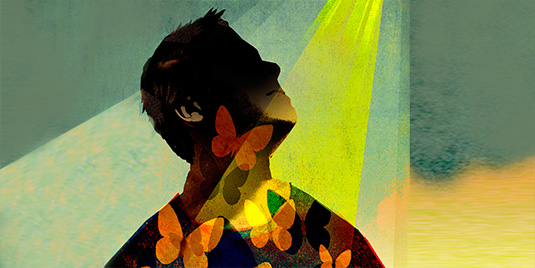
Faith and spirituality can offer meaning and support alongside treatment for bipolar disorder.
Key Takeaways
- Faith and spirituality can shape how some people cope with bipolar disorder while remaining part of a broader treatment plan.
- Spiritual practices can support coping, but shouldn’t replace professional treatment.
- A sudden increase in religious preoccupation may sometimes signal mania or psychosis.
- Supportive faith communities can reduce isolation and provide structure and encouragement.
Marja Bergen found God at her public library.
Born into a Christian family, she went to Sunday School because it was expected. But as a teenager, she turned her back on religion. Years later, following a diagnosis of bipolar disorder after two decades of uncontrolled symptoms, she was ready for a spiritual quest. So she went to the library.
“I looked up ‘God’ and found some books,” recalls Bergen, an author and mental health advocate. “I thought, ‘Okay, I can believe in this. Now what?’ Then I got a hold of the Old Testament and it was like God was something completely new to me. I could see the truth in so many things I read. I just reached out and had to surrender.”
For some people living with bipolar disorder, faith or spirituality can provide comfort, community, hope, and a sense of meaning. Religious beliefs and spiritual practices may help with the emotional challenges of the condition, but they aren’t treatments for bipolar disorder or substitutes for professional care.
How Faith and Spirituality Support Mental Health in Bipolar Disorder
Faith and spirituality — whether formal or informal, and regardless of doctrine — can offer significant strength and comfort when dealing with the mood swings of bipolar. Faith traditions provide a message of hope, a blueprint for living, and a way to interpret the world, which can bring a sense of control and serenity when times are tough.
There’s no lack of general research on the mental health benefits associated with belief in a higher power, including better coping skills, less anxiety and depression, reduced substance abuse, and a happier, longer life span.
In fact, according to a review in the World Journal of Clinical Cases, studies evaluating spirituality/religiousness (S/R) and mental health have been increasing over the past several decades, suggesting that the former has an impact on the latter. While most of the research has centered on depression, suicidality, and substance use, several studies have found reassuring results regarding post-traumatic stress disorder (PTSD), psychosis, and anxiety.
However, researchers note that more specific studies are needed to see how spirituality and religiousness affect mental health, in addition to clinical trials evaluating the impact of S/R interventions on mental health results.
Bipolar Disorder, Religion, and Spirituality: What Research Shows
As for the tie between spirituality and religion among those living with bipolar, studies are limited. But per a review in the Journal of Religion and Health, researchers analyzed 14 quantitative and four qualitative studies for their review.
They discovered that the strongest links to better managing bipolar disorder symptoms were seen in two areas: intrinsic religiosity, which means having deep personal religious beliefs or feelings, and positive religious coping, which is the use of religious practices or beliefs to navigate challenging life circumstances.
Some people believe that faith can definitely contribute to managing their bipolar. Believing in divine forgiveness may help ease guilt over the hurtful actions that can occur during a manic episode, for example, and singing and praying as a group during religious services can provide a sense of community.
One study on religious involvement and bipolar, published in the journal Bipolar Disorders, suggests that prayer or meditation may be an important coping mechanism for those in a mixed state with coexisting symptoms of mania and depression.
Similarly, another study looked at the effect of religious involvement on bipolar disorder. Specifically, investigators examined the results of religious activity and coping behaviors on the course of depression, mania, and quality of life in people with bipolar.
The longitudinal, two-year study involved 158 people with bipolar disorder, and researchers found that religiosity and spirituality may impact the quality of life of those with bipolar disorder over time, including those who are euthymic (in a stable state). Researchers also noted that religiosity and spirituality may improve stability for people with bipolar, contributing to long-lasting well-being.
Other studies, however, show that people with bipolar disorder are less likely to attend religious services. This may be because it can be difficult to concentrate when their mind is racing, or hard to leave the house due to depression.
In a study by Baylor University psychologists, researchers discovered that some families who have a family member with mental health conditions often break off their connection with a religious community.
How Faith and Spirituality Can Help People Feel Less Alone
Many people who participate in communal worship or have a committed personal practice often credit their faith or spirituality with helping them feel more grounded when their world gets shaky.
John T., of Chesterfield, Missouri, draws strength from membership in his nondenominational Christian church, where the pastor is a dear friend and source of emotional support. He also finds comfort in the Old Testament. After reading the Psalms of David during one psychiatric hospitalization, he says he wrote this in the margins: “I’m not alone. I don’t feel forsaken.”
Diagnosed with bipolar disorder in the late 1990s, the former police officer has grappled with thoughts of self-harm, delusions of grandeur, and other symptoms that aren’t completely controllable. After having to turn in his badge because of behaviors associated with his bipolar disorder, John felt he’d lost his identity and direction. Volunteer work at his church, where he helps take care of the grounds and facilitates a support group for people with bipolar, helps fill the gap.
He admits that he sometimes asks God, “Why don’t you just heal me?” Still, the prism of his spirituality and religion allows him to see meaning in having bipolar.
“I actually feel it’s a blessing that I’ve been ‘allowed’ to have this disorder,” he says. “This way, I can help people.”
Reframing Hardship: Bipolar Disorder and Religious Traditions
The Judeo-Christian tradition provides a powerful therapeutic model for overcoming affliction and suffering, according to Harold G. Koenig, MD, founding co-director of the Center for Spirituality, Theology, and Health at Duke University School of Medicine in Durham, North Carolina. Dr. Koenig is a professor of psychiatry and behavioral sciences at Duke whose primary research focuses on studying the effects of religion and spirituality on health.
In Christianity, explains the author of books such as The Healing Power of Faith and Faith and Mental Health, the central role model is Jesus Christ. “He suffered terribly,” says Koenig. “He was rejected, he was ridiculed, he was in pain. To be called a Christian is to be like Jesus, so are you going to expect to have smooth sailing here? Absolutely not.” Koenig adds that, of course, hardship can hold deeper spiritual significance.
“That’s what gives people with bipolar hope,” Koenig adds. “It has meaning. And when it has meaning, it is easier to bear.”
Finding Strength Across Different Faith Traditions
Other faith denominations also have messages about facing life’s hardships. A central tenet of Buddhism, for instance, holds that existence entails suffering, and the Buddha’s teachings offer a means to overcome this inevitable pain.
With little religious background growing up, Thomas M. has turned to both Christianity and Buddhism in adult life.
“When you read a lot of Buddhist and Christian teachings, they’re the same,” says Thomas, a retired supervisor from Upstate New York who lives with bipolar disorder. “They make you feel that there’s a message being given to you, and you just have to listen for it.”
Thomas attends weekly scripture classes and meditation sessions. He also goes to seminars on Buddhist concepts, such as emptiness and impermanence. In addition, he spends time in his yard with a serene Buddha statue when he has trouble sleeping, doesn’t want to do anything, and feels overwhelmed.
“Buddha gave us 84,000 teachings,” Thomas says. “So being with him is always very uplifting, because basically he’s already given you the answer. Yes, you deal with suffering. But so does everybody else. You just have to have compassion.”
How Faith Can Provide Structure and Support
As a Muslim, Sarah A. believes that trials and tribulations are opportunities for growth in this life and rewards in the next.
“I realized that, even though it’s a really hard lesson for me to learn, any tests I go through are a way of getting a blessing or reward from God,” says Sarah from Florida, who was diagnosed with bipolar disorder as a young adult.
Her religion also helped ease the guilt Sarah felt when she accidentally came across a letter written by her mother. In the letter, her mother explained that she’d missed so much work because she had to care for her daughter. Sarah had always assumed her mother simply had taken a lot of vacation days.
Confronted with the effect her condition was having on her family, Sarah reminded herself of Quran scripture, the main religious text of Islam. In it, the prophets — who Sarah describes as “the best people who ever entered this earth” — bear great trials.
Islam also provides structure in Sarah’s life, although mood shifts can make her faith practice challenging. When she’s feeling manic, it’s difficult to concentrate on the five daily prayers Muslims are required to perform; when she’s sluggish and sleeping a lot, it’s difficult to even get started.
When her husband filed for divorce after only two months of marriage, attributing the breakup to her mental health challenges, Sarah felt too depressed to pray at all. When she’s troubled by symptoms, however, her connection to a religious community helps her cope.
“There’s a saying in our religion that ‘believers are all one body; when one part is ill or suffering, the entire body suffers,’” Sarah says. “I have a really good support system of Muslim friends and counselors I can turn to. The rope of Islam has always been there for me to grab onto.”
Using Spiritual Practices to Help Manage Bipolar Symptoms
In addition to the comfort of scripture and the support of a faith community, belief in a divine power can positively affect emotional well-being.
Research from Rush University Medical Center in Chicago suggests that, for individuals with major depression or bipolar disorder, believing in a concerned God can improve their response to medical treatment. The positive response to medication was specifically tied not just to belief in a supreme being, but in a supreme being who cared.
Similarly, University of Toronto psychologists discovered that belief in God can help diminish anxiety and stress. Their work, published in Psychological Science, showed distinct brain differences between believers and non-believers. The stronger the religious zeal, the less activity there was in the portion of the brain responsible, in part, for self-generated negative thoughts and psychological pain. As a result, the researchers concluded, believers were less likely to worry about facing uncertainty.
Lead researcher Michael Inzlicht, PhD, a professor of psychology at the University of Toronto Scarborough in Canada, supposes “this could mean those with bipolar disorder would have a calming effect, as well, even if it gives you one extra tool to help regulate your own emotions.”
In some circumstances, however, religious beliefs can inflict distress. Bergen says people with mood disorders may feel guilty that their faith isn’t enough to bring them “a life of peace and joy.”
“They feel that something is ‘wrong’ between them and God, that they’re not praying enough or believing enough, or that the Devil is getting a hold of them,” she explains.
Bergen wrote A Firm Place to Stand to help those with mood disorders who struggle to fit in with their faith communities. In the book, she describes her transformation from an insecure, withdrawn woman to a leader, activist, and founder of Living Room, a Christian peer support group that has several chapters in Canada and the United States.
Bergen says Living Room provides people with depression, anxiety, and bipolar disorder a place to freely and comfortably discuss both their faith and mental health challenges. Secular support groups often steer clear of religious topics, while church groups offer varying interpretations of what it means to live with a mental health condition.
She chooses to see her bipolar disorder as “a gift, although it’s a very painful gift,” she says. “Spiritually, it has made me stronger, because I’ve had to rely on God so much. And it’s given me meaning and purpose in life — to reduce the stigma in the church. I don’t think I’d be doing as well emotionally right now if I didn’t have this work to do.”
Understanding Hyperreligiosity in Bipolar Disorder Mania
Faith can be a meaningful source of strength, but religious thoughts and experiences can also become intertwined with bipolar symptoms. Hyperreligiosity — an unusually intense preoccupation with religious beliefs, ideas, or experiences — can occur during mania, particularly when psychotic symptoms are present. It may include believing that one has a special religious role, receiving messages from God, or having an extraordinary spiritual connection.
Angela B., who was diagnosed in her twenties, remembers one hospitalization in which she would sneak out of her room at night to pray with the other patients, introducing herself as “a messenger of God.” Looking back, the Michigan woman realizes that this occurred during a manic episode, but she says it felt “extraordinary to be so much in touch with God and Jesus.”
Strong religious faith itself isn’t a symptom of bipolar disorder. What may signal concern is a marked change from a person’s usual beliefs or behavior, particularly when it occurs alongside other symptoms of mania or psychosis.
Balancing Bipolar Disorder and Religion: Faith in Recovery
Angela says that when she gets depressed, “I get wrapped up in worry and paranoia, and I lose touch with my faith.”
She rolls up in a ball on the couch, wanting to hide, and feels disconnected from her family members. Years ago, this impacted her three children, too. “I basically just cared for their functional needs,” she says. “But I wouldn’t talk to them, or caress them, or act like their mother. I was like a ghost around the house.”
During those times, she began relying more on her spiritually like-minded friends, with their prayers, phone calls, and scripture-filled notes. One of her favorites is Psalm 55:22: “Cast your cares on the Lord and He will sustain you; He will never let the righteous fall.”
Her faith also gives her a sense of purpose. “Putting your hands into God’s hands is a strong component of surviving this illness,” says Angela, who even started a support group at her church. “I don’t know how people do it without Him.”
The Role of Spirituality in Professional Bipolar Treatment
Mental health professionals may consider a person’s faith or spiritual beliefs when exploring what provides meaning, support, and comfort. They may also need to distinguish established beliefs from religious thoughts or behaviors that could be related to bipolar symptoms.
“Respecting the spiritual and religious beliefs of those who live with mental health conditions actually opens the way to greater meaning, support, and even healing,” Nancy Kehoe, PhD, a psychologist and nun, writes in her book, Wrestling with our Inner Angels: Faith, Mental Illness, and the Journey to Wholeness. Dr. Kehoe is also a part-time assistant clinical professor of psychology in the Department of Psychiatry at Harvard Medical School.
Kehoe says clinicians may hesitate to explore spirituality for several reasons, including uncertainty about how deeply to address it, their own religious history, and concern that a person’s religiosity could be related to symptoms.
“Faith has to do with hope,” says Reverend Patricia Murphy, PhD, a board-certified chaplain and ecclesiastical endorser of Chaplaincy and Specialized Ministries.
“If clinicians can understand that religion can be a source of strength and positive self-esteem, then they’ll be able to help foster the knowledge that the divine is going to be there, even in the darkest moments,” she explains. “That’s what a lot of people need.”
Editorial Sources and Fact-Checking
bpHope follows strict sourcing guidelines to ensure the accuracy of its content, as outlined in our editorial policy. We use only trustworthy sources, including peer-reviewed studies, board-certified medical experts, people with lived experiences, and information from top institutions.
SOURCES +
- Lucchetti G et al. Spirituality, Religiousness, and Mental Health: A Review of the Current Scientific Evidence. World Journal of Clinical Cases. September 16, 2021.
- Jackson DC et al. Bipolar Disorder, Religion, and Spirituality: A Scoping Review. Journal of Religion and Health. January 21, 2022.
- Cruz M et al. The Relationship Between Religious Involvement and Clinical Status of Patients With Bipolar Disorder. Bipolar Disorders. February 1, 2011.
- Stroppa A et al. Religiosity, Depression, and Quality of Life in Bipolar Disorder: A Two-Year Prospective Study. Brazilian Journal of Psychiatry. February 15, 2018.
- Rogers EB et al. The Effects of Mental Illness on Families Within Faith Communities. Mental Health, Religion and Culture. May 25, 2011.
- Murphy PE et al. Belief in a Concerned God Predicts Response to Treatment for Adults With Clinical Depression. Journal of Clinical Psychology. May 19, 2009.
- Inzlicht M et al. Neural Markers of Religious Conviction. Psychological Science. March 2009.
UPDATED: Printed as “Hope, Religion, Faith”, Fall 2011