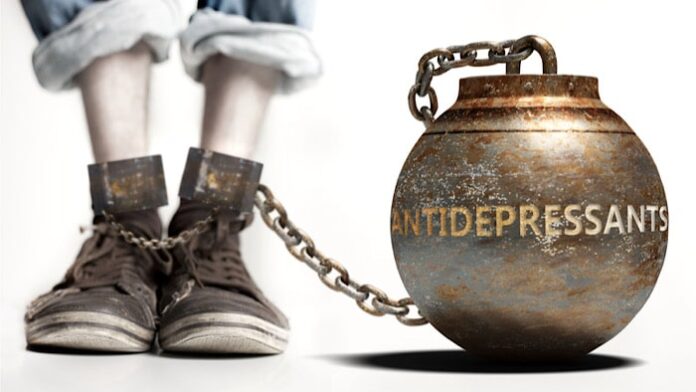
Someone’s had enough: “I’m just looking for some help with my depression. I’ll bet finding the right medication would be easier if I had high cholesterol. So, are antidepressants bad for you? I don’t know who or what to believe anymore.” She may find reviewing 10 deceiving claims about them helpful.
Antidepressants work by numbing emotions: On the contrary, based on the use of the gold standard measure of emotional blunting — the Oxford Depression Questionnaire — it is clear that successful antidepressant treatment is correlated with reduced levels of emotional numbing during the course of treatment.
Introduction
Psychiatric medications: for many of us, the ultimate crapshoot. Prescribing antidepressants, antipsychotics, mood stabilizers, and benzodiazepines sure isn’t an exact science,
Of course, “good or bad for you” opinions abound — a good number of them motivated by social, political, and corporate agendas.
Antidepressants
Our focus is going to be on antidepressants (ADs). And our information source is the Psychiatric Times article “Debunking the Top 10 Misleading Claims About Antidepressants.” Dated September 14, 2026, it was written by two psychiatrists…
Roger S. McIntyre, MD, FRCPC: professor of psychiatry and pharmacology at the University of Toronto and head of the Mood Disorders Psychopharmacology Unit at the University Health Network in Toronto.
Ronald W. Pies, MD: professor emeritus of psychiatry and a lecturer on bioethics and humanities at the State University of New York Upstate Medical University in Syracuse; sbd clinical professor of psychiatry at Tufts University School of Medicine, Boston.
Let’s see what they have to say about some common antidepressant claims.
Are antidepressants bad for you? 10 deceiving claims

According to McIntyre and Pies, “sensational” claims of harm caused by ADs have found their way into the press.
Right out of the gate, Dr. McIntyre and Dr. Pies acknowledge that the safety and efficacy of psychiatric medications, especially ADs, are being questioned at the highest levels of the US Departmental of Health and Human Services (HHS).
According to McIntyre and Pies, “sensational” claims of harm caused by ADs have found their way into the press. As a result, medically unsupervised lay groups claiming to provide safe methods of tapering ADs have been increasingly active.
As you may imagine, the good doctors have a problem with that. So they compiled.snd published their debunking article, referring to the claims as “misleading or simplistic at best.”
Let’s take a look at their list of 10 deceiving claims. Now, their work is comprehensive and detailed. I considered condensing it, but crucial information would be omitted. So you’re going to get it all, which makes for a very long article.
I recommend skimming it for information you find relevant, and using it for ongoing reference. There is a link to the original article at the end. You may want to review the author’s study citations.
Let’s go…
All antidepressants have the same risks and adverse effects.
McIntyre and Pies note that when criticizing ADs, especially in the press, all types — e.g., selective serotonin reuptake inhibitors (SSRIs), serotonin and norepinephrine reuptake inhibitors (SNRIs), monoamine oxidase inhibitors (MAOIs) — are usually grouped together. And it’s common for critiques to focus on SSRIs — e.g., Zoloft, Celexa, Lexapro — even though several of them don’t entirely work on inhibiting serotonin reuptake. Most notably, bupropion (Wellbutrin), which targets norepinephrine and dopamine, is rarely discussed. Mind you, it has very few of the adverse effects, such as sexual dysfunction and emotional blunting, associated with the SSRIs and other serotonergic (liberating, activated by, or involving serotonin in the transmission of nerve impulses) agents.
Antidepressants work by numbing emotions
It’s been claimed that ADs work by “numbing emotions.” Though it’s true that decreased emotional responsiveness can occur in a significant proportion of patients taking serotonergic agents; however, there is no credible evidence that emotional blunting is the active mechanism underlying antidepressant effects. On the contrary, based on the use of the gold standard measure of emotional blunting — the Oxford Depression Questionnaire — it is clear that successful antidepressant treatment is correlated with reduced levels of emotional numbing during the course of treatment.
Antidepressants are just expensive placebos.
Few experts would argue that currently available ADs are robustly effective for all patients. Equally few specialists would endorse the common claim in the popular press that “ADs work no better than no treatment at all,” or “ADs are no better than a sugar pill.” As a comprehensive review observed, “This conclusion represents an incorrect interpretation of the data, which may have the dangerous public health consequence of dissuading patients with depression from accessing treatment.”
McIntyre and Pies shared the following empirical data. There’s a lot of it, but it’s important…
In a meta-analysis reviewing 522 trials representing over 116,000 patients, the study showed that all 21 antidepressants studied outperformed placebos. However, the standard mean difference (SMD) of 0.30 was small and corresponds to a modest 2-point reduction on the 17-item Hamilton Depression Rating Scale (HAM-D17). The clinical significance of this small reduction has been challenged.
It is widely recognized that the nonspecific effect of ADs is very large, accounting for at least two-thirds of the response to the medication. Rutherford and Roose observed that “in antidepressant trials for adults, placebo response averages 31% compared with a mean medication response of 50%.” This means that the active pharmacologic effect gets an extra 19% of the patient population better than would be the case with placebo. Similarly, Stone et al, examining individual participant data, estimated that about 15% of the patient population experienced a large, clinically significant response specifically attributable to the active drug. Both studies highlight that while the overall response to medication is high, the specific pharmacological benefit applies to a distinct minority of the treatment group. However, if we apply the 15% to 19% specific drug benefit figure to the US population receiving antidepressant treatment — roughly 45 million individuals — it means that about 6.75 to 8.55 million individuals are experiencing a large, potentially life-altering reduction in depressive symptoms (an average 16-point drop on the HAM-D). This is by no means a trivial outcome from the public health perspective.
Notably, the Stone et al study relied on the HAM-D17 as its standard metric. When a version of the Hamilton Depression Rating Scale is used that evaluates core depressive symptoms (the HAM-D6), the drug-placebo difference rises from a modest approximate 0.30 on the HAM-D17 up to a clinically meaningful approximate 0.40 or higher on the HAM-D6.
Finally, it is worth noting that placebo studies do not merely hand participants an inert pill and push them out the door. In a standard phase 3 antidepressant trial, patients with depression in the placebo group are provided as many as 8 to 12 hours of personal contact and support with professional staff.
Antidepressants are addictive.
Despite a widely publicized statement likening ADs to heroin, there’s no credible evidence that AD use shows the key features of genuine addiction — SSRIs score no higher than a placebo on standard human abuse potential scales. And there’s no conclusive evidence showing that the pathophysiological mechanisms underlying SSRI/SNRI withdrawal symptoms are similar to those in alcohol, opioid, barbiturate, or benzodiazepine withdrawal.
Although it is often claimed that tolerance develops to long-term use of antidepressants, this is not consistent with the most stringent definition of tolerance (ie, requiring higher doses of a drug to achieve the same clinical effect). Unlike with genuine substances of abuse, true tolerance is not commonly observed with antidepressants. The related phenomenon of tachyphylaxis — defined as loss of a previously effective antidepressant treatment response despite staying on the same drug and dosage — observed in about 25% of patients with unipolar depression. In our experience, the most common factor in loss of antidepressant response is poor adherence.
Antidepressants increase suicidal behavior.
This literature is muddied by the use of the ambiguous term suicidality, which conflates suicidal ideation with suicidal behavior. The black box warning on all antidepressant medications highlights an increased risk of suicidal thoughts and behaviors in children, adolescents, and young adults (up to age 24), but there is evidence that the warning may actually have backfired by reducing necessary prescriptions and possibly increasing suicide attempts in this age group.
There is no credible evidence that antidepressants increase completed suicide or suicide attempts in older populations. In fact, the very same black box warning notes that antidepressants are associated with a reduction in suicidality (suicidal thinking and behavior) in adults aged 65 and older, compared with a placebo. In addition, macro-level prescription data reveal that increases in prescriptions for SSRIs and other new-generation non-SSRIs are associated with lower suicide rates.

Nice job — you’re at the halfway point.
Antidepressants provoke mass violence.
Careful reviews have concluded that there is no established causal link between antidepressant use and mass violence, including school shootings. Thus, Knoll and Pies concluded that “…there is little or no evidence showing that perpetrators of mass shootings are more likely than those in the general public to have used, or to have been prescribed, antidepressants prior to the shooting.” Given that a subset of school shooters with nonspecific emotional disturbances may receive psychiatric medications, confounding bias may lead to the unwarranted conclusion that the medication caused the shooter’s behavior.
Antidepressants are overprescribed.
This claim oversimplifies a complex pattern of antidepressant prescription in the US, in which differences in study methods and health care systems may lead to differences in frequency and duration of prescribing. To be sure: AD use and prescribing have increased significantly in the past 30 years. Most of this increase is due to prescribing by primary care providers, not psychiatrists, and reflects a growing pool of patients kept on antidepressants for prolonged periods.
Increased use has raised concerns about overprescribing for patients with less severe depression and those who may not need medication for the long-term. In the 2010 National Survey on Drug Use and Health,, only 44% of respondents using antidepressants reported experiencing a major depressive episode during the past year. However, as Simon et al point out, “Cross-sectional community surveys…may not accurately assess indications for antidepressant treatment…[because] more remote episodes of depression are often under-reported.” In their own study of outpatients in 4 large health care systems, Simon et al found that “…prescribing of antidepressant medication for minimal or mild depression is much less common than suggested by previous reports,” amounting to no more than 18% of patients.
Furthermore, Thornicroft et al found that only a small minority of participants with major depressive disorder (MDD) received minimally adequate treatment (pharmacotherapy or psychotherapy), amounting to 1 in 5 people in high-income and 1 in 27 in low-/lower-middle-income countries. Anf although as many as 1 in 6 Americans are taking an antidepressant, a large proportion are likely undertreated, as they do not meet criteria for minimally adequate treatment.
There is also evidence of underprescribing in some minority populations. For example, among individuals with Patient Health Questionnaire-9 scores equal to or greater than 10, indicating moderate to severe depressive symptoms, only 13% to 15% of Black and Asian American respondents were currently receiving antidepressants, compared with 27.3% of White respondents.
Finally, it is notable that most US adults with depression receive no psychiatric treatment at all: Only 28.7% of adults who screened positive for active depression received any psychiatric treatment during the survey year.
Antidepressants mask the root causes of depression.
This claim assumes that we can reliably determine the root causes of depression for any given patient, whereas depression is often determined by myriad biopsychosocial causes. As a recent comprehensive review concluded, the determinants of depression include “…the microbiome, dysregulation of the hypothalamic-pituitary-adrenal axis, inflammatory reactions, the kynurenine pathway, as well as psychological and social factors.” Furthermore, there is no credible evidence that antidepressants interfere with a psychodynamic understanding of depression, or that combining medication with psychotherapy interferes with the latter. On the contrary, several studies find the combination superior to either treatment alone for moderate to severe MDD.
Antidepressants frequently provoke withdrawal syndromes.
Unfortunately, we lack controlled studies of the frequency, severity, and duration of antidepressant withdrawal symptoms, using both (1) the standardized assessment tool, the Discontinuation-Emergent Signs and Symptoms checklist, and (2) long tapering periods (>2 months). The best available data do not support the claim that withdrawal reactions are usually serious or very prolonged (>2 months). However, a small minority of patients do experience severe and prolonged withdrawal symptoms, which can be very distressing. Much depends on the specific antidepressant, the dose, the tapering period, and possibly the duration of drug exposure. While it is difficult to find a well-validated average duration of withdrawal symptoms, a systematic review by Fava et al concluded that “…symptoms typically ensued within a few days from discontinuation and lasted a few weeks…”; however, “…late onset and/or a longer persistence of disturbances occurred as well.”30
A 2019 study by Henssler et al concluded that withdrawal manifestations are usually mild, and more serious manifestations are rare. These findings contrast with uncontrolled studies and online surveys, which suggest much higher incidence rates of antidepressant withdrawal effects, as well as more severe symptoms. Subsequently, Henssler et al performed the first meta-analytic assessment of the incidence of antidepressant discontinuation symptoms and of placebo effects. Their study found that — considering nonspecific (“nocebo”) effects — the incidence of antidepressant discontinuation symptoms was approximately 15%, affecting about 1 in 6 to 7 patients who discontinue their medication. About 1 in 35 patients (roughly 3%) were found to have severe antidepressant discontinuation symptoms. Antidepressant agents differed substantially in the risk of inducing withdrawal symptoms. Within the SSRI/selective SNRI group, discontinuation symptoms were most frequently observed and most severe with desvenlafaxine, venlafaxine, and paroxetine.
Clinical experience suggests that discontinuation after very long antidepressant exposure (> 2 years) increases the risk of serious withdrawal reactions, though this has not been borne out in several meta-analyses. Similarly, clinical experience almost uniformly suggests that a very gradual taper (eg, over 2-4 months) achieves better outcomes than a very rapid taper, though results from one recent study did not confirm this. Some patients who have great difficulty discontinuing the antidepressant may require hyperbolic tapering.35 Others may benefit from the use of the long-acting agent fluoxetine as a bridge to complete the discontinuation of a shorter-acting agent.36 A recent publication by the American Society of Clinical Psychopharmacology has provided guiding principles regarding how and when antidepressant discontinuation should be considered.
Antidepressants are not effective long-term.
For many antidepressants, we have limited evidence for long-term recurrence prevention beyond 2 years. This has led some critics to infer, fallaciously, that antidepressants are not clinically effective past the acute phase of treatment. Not surprisingly, the situation is more complicated. There is ongoing debate as to how maintenance and recurrence prevention studies should be conducted and whether they should use an enriched design. Some have argued that the latter tends to skew the results in favor of the active drug. And although it is clear that antidepressants prevent depressive relapse, it is more difficult to demonstrate the prevention of actual recurrence of depressive episodes after a patient has been in remission for 6 months or longer.
In our experience, for many patients with 3 or more episodes of serious major depression, long-term antidepressant maintenance (2 years or longer) clearly helps prevent depressive relapse, and may also prevent recurrence after 6 months. This is consistent with the 2023 Canadian Network for Mood and Anxiety Treatments report.
The doctor’s Concluding Thoughts
Currently available antidepressants are far from ideal medications, and SSRIs/SNRIs carry a substantial adverse effect burden. However, exaggerated claims of harm from antidepressants have unduly alarmed and misinformed the general public. This threatens the health and well-being of the substantial subset of patients who significantly benefit from antidepressant treatment.
Make comfortable decisions
Psychiatric medications: for many of us, the ultimate crapshoot. Like our friend above, we can become quickly frustrated by the decision-making and trial and error of it all.
We want, need, and deserve help —. not “I don’t know who or what to believe.” As it applies to antidepressants, I hope this information helps you or someone you know make comfortable decisions.
Be sure to head over to Psychiatric Times for the original article. Again you’ll find study and quotation citing. “Debunking the Top 10 Misleading Claims About Antidepressants.”
And please review the Chipur emotional and mental illness info and inspiration titles on the articles page — or by category below, right sidebar on desktop. We’ll both appreciate it.

After a decades-long wrestling match with emotional and mental illness, Bill finally found his professional and personal passion – life’s meaning. He wanted to lend a hand to those struggling as he did, so off he went to grad school at age 49 and earned his counseling credentials. He continues his service through Chipur and other projects.