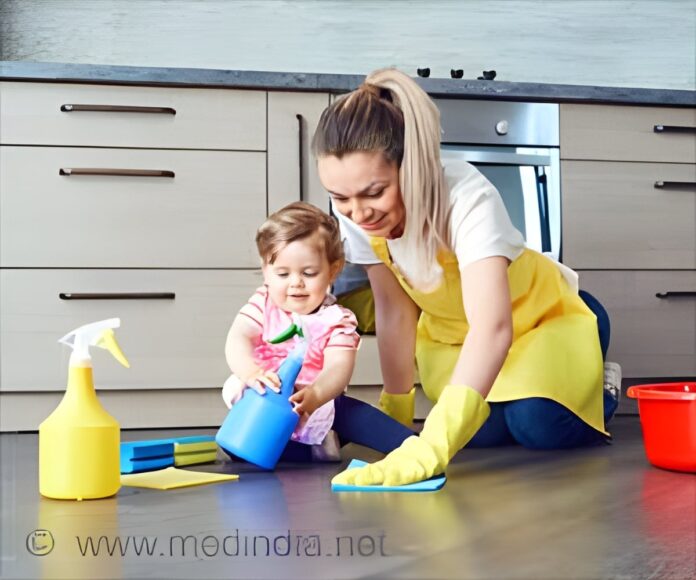
Household cleaning products may keep homes spotless—but they can pose serious risks to young children. Keeping household cleaners out of children’s reach can significantly reduce the risk of injury.
Household cleaning products continue to be a major cause of injury among young children. Despite safety improvements, they still lead to many preventable emergency visits each year.
Cleaning Products Continue to Pose a Risk to Children
Rising risks from household cleaning products like detergent packets and calls for stronger safety packaging and prevention measures.
Researchers from the Center for Injury Research and Policy at Nationwide Children’s Hospital found that between 2007 and 2022, more than 240,800 young children (age five and under) in the U.S. visited emergency departments due to injuries from household cleaning products—about one injury every 35 minutes. Bleach and detergents were the most common causes of these injuries.
Making Spray Bottles and Everyday Containers Safer for Little Hands
In a new study, researchers analyzed 16 years of data and called for stronger product packaging standards, with an emphasis on ensuring that spray bottles and other commonly accessible containers meet child-resistant packaging requirements.
The findings of the study are published in the journal Pediatrics (1✔ ✔Trusted Source
Cleaning Product-Related Injuries Treated in US Emergency Departments: 2007-2022
Go to source).
Since their previous paper on household cleaning product-related injuries 19 years ago, new cleaning products have entered the consumer market, most notably single-use laundry and dish detergent packets, which were introduced in 2012. These packets were rapidly identified as a primary hazard to children.
Detergent Packets Remain a Top Threat to Children
Detergent packets were a main source of injury to children in this study, accounting for 33% of injuries. The rate of injuries associated with packets increased rapidly after their introduction in 2012, peaked in 2015, and then declined through 2022. “The post-2015 decline may be due to the implementation of safety measures, including child-resistant and opaque containers and delayed-dissolving, bitter-tasting packet films,” said Rebecca McAdams, MPH, chief research associate in the Center for Injury Research and Policy, and lead author of the study. “Although the rate of injuries associated with packets decreased, they remained the leading cause of overall detergent injury rates in 2022.”
Why Young Children Face the Highest Cleaning Product Risks?
Children aged 1-2 years were at the highest risk for household cleaning product-related injuries. “This heightened vulnerability is likely due to developmental factors,” said McAdams. “Young children explore their world by putting things in their mouth, but they can’t read labels or recognize the potential danger of these products.”
Spray Bottles Continue to Pose a Child Safety Risk
The second change since their previous paper is that we now better understand children’s ability to operate dispensing systems such as spray bottles. “Our previous analysis identified spray bottles as the primary source of household cleaning product-related injuries to young children from 1990-2006, likely due to their availability in homes and ease of use,” said Lara McKenzie, PhD, principal investigator in the Center for Injury Research and Policy and senior author of the study. Over that time, the number of injuries associated with spray bottles remained consistent while the number of injuries associated with other storage sources such as kitchenware or bottles and containers decreased.
In this study, spray bottles remained an important source of injury for children, accounting for 28% of all injuries. Most injuries from products in spray bottles occurred to the eyes. Spray bottle-related injuries often resulted in chemical burns, poisoning, or dermatitis and conjunctivitis. Nearly one-quarter of these injuries occurred when another person sprayed the child with the product.
Among all product types, the most common way children were injured was by ingesting the product. Poisoning was the most common diagnosis, and nearly all poisonings resulted from ingestion of a product. The hospitalization rate was very high: 7%, increased from 5.5% in the previous study.
Overall, bleach and detergents were the most common product types involved in these injuries. The rate of bleach-related injuries remained stable, but high, over time. Bleach was most often packaged in spray bottles, while detergents were frequently dispensed as packets.
Safety First: Simple Ways to Prevent Cleaning Product Injuries
Parents and caregivers can help children stay safer by following these tips:
- Store safely. Store household cleaning products and detergents up, away, and out of sight of young children, preferably in a locked cabinet. Close containers and put all cleaning supplies and any chemicals away immediately after every use.
- Stay original. Keep all household cleaning products and detergents in their original containers. When buying products, look for child-resistant containers for an extra layer of protection.
- Save the national Poison Help Line number in your cellphone and post it near your home phones. Call immediately if you think your child has come into contact with a household cleaning product or other dangerous product. You do not need to wait for symptoms to develop to call.
Data for this study were obtained from the National Electronic Injury Surveillance System (NEISS) database, which is maintained by the U.S. Consumer Product Safety Commission. The NEISS database provides information on consumer product-related and sports- and recreation-related injuries treated in hospital emergency departments across the country.
Reference:
- Cleaning Product-Related Injuries Treated in US Emergency Departments: 2007-2022 – (https://publications.aap.org/pediatrics/article-abstract/doi/10.1542/peds.2025-074551/206975/Cleaning-Product-Related-Injuries-Treated-in-US)
Source-Eurekalert