I have been thinking a lot about setbacks lately. Not just my own (although of course, that’s taking up the majority of my time), but the very concept of them. It’s a thought I’m still coming to terms with, but I definitely think about setbacks more often than I would like – and it’s those consequences that I’d like to focus on today.
It’s safe to say that for the most part, people don’t like facing setbacks. Whether these setbacks happen because of something they’ve done or something out of their control, it can be hard for someone to accept this truth. Physically, mentally, emotionally – setbacks happen in all areas of our lives, and they can have impacts that last days, weeks, months, or even years. Having an anxious mind, I guess it’s not so surprising why I might ruminate on this topic, now is it?
If I was thinking off the top of my head, without slowing down, I’d probably tell you I face setbacks constantly. Every day, it feels like, something new happens that feels like a setback. Is it actually a setback? Not always. But when I am going through a challenging time, each minor problem feels like a massive setback. The stakes get higher, the challenge becomes more all-encompassing, and it becomes hard to focus on anything else. And let me tell you, it is not good for your mental or physical health to constantly think about one small aspect of your life, and it’s impact on you.
But I don’t think I’m alone in feeling this way. In fact, I know I’m not. There is a strong link between depression and rumination in particular – in fact, studies show that people who tend to ruminate develop depression four times as often as those who don’t. Focusing on setbacks is not good for our mental health in general but for some people pre-disposed to negative thoughts or instances of depression, it can have far-reaching consequences.
Which brings me back to my main issue with setbacks – or at least, how I currently think about them. I don’t like how I view setbacks, and I’d like that to change. Reading this post on Psychology Today about turning small problems into big issues definitely helped. Because every time I have a small problem, or an issue I perceive as a setback, I forget about all the progress I’ve made. It’s as if the past few weeks, months, or years, didn’t happen. There’s a part of me that thinks this type of thinking is in line with toxic positivity, or always “looking on the bright side,” but I think that’s just a coping mechanism I’m telling myself so I can continue to ruminate.
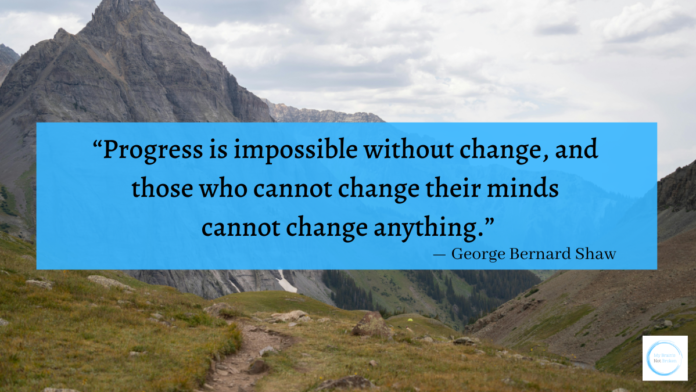
The fact is, I’ve made progress. Setbacks don’t tend to happen unless you have made progress – otherwise, why would it feel like a setback? Reminding ourselves of our progress isn’t just putting a positive spin on things; it’s bringing facts and logic to the table. I might feel like a failure because I did not accomplish this thing, but that does not negate the progress that I can point to that has gotten me to that point. And when I think about the progress I’ve made – particularly when it comes to my mental health challenges – I can’t help but admit that I have grown by leaps and bounds. And once I acknowledge that growth, it’s much harder to ruminate and feel like a failure.
Whether you view this post as a pep talk, a reminder, or a discovery of sorts, I hope that you can take what I’ve learned here and apply it to your own life. Next time you face a setback (maybe start with a minor one? I don’t know, I’m clearly not an expert on this), try and remember where you started. Consider the progress you’ve made, and try and be gentle with yourself. It’s easier said than done, but when it happens, it can turn your whole day around.
And before you get discouraged, please know I’m working on this, too. We’re all a work in progress – and it’s not a bad thing to think about that progress from time to time.