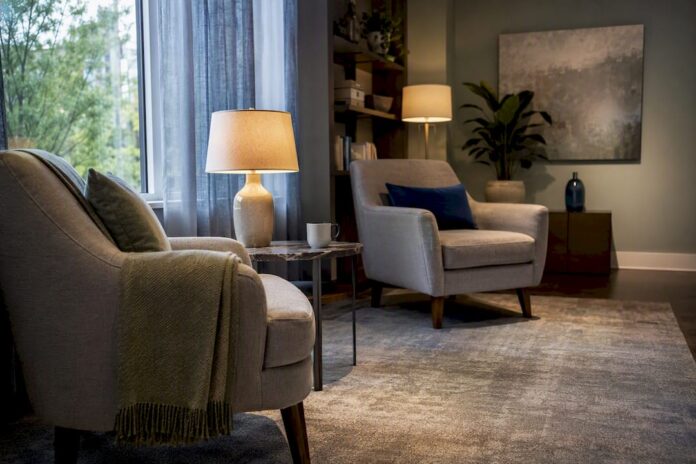
The most calming therapy offices get three things right before anything else: seating that gives clients a sense of safety and choice, warm layered lighting instead of harsh overheads, and a soft, nature-influenced palette. The Devlin and Nasar research on office perception backs this up, and one biophilic touch, a plant or a landscape print, rounds it out. Everything else in this guide builds on those four moves.
TL;DR:
- Prioritizing supportive seating, layered warm lighting, and natural colors creates a calm environment that fosters client safety and comfort.
- Organizing the space with visible but unobtrusive personal touches, maintaining order, and avoiding clutter reinforces professionalism and attentiveness.
- Incorporating plants, nature imagery, and gentle textures lowers client anxiety and promotes relaxation through biophilic design principles.
- Soundproofing, scent control, and accessible features ensure privacy, reduce sensory overload, and accommodate diverse client needs.
- Budget-conscious sourcing of furniture, lighting, and decor, along with intentional personalization, builds a welcoming space that reduces stigma and encourages openness.
Table of Contents
Key Decor Elements to Prioritize First
Clients form an impression of you before you say a single word. A study analyzing responses to 30 photographs of therapy offices found that spaces rated as soft, personalized, and orderly earned higher marks for the therapist and the environment alike. That’s not a coincidence. A room that looks cared for signals that the person running it is paying attention, and clients pick up on that fast.
Start with color. Sage green, dusty blue, and warm beige read as calm without feeling cold or clinical. If you’re renting and can’t repaint, an accent wall or a set of textiles (throw pillows, a woven blanket, a rug) gets you most of the effect without a landlord conversation.
Materials matter almost as much as color. Natural-colored wood with visible grain tends to feel warmer than glass or chrome, and the research on healing environments backs that preference up consistently. Matte surfaces beat glossy ones for the same reason: they absorb light instead of throwing it back in the room.
Orderliness doesn’t mean sterile. A few practical rules:
- Keep visible surfaces (desk, side tables) clear of paperwork clients could glimpse.
- Store files and supplies out of sight, even in a small office.
- Leave one or two personal touches (a diploma, a small piece of art) rather than a wall full of them.
Statistic Callout: In the photo-based study cited above, offices scoring high on softness, personalization, and orderliness consistently outperformed sparse or cluttered rooms in how clients rated both the space and the clinician using it.
Seating and Layout That Support Safety
The client chair is arguably the single most important piece of furniture in your office, more than the desk, the art, or the rug. An ideal chair has a supportive back, sits low enough to feel grounded, and can’t be easily tipped or lifted, since some clients in acute distress may test the furniture around them.
Layout matters just as much as the chair itself. Follow these placement rules:
- Position the client’s seat so they can see the door without turning their head.
- Add a small side table within reach for tissues, water, or a phone.
- For individual sessions, keep chairs at a comfortable conversational distance, roughly four to six feet, angled rather than facing head-on.
- For couples or family sessions, a round or oval table supports more balanced group communication than a rectangular one that puts people at the “head” and “foot.”
Rugs do double duty here. A low-pile rug under the seating area softens footsteps and cuts down on echo, which helps with both comfort and confidentiality if your walls are thin.
Pro Tip: If you’ve ever worried about a client moving furniture during a crisis, choose heavier chairs with a wide base. They convey stability without looking institutional, and they’re much harder to shift than they look.
Layered Lighting and Window Treatments
Fluorescent overhead lighting is one of the fastest ways to make a therapy room feel like a DMV waiting area. It casts flat, clinical light that washes out faces and makes eye contact feel harsher than it needs to. Healing by design research from the American Psychological Association recommends layering floor and table lamps instead, positioned at roughly eye level when seated, so the light feels ambient rather than institutional.

For bulb temperature, stick to warm LEDs in the 2700K to 3000K range. Anything cooler starts to feel office-fluorescent again, even in a lamp.
Natural light helps when you have it. Sheer curtains let daylight in while still giving clients privacy from outside sightlines, which matters more in ground-floor or street-facing offices than people expect.
If your office has no windows at all, a full-spectrum lamp or a soft diffuser panel can approximate daylight without the glare of a bare bulb. A few fixes worth trying:
- Swap any remaining overhead fluorescents for a warm LED equivalent.
- Add one floor lamp and one table lamp, not just a single overhead source.
- Use a dimmer where wiring allows, so you can adjust light by time of day or session type.
Biophilic Touches and Art Selection
Plants and nature imagery aren’t decoration for decoration’s sake. Design research on biophilic environments shows that viewing natural scenery can lower blood pressure and reduce anxiety in built spaces, which makes this one of the highest-value, lowest-cost changes you can make to a therapy room.
Choose plants you’ll actually keep alive. A dying plant reads as neglect, which undercuts the orderliness clients respond to. Reliable low-maintenance options include:
- ZZ plant, which tolerates low light and irregular watering.
- Pothos, easy to propagate and forgiving of missed waterings.
- Snake plant, nearly impossible to kill and effective as a floor accent.
For artwork, favor simple landscapes over abstract or emotionally ambiguous pieces, and choose imagery that reflects a range of cultural backgrounds rather than a single default aesthetic. Hang one or two pieces at eye level instead of filling every wall; too much visual stimulation competes with the conversation instead of supporting it. Our nature and mental health resource goes deeper on why this connection holds up.
Sensory, Privacy, and Accessibility Details
Sound leaks matter ethically, not just aesthetically. If a client can hear muffled conversation from the next room, they may wonder what’s audible from theirs. Low-effort fixes include area rugs, fabric wall hangings, a well-placed bookcase, or acoustic panels behind the seating area, all of which reduce sound transfer and distraction.
Scent deserves the same caution. Skip strong candles or diffusers. Many clients carry allergies or trauma associations with specific smells, and an unscented, well-ventilated room is the safer default.
Accessibility rounds this out: chairs at a comfortable seat height, clear walking paths with no loose cords, and non-slip rug backing.

Pro Tip: Add one line to your intake paperwork asking about sensory sensitivities, light, sound, or scent. It takes ten seconds to answer and can shape how you set up the room before their next visit.
Budget-Friendly Sourcing That Still Looks Intentional
You don’t need a design budget to get this right. Sequence your spending so the highest-impact pieces come first.
- Seating and lighting first. These touch every session and every client, so they earn the largest share of your budget.
- Rug and one or two plants next. Both are relatively inexpensive and immediately change how the room feels.
- Art and small accessories last. This is where a piece from our mental health poster ideas guide or a subtle advocacy print can round out the space.
For sourcing, secondhand furniture stores and restore-style shops often carry solid-wood pieces at a fraction of retail cost, and mid-range retailers cover lamps, rugs, and textiles reliably. For advocacy-minded touches specifically, a small selection from Schizophrenic.NYC works well as a tasteful accent rather than a dominant statement. Keep plants on a watering schedule and rotate rugs or throws seasonally so nothing looks tired six months in.
Personalization That Feels Welcoming, Not Cluttered
Personal touches tell clients something true about the person sitting across from them, which builds trust faster than a generic, showroom-style office ever could. The key is restraint: one or two meaningful items say more than a wall covered in credentials and mementos.
A single framed piece of art you genuinely connect with, a small plant you’ve kept alive for years, or a modest collection of books on a shelf all do this work quietly. Diplomas and licenses belong somewhere visible, since clients often want to confirm your credentials, but they don’t need to dominate the wall behind your chair.
Consider rotating one element seasonally, a different throw pillow, a small seasonal plant, a changed piece of art. It keeps the space feeling attended to without requiring a redesign. And if you serve a culturally diverse client base, look at your art, books, and decor with a critical eye: does everything reflect a single background, or does the room signal that people from different cultures and experiences are welcome here? Small choices, like a mix of artists or a neutral rather than culturally specific color scheme, go a long way toward making a first-time client feel like the space wasn’t designed with someone else in mind.
Relaxation Cues That Reduce Anxiety Before the Session Starts
Clients often arrive carrying tension from traffic, work, or the appointment itself, and the room can either add to that or start defusing it immediately. A few sensory anchors do more work than people expect: a soft throw blanket folded visibly on or near the client chair, a small tactile object like a smooth stone or fidget tool on the side table, and a subtle white-noise element if your walls are thin.
Temperature control is an underrated one. A room that runs too warm or too cold pulls attention away from the conversation and toward physical discomfort, so a small adjustable fan or space heater within reach of the client chair is worth the modest investment. Washable, low-pile textiles provide sensory grounding for anxious clients while staying easy to keep clean between sessions.
Avoid overloading the senses in the name of relaxation. One scent-free candle warmer, one soft blanket, one plant near the window is plenty. The goal is a room that feels settled, not staged.
Storage That Keeps the Room Feeling Calm
Clutter undercuts every other decor choice you make, because a stack of folders on your desk or a visible filing cabinet can quietly signal disorganization even in an otherwise well-designed room. Closed storage does more for the room’s calm than almost any decorative choice.
A cabinet with doors, rather than open shelving, keeps client files and office supplies out of view entirely. Baskets or fabric bins on a shelf handle smaller items like tissues, chargers, or spare notepads without looking like storage at all. If your office is small, look for furniture that pulls double duty, a side table with a drawer, an ottoman with hidden storage, so surfaces stay clear without sacrificing function.
Digital records reduce physical clutter more than any organizing system can. If you’re still keeping paper files in the room where sessions happen, moving them to a locked cabinet outside the session space, or digitizing them, frees up visual and psychological space for the client sitting across from you.
Why These Choices Matter Beyond Aesthetics
Design choices in a therapy office carry weight most clinicians underestimate. A room that looks intentional, rather than sterile or generic, tells a client their comfort was considered before they walked in, and that matters enormously for people who’ve felt dismissed by clinical spaces before.
Subtle advocacy touches do similar work without overwhelming anyone. A small pin, a modest framed print, or a single tasteful accessory can open a conversation about mental health without turning the room into a statement piece. One clinician might notice a new client relax slightly after spotting a piece of recovery-themed art on the wall; another might find that a softer chair arrangement changes how a first session unfolds. These small signals accumulate into something larger: a room that treats mental health as something to talk about openly, not something to hide behind clinical neutrality.
— Michelle
Tasteful Advocacy Accents for Your Office
There are plenty of ways to soften a therapy office, but few double as a quiet stigma-reduction tool the way advocacy-minded pieces do. Schizophrenic.NYC makes small-format art, buttons, and soft-textile items designed to spark a conversation without taking over a room, exactly the scale a waiting area or clinician’s desk calls for.
A subtly placed print works well as a waiting-room accent. A clinician might wear a small pin as a quiet signal of openness. A soft tote or accessory can even work as a thoughtful client giveaway. Every piece carries the same underlying mission: normalizing mental health conversations, one small object at a time, rather than one more generic motivational poster.
If you’re ready to add a piece that means something, browse the mental health tank tops collection for wearable options, or start with a small accessory that fits your space and your practice’s tone.
Sources
The recommendations above draw on environmental psychology research on therapy office perception, the APA’s healing by design guidance, and practice-focused design resources like the Align Therapy Collective for real-world implementation examples.
Recommended
Comments