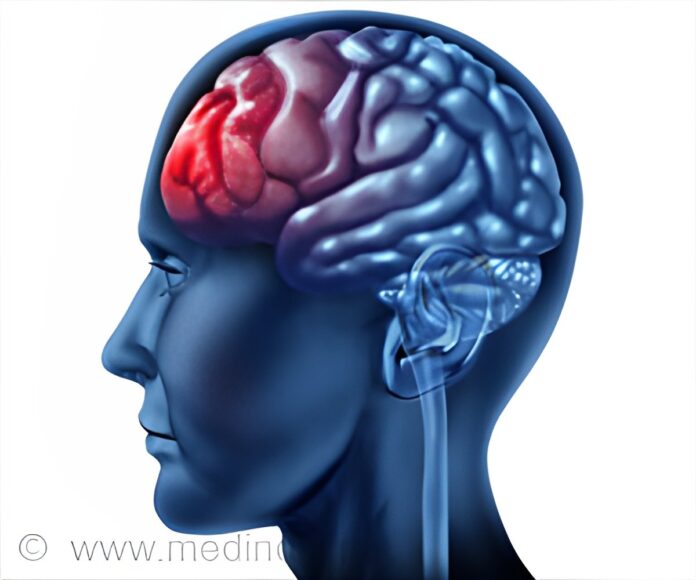
Seizure spread, not just origin, determines loss of consciousness in frontal lobe epilepsy.
- Frontal lobe seizures can either spare or impair consciousness
- Seizure spread across the brain, not just origin, drives awareness loss
- Findings may inspire future treatments like brain stimulation
Researchers have long known that seizures can affect consciousness in very different ways. In temporal lobe epilepsy, impaired awareness is linked to slow wave activity in the brain. But what about seizures that start in the frontal lobe? A new study published in Neurology provides the answer and shows that loss of consciousness in frontal lobe seizures happens through a very different mechanism (1✔ ✔Trusted Source
Relationship Between Brain Activity and Impaired Consciousness in Frontal Lobe Seizures
Go to source
).
The Statistics Behind Frontal Lobe Epilepsy Research
The study analyzed 65 seizures in 30 patients with frontal lobe epilepsy. In seizures where consciousness was preserved, brain activity in the frontal lobe of onset rose by about 40 percent. In seizures that led to impaired consciousness, activity in the frontal lobe rose by a similar 50 percent, but what stood out was the much wider spread of activity across other cortical regions, a difference that was statistically significant. These changes were not confined to slow brain waves. They appeared across multiple frequency ranges, including fast activity. In seizures that escalated to full bilateral tonic-clonic seizures, the increases were far more dramatic, reaching about 600 percent, a jump much larger than in any other
Frontal Lobe Seizures and Impaired Consciousness
Frontal lobe seizures are classified as focal seizures because they begin in one specific region of the brain. Yet, patients and doctors alike have puzzled over why some frontal lobe seizures leave consciousness intact while others abruptly shut it down.
The new findings provide an answer. Seizures that remain limited to the frontal lobe are less likely to disturb awareness. In contrast, when seizure activity spreads across large sections of the brain, consciousness is disrupted. This wide invasion of brain networks interrupts the areas thought to be vital for maintaining awareness.
Difference Between Frontal Lobe Epilepsy and Temporal Lobe Epilepsy
For decades, much of epilepsy research has centered on the temporal lobe. There, impaired consciousness usually coincides with slow wave patterns, resembling deep sleep. The new study reveals that frontal lobe seizures disrupt consciousness through a very different route. Instead of slowing the brain, they flood it with broad and fast activity across regions.
This difference matters. It highlights that the brain has multiple ways in which seizures can interfere with consciousness. Understanding these pathways is essential for developing therapies that are tailored to the type and origin of the seizure.
Seizure Spread and Future Epilepsy Treatments
For people living with epilepsy, impaired consciousness during seizures can be one of the most life-altering symptoms. It increases the risk of accidents, affects independence, and diminishes overall quality of life. By showing that seizure spread, not just seizure origin, is the critical factor in frontal lobe seizures, the research opens new possibilities.
One promising avenue is brain stimulation. If clinicians can predict when a seizure is beginning to spread, it may be possible to intervene in real time and prevent the loss of consciousness. Similarly, diagnostic tools could be refined to identify patients whose seizures are more likely to spread widely, allowing for more personalized treatment strategies.
Key Takeaway on Frontal Lobe Seizures and Awareness
The study underscores a powerful insight: not all seizures that begin in the same place are equal. What determines consciousness is not only where a seizure starts but how far it travels across the brain. This distinction changes how researchers and doctors think about epilepsy. It suggests that the brain’s pathways to awareness can be disrupted in more than one way, and that future treatments must be designed with these differences in mind.
Reference:
- Relationship Between Brain Activity and Impaired Consciousness in Frontal Lobe Seizures – (https://www.neurology.org/doi/10.1212/WNL.0000000000213965)
Source-Medindia