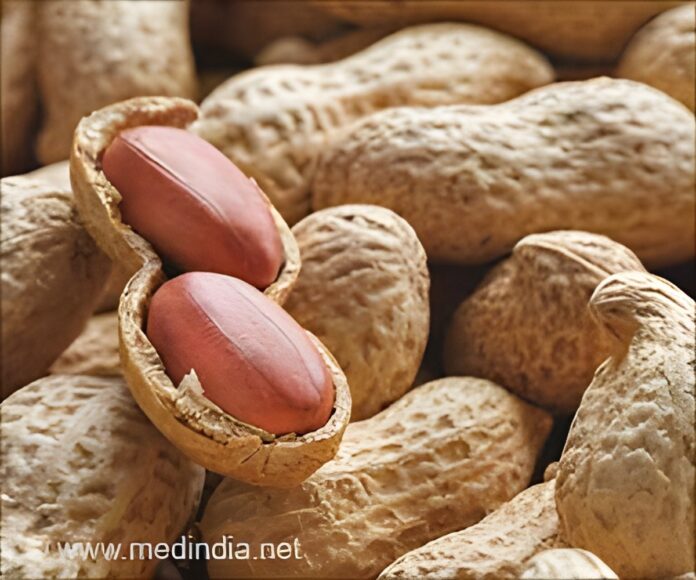
Eating unsalted, skin-roasted peanuts daily can boost brain blood flow, memory, and overall vascular health in older adults.
- Daily intake of skin-roasted peanuts improves brain blood flow and memory
- Peanuts lowered blood pressure and enhanced vascular health in older adults
- Nutrient-rich peanuts support brain function through antioxidants, healthy fats, and amino acids
Eating unsalted, skin-roasted peanuts daily can enhance brain vascular function and memory, according to findings from the Institute of Nutrition and Translational Research in Metabolism (NUTRIM) at Maastricht University Medical Center, Maastricht, Netherlands, published in the journal Clinical Nutrition (1✔ ✔Trusted Source
Longer-term skin-roasted peanut consumption improves brain vascular function and memory: A randomized, single-blind, controlled crossover trial in healthy older adults
Go to source
).
The NUTRIM study, which involved 31 healthy older adults aged between 60 and 75, revealed that consuming 60 grams (about two servings) of peanuts per day for 16 weeks increased global cerebral blood flow (CBF) by 3.6% and improved verbal memory by 5.8%. Alongside these brain-related improvements, systolic blood pressure and pulse pressure were reduced by 5 mmHg and 4 mmHg, respectively.
Improvement in Brain Blood Flow and Memory Function
“CBF is an essential physiological indicator of brain vascular function, representing the volume of blood flowing through the brain to deliver oxygen and nutrients vital for maintaining brain health,” explains Dr. Peter Joris, the study’s author and an associate professor in the Department of Nutrition and Movement Sciences at NUTRIM, Maastricht University Medical Center. “We discovered that long-term intake of unsalted, skin-roasted peanuts improved global CBF, suggesting a general enhancement of brain vascular performance.”
The peanut intervention also led to an increase in blood flow in the frontal and temporal lobes, two brain regions crucial for memory and various cognitive abilities.
Advanced Brain Imaging Reveals Measurable Cognitive Gains
What sets the NUTRIM study apart is its combination of a controlled, long-term dietary approach with advanced brain imaging methods. Researchers used arterial spin labeling magnetic resonance imaging (MRI) to assess changes in brain health and applied the Cambridge Neuropsychological Test Automated Battery (CANTAB) to measure cognitive performance.
“For the first time, we have shown that peanut consumption can improve brain vascular function in healthy older individuals. These positive effects may account for the observed memory enhancements, offering new insight into how regular peanut intake can beneficially influence cognitive function,” states Joris.
Link Between Aging, Brain Function, and Peanut Nutrients
As people grow older, brain vascular function tends to decline, increasing the likelihood of cognitive deterioration and dementia. Dementia remains a major global health issue that continues to rise in prevalence. According to Alzheimer’s Disease International, 78 million people are expected to live with dementia by 2030, and this figure is projected to reach 139 million by 2050.
“Peanuts are notably high in plant-based protein and rich in L-arginine, an amino acid essential for vascular health. They are also abundant in unsaturated fats and polyphenols, both known to support proper vascular function,” Joris explains. “In this study, we selected skin-roasted peanuts because their skins add dietary fiber and natural plant compounds, including antioxidants. Collectively, these nutrients may help clarify the positive health benefits linked to skin-roasted peanuts found in our results.”
In conclusion, daily consumption of unsalted, skin-roasted peanuts can enhance brain vascular function, improve memory, and reduce blood pressure in older adults. Rich in protein, L-arginine, healthy fats, and antioxidants, peanuts provide a natural and effective way to support cognitive and vascular health.
Reference:
- Longer-term skin-roasted peanut consumption improves brain vascular function and memory: A randomized, single-blind, controlled crossover trial in healthy older adults – (https://www.clinicalnutritionjournal.com/article/S0261-5614(25)00292-4/fulltext)
Source-Medindia