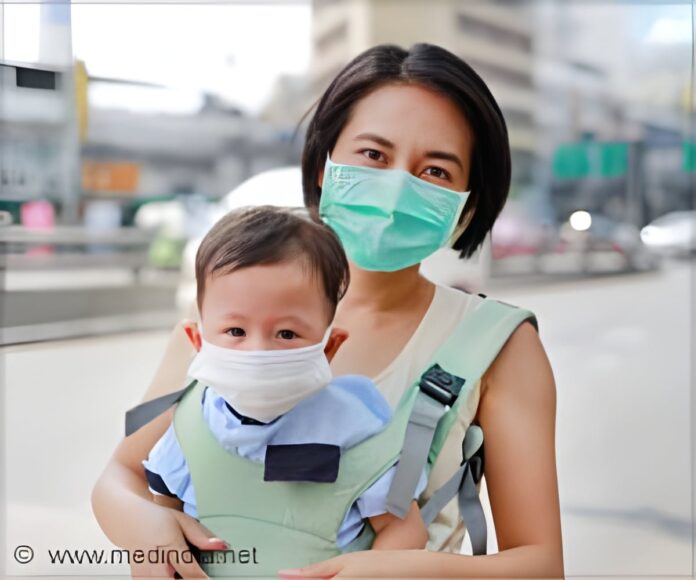
Delhi’s toxic winter air is placing children at severe risk as pollution climbs to unhealthy levels.
- Delhi’s AQI hits unhealthy levels, severely affecting children
- PM2.5 exposure is linked to preterm birth, infections, and long-term lung damage
- Climate change, traffic, household fuels, and wildfires worsen air pollution globally
Air pollution is silently harming millions of children — not just in Delhi, but across the globe. As winter smog chokes North India and families in the capital struggle with “unhealthy” air almost every day, new global evidence shows that this crisis is not local or seasonal. It is universal, persistent, and worsening. Children are particularly at risk because their immune systems and lungs are still developing.
Air pollution continues to be one of the leading causes of illness and death in children under five, according to the most recent State of Global Air 2024 report. Nevertheless, less than 1% of foreign aid is used to improve the quality of the air they breathe. (1✔ ✔Trusted Source
‘I panic every time she coughs’ – Delhi’s toxic air is making its children sick
Go to source
)
TOP INSIGHT

Did You Know?
Air pollution kills 2,000 children under 5 every day worldwide. #cleanair #medindia
Delhi’s Constant Battle With Smog: A Local Crisis With Global Parallels
With PM2.5 levels approaching 70 µg/m³ this winter, Delhi’s AQI once again entered the “Unhealthy” category. This is significantly higher than the WHO safe guideline of only 5 µg/m³. In the NCR area, paediatricians are seeing an increase in cases involving:
Nebulisation, oxygen support, or extended medical care are necessary for certain children.
While Delhi struggles with seasonal stubble burning, low wind speeds, vehicle exhaust, and industrial emissions, the challenges mirror a much bigger global issue. Across Africa, South Asia, and parts of Latin America, millions of children breathe toxic air daily whose levels are dramatically higher than those in wealthier countries.
A City Gasping for Breath: What the Current AQI Means
On 1 December 2025, Delhi recorded:
- AQI: 213 (Unhealthy)
- 5: 137 µg/m³
- PM10: 181 µg/m³
- CO, NO₂, SO₂, and O₃ levels moderately raised
- Humidity: 35% | Wind: 5 km/h | Temperature: 21°C (2✔ ✔Trusted Source
Delhi Air Quality Index (AQI) | Air PollutionGo to source
)
This level of pollution is equivalent to smoking 7.6 cigarettes a day (which is equivalent to smoking 53.1 weekly / 228 monthly), according to the Berkeley Earth estimate.
An AQI above 150 affects everyone, but hits children, the elderly, and people with lung or heart diseases the hardest.
A Global Emergency: Children Worldwide Are Breathing Dangerous Air
The State of Global Air 2024 report presents a bleak picture:
- Every single day, 2,000 children under the age of five die of illnesses caused by air pollution – 15% of the total child deaths worldwide.
- In 2021, 34% of preterm births were associated with air pollution, which puts people at risk of developing lifelong disabilities.
- Children under five in East, West, Central, and Southern Africa face a 100× higher risk of death from air pollution than those in high-income countries.
- Less than 1% of global aid is dedicated to clean air solutions — despite nearly half of household air pollution–related infections being preventable. (3✔ ✔Trusted Source
Air pollution is the leading environmental health threat to children worldwide.Go to source
)
These numbers highlight a brutal truth: the youngest and the poorest pay the highest price.
Why Children Are More Vulnerable: The Science Behind Their Higher Risk
Children breathe a greater volume of air per kilogram of body weight than adults do. They have smaller lungs, narrow airways and an immunity that is yet to learn to react. Air pollution is detrimental to children in a number of ways:
- Fine PM2.5 moves deep into the lungs that are developing.
- It influences the immunity, becoming more frequent and more serious.
- Constant exposure may result in irreversible pulmonary disorder.
- Poisonous air is associated with retarded cognitive growth, learning disability and poor educational attainment.
- The womb exposes the child to the risk of early birth, low weight and chronic disease over time.
Doctors have warned that children who are raised in heavy pollution conditions today may end up developing respiratory issues, as was observed in chronic smokers.
Sources of the Problem: From Kitchen Stoves to Highways and Wildfires
Air pollution comes from many everyday sources:
- Household cooking fuels (wood, coal, dung)
- Traffic emissions
- Industrial pollution
- Burning waste
- Wildfires and landscape fires
- Dust storms
- Secondhand smoke
In several countries with low and middle incomes, people prepare food at home with solid fuel sources, leaving homes full of smoky air. To millions of children, the air in the house is commonly more degraded than the air outdoors.
At the same time, climate change is making everything worse. Rising temperatures increase chemical reactions in the air, producing more ground-level ozone. More frequent wildfires send massive amounts of smoke into the atmosphere. Droughts and land degradation create severe dust storms.
The result: a dangerous cycle of heat and pollution that magnifies health risks.
The Air Crisis Is Preventable, But Only If We Choose to Act!
Whether in Delhi or Dakar, Lagos or Lahore, children are living through an invisible emergency. They have no choice in the matter. They cannot control the fuel their families use, the traffic outside their window, or the industries operating near their homes. Yet they bear the worst consequences.
The scientific evidence is clear. The health impacts are well understood. The solutions exist — cleaner energy, stricter regulations, better city planning, access to affordable clean cooking methods, and strong global cooperation.
But the world has not matched the scale of the crisis. Until clean air becomes a global priority, children will continue paying with their health, their growth, and, in far too many cases, their lives.
Clean air is not a luxury. It is a right — and protecting it is one of the most urgent responsibilities of our generation.
Reference:
- ‘I panic every time she coughs’ – Delhi’s toxic air is making its children sick – (https://www.bbc.com/news/articles/cx23lyp2dmeo)
- Delhi Air Quality Index (AQI) | Air Pollution – (https://www.aqi.in/in/dashboard/india/delhi)
- Air pollution is the leading environmental health threat to children worldwide. – (https://ceh.unicef.org/spotlight-risk/air-pollution)
Source-Medindia