As viral trends sweep social media, professionals rush to adapt them. Experts explain when this boosts trust—and when it risks harm.
- Social media trends boost visibility by rewarding familiarity and speed
- In healthcare, trends can oversimplify information and amplify authority risks
- Responsible trend use requires accuracy, context, and professional restraint
Why Everyone Is Suddenly Doing the Same Trend!?
It starts innocently—a playful video format, a catchy sound, or a relatable visual sweep across social media. Within days, everyone is using it: influencers, brands, small businesses, professionals, and even healthcare workers.
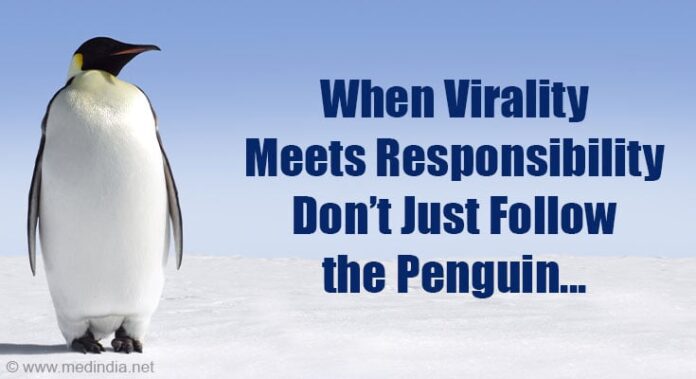
What’s striking isn’t just how fast trends spread, but how unquestioningly they’re adopted. Take the viral “nihilist penguin,” a lone Adélie penguin walking away from its colony, repurposed across platforms as a symbol of burnout and rebellion. The same format is swiftly reworked by doctors debunking health myths, jewellers showcasing designs, clinics promoting services, and educators dispensing “relatable” advice, all marching penguin-like along the same digital path.
This phenomenon isn’t accidental. It’s driven by platform algorithms that reward familiarity, recognisability, and speed of participation. Trends act like digital shortcuts to visibility.
But experts warn: what boosts reach doesn’t always protect meaning, accuracy, or trust, especially in healthcare.
TOP INSIGHT

Did You Know?
The viral “nihilist penguin” is real footage from a 2007 documentary, which is reimagined online as a symbol of burnout and quiet quitting. #penguintrend #nihilistpenguin #penguin #mentalhealth #healthcommunication #medicalethics #digitaltrust #socialmediatrends #publichealth #medindia
Why a Lone Penguin From a 2007 Film Became Social Media’s Newest Viral Symbol
The “nihilist penguin” trend comes from a 2007 Werner Herzog documentary. What makes the trend compelling is its quiet defiance. There’s no punchline, no performance, just withdrawal. In an era of constant visibility and pressure to participate, the penguin’s wordless exit mirrors a collective craving to opt out without explanation.
Revived on TikTok in early 2026, the clip has gone viral as a meme symbolising burnout, quiet quitting, and the urge to abandon societal expectations, spreading rapidly across Instagram, X, Reddit, and beyond (1✔ ✔Trusted Source
bye bye birdie What is the nihilist penguin and did he die? Why the lone bird is going viral
Go to source).
Why Trend Adaptation Works So Well Online
Psychologists and digital behaviour researchers explain that trends work because they reduce cognitive effort. Viewers already understand the format, so they’re more likely to stop scrolling and engage.
For creators, trends offer three major advantages:
- Algorithmic amplification due to current popularity
- Lower content creation effort compared to original formats
- Higher relatability, because audiences feel “in on the joke”
For health professionals, this can translate into wider reach for important messages, awareness campaigns, preventive advice, or destigmatising conversations.
Used thoughtfully, trends can humanise doctors, make health education less intimidating, and improve recall (2✔ ✔Trusted Source
Social Media Behavior Guidelines for Healthcare Professionals: An American Society of Pain and Neuroscience NEURON Project
Go to source).
Where the Problem Begins Especially in Healthcare
The issue arises when virality overtakes responsibility. Healthcare communication isn’t the same as selling a product or promoting entertainment. When medical topics are squeezed into trending formats, nuance often disappears. Experts flag several risks:
- Oversimplification of medical information
Trends thrive on brevity and punchlines, but health information often requires context. This can lead to half-truths being remembered as facts. - False equivalence
Adapting the same trend across unrelated fields can blur boundaries; medical advice may appear as casual or optional as fashion tips. - Authority amplification
When doctors participate in trends, their professional credibility gives the content disproportionate influence, even if the message is lighthearted or incomplete. - Audience misinterpretation
Viewers may not distinguish between satire, education, and personal opinion, especially when trends prioritise humour over clarity.
The Psychological Pressure to “Not Miss the Trend”
Content creators, including doctors, often feel an unspoken urgency: post now or lose relevance.
Social media psychologists describe this as algorithm-induced performance anxiety. When creators see peers gaining traction from a trend, not participating can feel like professional stagnation.
This pressure can push even cautious professionals to post content they would normally reconsider.
Ironically, the same behaviour that boosts short-term visibility can erode long-term trust if audiences sense inconsistency or opportunism (3✔ ✔Trusted Source
Dangers and Benefits of Social Media on E-Professionalism of Health Care Professionals: Scoping Review
Go to source).
Is Avoiding Trends the Answer? Experts Say No
Blanket avoidance isn’t realistic or necessary. Public health experts acknowledge that meeting audiences where they are is crucial in today’s digital ecosystem. Trends are where attention already exists. The question is not whether to adapt trends, but how.
How Healthcare Professionals Can Adapt Trends Responsibly
Experts suggest a few non-negotiable guardrails:
- The message must survive without the trend
If the sound or format were removed, the information should still stand as accurate and ethical. - Avoid diagnostic or treatment claims
Trends should never be used to imply cures, guarantees, or personalised advice. - Use trends as entry points, not endpoints
A viral format can open attention, but captions, comments, or follow-up posts should add clarity and context. - Respect emotional weight
Topics involving illness, body image, mental health, or grief require extra sensitivity; humour should never minimise lived experiences. - Consistency matters
Audiences trust professionals who maintain a clear identity. Jumping on every trend indiscriminately can dilute credibility.
What This Means for Audiences
For viewers, experts advise healthy scepticism. Not every trending health post is misinformation, but not every viral explanation is complete either. Social media is a starting point for awareness, not a replacement for professional consultation.
The Bottom Line
Trends are tools, not truths. In healthcare communication, virality should serve clarity, not replace it. Adapting trends can amplify good messages, but without care, it can also amplify confusion.
In a digital world obsessed with speed, the real challenge isn’t going viral. It’s staying responsible while doing so.
Frequently Asked Questions
Q: Why do social media trends spread so quickly across professions?
A: Social media algorithms reward familiarity and rapid participation. When users already recognise a format, they engage faster, pushing the trend across industries-from healthcare to education and retail.
Q: Why are doctors and healthcare professionals using viral trends?
A: Healthcare professionals use trends to reach wider audiences, simplify complex topics, and increase engagement. When used responsibly, trends can improve awareness and recall of important health messages.
Q: What are the risks of following social media trends in healthcare?
A: Healthcare experts count on trends to engage broader audiences, simplify complicated matters, and get more engagement. Trends can be used in a responsible manner to enhance recall and awareness of the key health messages.
Q: What is the “nihilist penguin” trend, and why does it resonate with users?
A: The trend features a lone penguin walking away from its colony, symbolising burnout, quiet quitting, and emotional withdrawal. It resonates because it reflects collective fatigue in a high-pressure, always-online culture.
Q: How can healthcare professionals adapt trends responsibly on social media?
A: The experts also suggest focusing on accuracy, not making claims of diagnoses, including context outside of the trend, and using viral forms as access points (rather than replacement of) trustworthy health communication.
References:
- bye bye birdie What is the nihilist penguin and did he die? Why the lone bird is going viral – (https://www.thesun.co.uk/tech/38024183/nihilist-penguin-trend/)
- Social Media Behavior Guidelines for Healthcare Professionals: An American Society of Pain and Neuroscience NEURON Project – (https://pmc.ncbi.nlm.nih.gov/articles/PMC11551221/)
- Dangers and Benefits of Social Media on E-Professionalism of Health Care Professionals: Scoping Review – (https://pmc.ncbi.nlm.nih.gov/articles/PMC8663533/)
Source-Medindia