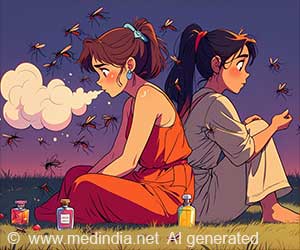
Mosquitoes don’t bite everyone equally—discover why some people are irresistible targets.
- CO₂, body heat, sweat, genes, and perfumes make some people mosquito magnets
- Mosquitoes love red/orange colors and fruity or floral scents
- Prevent bites with repellents, nets, clean surroundings, and smart clothing
Mosquitoes, though tiny, cause deadly harm to humans. Among the most common mosquito-borne diseases affecting large populations are Dengue, Malaria, and Zika virus.
Malaria and dengue are major public health hazards. The World Malaria Report from WHO reveals some startling stats about malaria and dengue. In 2023, there were 263 million cases of malaria, and the estimated number of malaria deaths stood at 597,000 (1✔ ✔Trusted Source
Malaria
Go to source
).
Dengue infects about 400 million people, of which 100 million become ill, and this causes 21,000 deaths (2✔ ✔Trusted Source
Why is Dengue a Global Issue?
Go to source).
In warm, humid climates like India, mosquitoes thrive as unwelcome guests, living rent-free while spreading infections. Indian households are well aware of these dangers and try to protect themselves using mosquito nets, repellents, mosquito bats, and countless other products designed to kill these tiny creatures. Despite these preventive measures, mosquitoes continue to persist—and some people seem to get bitten far more than others! Have you ever wondered why?
Advertisement
Why Do Mosquitoes Love You More?
Experts point out that attraction is not random, and several factors play a role!
-
High Carbon Dioxide Levels: Pregnant women, exercisers, or alcohol drinkers exhale more CO₂, and therefore, invite more bites. -
Body Heat & Dark Colors: Dark clothing traps heat, which makes it easier for mosquitoes to detect you easily. -
Sweat & Lactic Acid: Sweating raises body temperature and increases lactic acid, which is a double delight for mosquitoes. Thus, working out early in the morning and taking a bath immediately might save you from mosquito bites! -
Genetic Factors: Some people naturally emit odors that act as mosquito magnets. Genes related to the immune system play a key role here (3✔ ✔Trusted Source
The olfactory gating of visual preferences to human skin and visible spectra in mosquitoesGo to source
).
Advertisement
Learn What Mosquitoes like
Mosquitoes’ Favorite Colour
Mosquitoes don’t just buzz around randomly—they’re on a mission! Using both vision and smell, mosquitoes find their meal. They are more attracted to vibrant colors like orange and red that resemble human skin tones to them. So next time you wonder why you’re the mosquito magnet at a party, it might just be the color of your outfit!
Mosquitoes’ GPS signal
To a mosquito, your exhale is a GPS signal. One puff of CO₂ and they’re locked on to you from across the yard, even when you are as far as 30 feet away. Only female mosquitoes bite, as they require blood proteins to produce eggs.
Mosquitoes’ Favorite Food Combo
Spicy hot food and booze are not only humans’ favorites; mosquitoes also like this combo. Alcohol, especially, can raise the body temperature and leave a unique scent for mosquitoes to smell.
However, diet alone won’t determine your mosquito appeal; it’s your overall metabolism and scent profile that matter the most!
Mosquitoes’ Favorite Fragrance
Mosquitoes can also use their sense of smell to find their way around. Body lotions and floral/fruity perfumes can be used to replicate the natural plant chemicals, similar to the nectar odors, which mosquitoes use as energy sources. These pleasant aromas deceive mosquitoes so they believe that you are a walking flower. Add your own exhaled breath and body warmth, you are a target no mosquito can resist!
Therefore, these pesky little buzzers are even more attracted when you wear intense fragrance (flowery or fruity perfumes) outside, particularly in the evenings.
Protect Yourself From Mosquito Bites
Experts stress that while you cannot change your genes, you can reduce risk through smart measures:
-
Use insect repellents (DEET, picaridin, lemon eucalyptus oil, etc.) -
Wear long-sleeved, loose clothing (permethrin-treated for extra protection) -
Sleep under insecticide-treated mosquito nets -
Keep windows/doors screened to block entry -
Avoid outdoor exposure at peak biting times (dawn & dusk) -
Eliminate standing water (buckets, tires, plant trays, gutters) -
Maintain clean surroundings and proper drainage -
Use Indoor Residual Spraying (IRS) or insecticide-treated nets for malaria zones -
Explore community-level measures like Attractive Toxic Sugar Baits (ATSBs) -
Support biological/genetic controls (e.g., Wolbachia-infected or sterile male releases) -
Promote community education and participation -
Employ monitoring tools (ovitraps, AI-based mosquito surveillance) (4✔ ✔Trusted Source
Personal Protection Measures Against Mosquitoes, Ticks, and Other ArthropodsGo to source
)
- Like humans, mosquitoes also have preferences! Know their preference and stay safe from the mosquito-borne diseases.
References:
- Malaria- (https://www.who.int/news-room/fact-sheets/detail/malaria)
- Why is Dengue a Global Issue? – (https://www.cdc.gov/dengue/training/cme/ccm/page51440.html)
- The olfactory gating of visual preferences to human skin and visible spectra in mosquitoes- (https://pmc.ncbi.nlm.nih.gov/articles/PMC8816903/)
- Personal Protection Measures Against Mosquitoes, Ticks, and Other Arthropods – (https://pubmed.ncbi.nlm.nih.gov/26900115/)
Source-Medindia