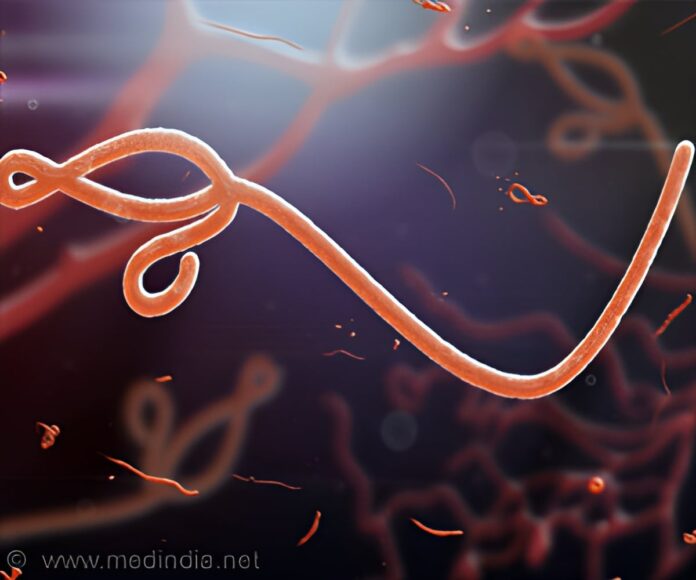
Why has WHO declared the Congo and Uganda Ebola outbreak a global health emergency?
The World Health Organization (WHO) has declared the Ebola outbreak in the Democratic Republic of the Congo (DRC) and neighboring Uganda a “Public Health Emergency of International Concern” (PHEIC), its highest level of global health alert short of a pandemic. The declaration follows growing fears that the rare Bundibugyo strain of the Ebola virus could spread further across Central Africa. ()
According to WHO, more than 246 suspected cases and over 80 suspected deaths have already been reported, primarily in Ituri Province in eastern DRC. Confirmed cases have also emerged in Uganda’s capital Kampala, while additional suspected cases were investigated in Kinshasa and North Kivu, raising concerns about regional transmission.
What Makes This Ebola Outbreak Different?
Health authorities say the current outbreak is caused by the Bundibugyo ebolavirus, a rare Ebola strain first identified in Uganda in 2007. Unlike the more common Zaire strain, which has approved vaccines and treatments, the Bundibugyo variant currently has no licensed vaccine or targeted therapy.
WHO officials warned that the absence of approved medical countermeasures significantly complicates outbreak control efforts. The agency also noted that the true scale of infections may be far larger than currently detected due to delayed diagnosis, limited surveillance, and conflict-related disruptions in eastern Congo.
The WHO stated that the declaration is intended to accelerate international coordination, mobilize emergency funding, and strengthen surveillance and response systems across affected countries.
Why Experts Are Concerned About Ebola Spread
The outbreak has emerged in a region already affected by armed conflict, population displacement, and weak healthcare infrastructure. Public health experts say these conditions can make contact tracing, isolation, and treatment extremely difficult.
WHO reported unusual clusters of deaths, including fatalities among healthcare workers, suggesting possible undetected transmission inside medical facilities. Several infected individuals reportedly traveled between regions before diagnosis, increasing fears of wider spread.
The confirmation of cases in Kampala and movement-linked investigations in Kinshasa have intensified concerns about cross-border transmission and urban spread. WHO warned that neighboring countries remain at high risk due to regional mobility and porous borders.
What Is Ebola and How Does It Spread?
Ebola virus disease is a severe and often fatal illness caused by infection with viruses from the Ebolavirus family. The disease spreads through direct contact with infected blood, bodily fluids, contaminated surfaces, or infected animals. Symptoms often begin suddenly and may include:
- Fever
- Severe weakness
- Muscle pain
- Vomiting and diarrhea
- Internal and external bleeding in severe cases
WHO notes that Ebola outbreaks can have fatality rates ranging from 25% to 90%, depending on the strain and healthcare access.
Why the WHO Emergency Declaration Matters
A “Public Health Emergency of International Concern” is a formal mechanism under international health regulations used when an outbreak poses a risk beyond national borders and may require coordinated international action.
Previous global health emergencies declared by WHO include COVID-19, mpox, Zika virus, and earlier Ebola outbreaks. Public health experts say the designation helps governments and aid agencies rapidly mobilize funding, emergency supplies, laboratory support, and outbreak-response teams.
WHO has advised countries not to impose blanket travel or border restrictions but urged stronger screening, surveillance, and emergency preparedness measures instead.
Past Ebola Outbreaks Show Importance of Rapid Response
The Democratic Republic of the Congo has experienced multiple Ebola outbreaks since the virus was first identified there in 1976. Researchers studying previous outbreaks have repeatedly shown that early intervention, rapid isolation, contact tracing, and community engagement are critical for limiting spread.
Mathematical modeling studies of earlier Ebola outbreaks in Congo and Uganda found that delays in intervention can dramatically increase outbreak size and transmission rates.
Scientists also warn that Ebola outbreaks may become increasingly difficult to control if healthcare systems remain under-resourced or if surveillance gaps allow undetected chains of transmission to continue.
Global Health Agencies Rush to Respond
WHO, Africa CDC, and international partners are now deploying rapid response teams, diagnostic support, infection-control supplies, and emergency coordination systems to affected regions. Efforts are also underway to identify experimental vaccines and treatments that may work against the Bundibugyo strain.
While officials stressed that the outbreak does not currently meet the criteria for a pandemic, they warned that swift international cooperation will be critical to prevent further escalation.
References:
- Epidemic of Ebola Disease caused by Bundibugyo virus in the Democratic Republic of the Congo and Uganda determined a public health emergency of international concern – (https://www.who.int/news/item/17-05-2026-epidemic-of-ebola-disease-in-the-democratic-republic-of-the-congo-and-uganda-determined-a-public-health-emergency-of-international-concern)
Source-Medindia