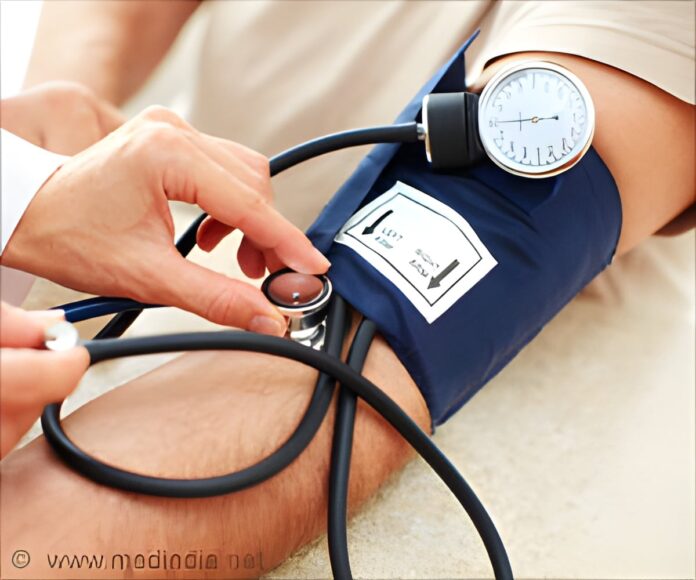
Doctors warn that hypertension is increasingly affecting younger Indians and often stays undetected for years before causing heart attacks, strokes, or kidney damage.
- Nearly one in four Indian adults may now be living with hypertension
- Many people remain unaware they have high blood pressure until complications develop
- Doctors say regular BP checks, healthier lifestyles, and early treatment remain critical
High blood pressure is quietly becoming one of India’s fastest-growing health threats, and doctors warn that millions of people may not even realize they are living with it.
Medical experts describe hypertension as a “silent killer” because it often develops without symptoms for years before triggering a heart attack, stroke, kidney failure, or vision damage. Experts warn that cases are rising rapidly across India, including among younger adults.
According to doctors more than 40% of people between 18 and 55 years of age do not know their blood pressure levels, while many diagnosed patients fail to monitor their condition regularly.
Experts say this lack of awareness is one of the biggest reasons hypertension continues to cause preventable deaths across the country.
Researchers say the growing burden of hypertension reflects a much larger lifestyle and public health transition taking place across India, where urbanization, stress, obesity, processed foods, physical inactivity, alcohol use, poor sleep, and metabolic diseases are all becoming more common.
Why Is Hypertension Rising So Rapidly Across India?
Hypertension, or persistently elevated blood pressure, is now one of the leading contributors to cardiovascular disease in India.
A major systematic review and meta-analysis published in BMC Public Health found that the pooled prevalence of hypertension in India had reached 27.2%, meaning roughly one in four Indian adults now lives with high blood pressure (1✔ ✔Trusted Source
National prevalence and regional variation in the burden of hypertension in India: a systematic review and meta-analysis
Go to source).
The researchers analyzed 112 Indian studies conducted between 2011 and 2022 and found particularly high prevalence in northern India, where nearly one-third of adults were affected.
Researchers say hypertension has now reached “epidemic proportions” globally and is becoming one of the largest drivers of non-communicable diseases in India as well.
The problem is especially concerning because hypertension rarely causes symptoms in its early stages. Many people continue living normally for years while blood pressure quietly damages arteries, the heart, kidneys, brain, and eyes.
Over time, uncontrolled hypertension may lead to:
- Heart attacks
- Stroke
- Heart failure
- Kidney disease
- Blindness and retinal damage
Doctors say this silent progression is what makes hypertension so dangerous.
Why Are So Many Indians Still Undiagnosed or Untreated?
Researchers say the biggest challenge may no longer be whether hypertension exists, but whether people know they have it and continue treatment properly.
A large national analysis published in The Lancet Regional Health – Southeast Asia examined India’s hypertension “treatment cascade” using National Family Health Survey-5 (NFHS-5) data involving more than 1.2 million Indians (2✔ ✔Trusted Source
Hypertension treatment cascade among men and women of reproductive age group in India: analysis of National Family Health Survey-5 (2019-2021)
Go to source).
The study tracked what happens after people develop hypertension — from screening and diagnosis to treatment and blood pressure control.
Researchers found that a very large number of people gradually drop out at different stages of care.
Many adults had never even undergone a blood pressure check. Among those already living with hypertension, only about one-third were actually aware they had the condition. Even fewer were taking regular treatment, and only a small proportion had their blood pressure successfully controlled.
To understand why experts are concerned, the table below shows how hypertension care gradually breaks down across different stages in India.
India’s Biggest Gaps in Hypertension Detection, Treatment, and Control
| Stage of Hypertension Care | What Researchers Found |
|---|---|
| Blood pressure screening | Many adults had never checked their blood pressure |
| Awareness of diagnosis | Only a small proportion knew they had hypertension |
| Regular treatment | Many diagnosed patients were not taking medicines consistently |
| Blood pressure control | Very few patients had their blood pressure properly controlled |
| Most vulnerable groups | Men, rural populations, smokers, and poorer households showed lower treatment and control rates |
Source: NFHS-5 analysis published in The Lancet Regional Health – Southeast Asia
Researchers noted that men, rural residents, smokers, alcohol users, and people with lower education or lower household income were less likely to move successfully through the treatment cascade.
Experts say these findings reveal not just a medical problem, but also a major healthcare access and awareness challenge across the country.
What Tests Can Help Detect Hidden High Blood Pressure Early?
Doctors say hypertension is often detected through simple routine screening, but many Indians do not undergo regular checks until serious complications appear.
According to the hypertension management review published in Medicine, regular blood pressure monitoring remains the most important screening tool for detecting hypertension early (3✔ ✔Trusted Source
Dependable approaches to hypertension management: A review
Go to source).
Experts recommend repeated blood pressure measurements because readings can fluctuate during stress, illness, physical activity, or clinic visits.
Researchers say people with risk factors such as:
- Obesity
- Diabetes
- Smoking
- Family history of hypertension
- Kidney disease
- Sedentary lifestyle
May require more frequent monitoring.
The review also explains that doctors may recommend additional evaluations to assess whether high blood pressure is already affecting organs or increasing cardiovascular risk. These can include:
- Blood sugar testing
- Cholesterol profile
- Kidney function evaluation
- Electrocardiogram (ECG) to assess heart function
- Ambulatory blood pressure monitoring over 24 hours
Researchers say home blood pressure monitoring is also becoming increasingly important because many people experience “masked hypertension” or nighttime blood pressure abnormalities that routine clinic readings may miss.
Why Does High Blood Pressure Damage the Body So Severely?
Blood pressure measures the force of blood pushing against artery walls as the heart pumps blood through the body.
When blood pressure remains consistently high, that pressure gradually injures blood vessels and organs over many years.
A review published in Medicine explained that hypertension develops through a complex interaction of genetics, obesity, high salt intake, stress, alcohol use, smoking, diabetes, poor sleep, and physical inactivity.
Researchers say excess salt intake, obesity, and stress can all contribute to the narrowing and stiffening of blood vessels, making it harder for blood to circulate normally.
The review also explained that hypertension does not appear suddenly at dangerous levels. Blood pressure rises gradually over time, and even moderately elevated levels may quietly increase cardiovascular risk for years before major symptoms appear.
This is why doctors repeatedly stress the importance of regular blood pressure monitoring even when people feel healthy.
Researchers say hypertension becomes even more dangerous when combined with:
- Diabetes
- Obesity
- High cholesterol
- Kidney disease
- Smoking
because these conditions together sharply increase cardiovascular risk.
Does Taking Blood Pressure Medicine at Night Really Reduce Heart Risk?
Physicians from the Indian Society of Hypertension explained that blood pressure normally follows a natural 24-hour rhythm. In healthy individuals, blood pressure typically falls during sleep at night.
However, many people with hypertension fail to experience this normal nighttime dip, which researchers believe may increase the risk of cardiovascular complications.
A systematic review and meta-analysis published in Health Science Reports analyzed five randomized studies involving more than 36,000 patients comparing bedtime versus morning dosing of blood pressure medicines (4✔ ✔Trusted Source
The Effect of Chronotherapy on Clinical Outcomes in Hypertensive Patients: A Systematic Review and Metaâ€Analysis Comparing Bedtime Versus Morning Dosing of Antihypertensive Drugs
Go to source).
The researchers found no major overall difference between bedtime and morning dosing in reducing:
- Heart attacks
- Stroke
- Heart failure
- Major cardiovascular events
- Overall mortality
The review concluded that there may not be a single “best” timing strategy for everyone and that taking medicines consistently may matter more than the exact time of dosing.
Still, researchers acknowledged that nighttime blood pressure remains an important cardiovascular risk factor and that some patients with abnormal nighttime blood pressure patterns may benefit from individualized treatment timing strategies.
Why Do Doctors Say Lifestyle Changes Matter as Much as Medicines?
Doctors say blood pressure medicines alone are often not enough to control hypertension effectively over the long term.
Controlling hypertension also requires major lifestyle changes, especially because many of the condition’s causes are linked to modern daily habits.
Some of the most important preventive measures include:
- Reducing salt intake
- Exercising regularly
- Maintaining a healthy body weight
- Avoiding smoking and excess alcohol
- Managing stress
- Sleeping properly
- Monitoring blood pressure regularly
Experts say India’s growing hypertension burden will likely require much stronger awareness campaigns, earlier diagnosis, affordable treatment access, and healthier lifestyles if the country hopes to reduce rising rates of heart disease and stroke in the coming decades.
Frequently Asked Questions
Q: Why is hypertension called a silent killer?
A: High blood pressure often develops without symptoms for years while quietly damaging blood vessels, the heart, kidneys, and brain.
Q: What are the common causes of hypertension?
A: Major causes include excess salt intake, obesity, stress, smoking, alcohol use, poor sleep, lack of exercise, and unhealthy diets.
Q: How can high blood pressure be detected early?
A: Doctors recommend regular blood pressure monitoring along with tests such as blood sugar, cholesterol, kidney function, and heart evaluation when needed.
Q: Can lifestyle changes reduce blood pressure naturally?
A: Yes. Reducing salt intake, exercising regularly, managing weight, quitting smoking, and improving diet may significantly improve blood pressure control.
Q: Is taking blood pressure medicine at night better than morning?
A: Some studies suggest nighttime dosing may help certain patients, but recent research found no single best timing strategy for everyone.
References:
- National prevalence and regional variation in the burden of hypertension in India: a systematic review and meta-analysis – (https://pmc.ncbi.nlm.nih.gov/articles/PMC12581272/)
- Hypertension treatment cascade among men and women of reproductive age group in India: analysis of National Family Health Survey-5 (2019-2021) – (https://www.thelancet.com/journals/lansea/article/PIIS2772-3682(23)00131-2/fulltext)
- Dependable approaches to hypertension management: A review – (https://pmc.ncbi.nlm.nih.gov/articles/PMC11175961/)
- The Effect of Chronotherapy on Clinical Outcomes in Hypertensive Patients: A Systematic Review and Meta‐Analysis Comparing Bedtime Versus Morning Dosing of Antihypertensive Drugs – (https://pmc.ncbi.nlm.nih.gov/articles/PMC12783704/)
Source-Medindia