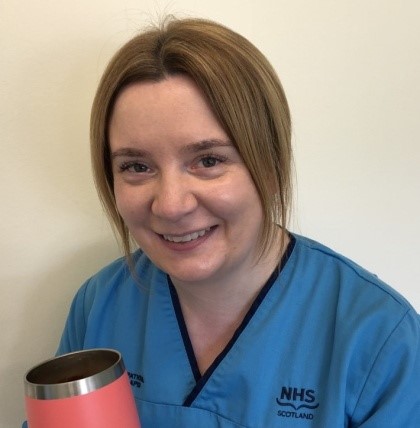
My career as an Occupational Therapist within the hospital setting has spanned eighteen years so far with the last ten years based within Medicine of the Elderly. Within this setting I support many patients living with dementia. As occupational therapists we advocate for rehabilitation within a pressurised context and have a person centred approach. The hospital environment can often be distressing for those individuals living with dementia, with increased fears about returning home after being unwell. As an Occupational Therapist I complete assessments focused on cognitive and physical function and work closely with the patient, their next of kin, professionals within the ward team and community colleagues to ensure a robust plan of support for returning home. We use a rehabilitative approach with the patients’ wishes for discharge & continued recovery at home at its core.
If I was to think about what rehabilitation means to me within the acute setting, where there is a need for timely assessment & decisions around discharge for individuals with dementia, I would say it means:
Ensuring that people living with dementia are provided with rehabilitation within the ward and beyond for cognition as well as physical function. The occupational therapy assessment enables me to work alongside the person to identify their rehabilitation goals and create a plan of action. Sometimes individuals may require time for delirium recovery in which case the ward team may suggest transferring to a rehabilitation unit. The occupational therapist role includes advocating for the right to rehabilitation for those with delirium and other conditions which impact cognition. Our aim to balance the scales and ensure cognitive rehabilitation is offered the same consideration as physical rehabilitation.
Making sure you know your patient as well as you can. Listening to the patient and their next of kin is key as well as contacting other professionals who have been involved with the persons consent. Knowing the persons level of independence prior to admission, best supportive approach and the persons like and dislikes helps me to build a therapeutic relationship with the person. Similarly knowing what motivates the individual is key to successful rehabilitation.
Next of kin involvement in assessment & rehabilitation. Having involvement of next of kin can improve engagement in assessment and rehabilitation as the individual is reassured with the presence of a familiar person. We work in line with the right to rehabilitation approach for individuals living with dementia ensuring all avenues are considered to enable to individual to engage in rehabilitation process.
Aiming to return home for recovery with the correct support in place to manage risks. The hospital environment presents challenges for most people when in recovery; however this is particularly challenging for those of us who live with dementia. In my role I work closely with the individual with dementia and their next of kin to explore all support options in the community to facilitate returning home as soon as possible.
Advocating for the individual with dementia using the above tips has helped me ensure individuals with Dementia are given opportunities to maximise recovery, function and well being within the hospital environment and on return home.
Contributor: Kirsty Williamson, Occupational Therapy Team Lead, NHS Lothian.

Further reading/ references:
Connecting People, Connecting Support framework for the contribution allied health professions make to people living with dementia in Scotland.
Allied Health Professionals – Alzheimer Scotland
Dementia Skilled Improving Practice Learning Resource (Updated 2016) NHS Education for Scotland.dementia-skilled-resource-2016-final-web.pdf
Information on the Home First Approach. Home First | NHS inform
World Alzheimer Report (2025) Reimagining life with dementia – the power of rehabilitation Professor Linda Clare, Professor Yun-Hee Jeon World Alzheimer Report 2025 | Alzheimer’s Disease International (ADI)
Since the publication of our first allied health professional dementia policy document in Scotland, Connecting People Connecting Support (Alzheimer Scotland 2017) we have debated, advocated and delivered dementia rehabilitation informed by three sources of evidence: research, clinical practice and the voice of lived experience. We shared in our second report (Alzheimer Scotland 2020) examples of dementia rehabilitation and in our third report (Alzheimer Scotland 2024) we highlight there is a rehabilitation gapthatmust be filled, with a need to increase awareness of what dementia rehabilitation is, how it has a positive impact on people with lived experience and also services, and there is a need to apply the evidence of dementia rehabilitation in practice. As an allied health professional dementia community, with our many partners, colleagues and friends, we are therefore going to share a number of blogs posts over the next 12 months on rehabilitation and dementia, answering the simple question
“What does rehabilitation mean to you?
You can read our first blog in the series here
You can read the second blog by Jenny, speech and language therapist here
You can read the third blog by Morna, occupational therapist here