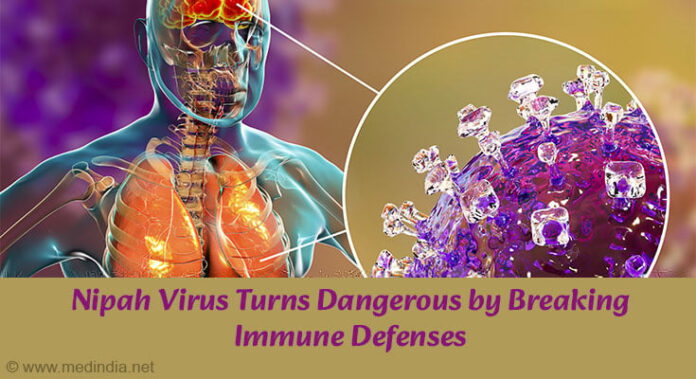
Nipah virus disrupts immune defenses, spreads rapidly to vital organs like the brain, and causes severe inflammation, explaining its high mortality rate.
- Nipah virus suppresses early immune responses, allowing rapid viral spread
- Severe inflammation and brain involvement drive high fatality rates
- Delayed antibody response limits effectiveness of late-stage treatment
High fatality rates and severe immune disruption make the Nipah virus outbreak in India a continuing public health concern despite recent patient recovery (1✔ ✔Trusted Source
Nipah Virus Outbreak In India: How It Affects The Immune System
Go to source
).
The Nipah virus outbreak in India has led to enhanced screening measures at airports across several Asian countries. Health officials at a Kolkata hospital, where two nurses were admitted for observation, confirmed that one of them has now been discharged.
While this development offers some reassurance, authorities continue to emphasize the importance of remaining alert to the threat posed by the virus.
Nipah Virus Transmission and Organ Damage Risk
Medical experts are urging the public to remain cautious about food consumption, as fatality rates associated with Nipah virus infection range from 40 percent to as high as 75 percent.
The virus is zoonotic in nature and affects critical organs such as the brain and lungs. In addition to direct organ damage, Nipah virus can also interfere with the body’s immune defenses.
Immune System Manipulation by Nipah Virus
The Nipah virus is particularly dangerous because it can overpower, weaken, and misdirect immune responses.
Dr. Dip Narayan Mukherjee, Consultant in Microbiology and Infectious Diseases at CK Birla Hospitals, explained that the virus prevents the body from clearing the infection promptly. He noted that understanding this immune interference helps explain the occurrence of severe encephalitis, multi-organ failure, and high mortality, and highlights why early identification and containment remain the most effective strategies.
This disruption of immunity begins early after infection. The innate immune system, which serves as the body’s first defense against viruses, depends heavily on interferons. These signaling proteins warn nearby cells of viral invasion and activate mechanisms that slow down viral multiplication (2✔ ✔Trusted Source
Nipah virus
Go to source).
Interferon Suppression and Rapid Viral Spread
According to Dr. Mukherjee, one of the earliest immune evasion strategies used by Nipah virus is the disruption of the innate immune response. By suppressing interferon activity, the virus gains the ability to multiply quickly before the immune system can mount an effective response.
Evidence published by the World Health Organization and other virology institutions indicates that certain Nipah virus proteins block interferon signaling pathways. This allows the virus to establish widespread infection before immune defenses are fully activated.
Blood Vessel Damage and Excessive Inflammation
As the infection advances, Nipah virus attacks the cells that line blood vessels, distinguishing it from many respiratory viruses. Damage to these vessels enables the virus to reach multiple organs, including the brain, while also triggering extensive inflammation throughout the body.
Rather than producing a controlled antiviral response, the body releases excessive amounts of inflammatory molecules. This uncontrolled inflammation results in tissue damage, swelling, and organ malfunction, leading to respiratory failure, neurological complications, and circulatory collapse in severe cases.
Immune Exhaustion and Brain Involvement
Immune exhaustion is another defining feature of Nipah virus infection. Although most immune cells are not directly infected, the intense inflammatory environment causes them to become overactive and eventually lose their effectiveness. Once these cells can no longer control viral replication, the infection worsens and supportive treatment becomes less effective in later stages.
When the virus spreads to the brain, immune control becomes even more limited. Natural restrictions on immune activity within the brain allow the virus to persist, while inflammation causes swelling, seizures, and encephalitis. Neurological complications continue to be the primary cause of death during Nipah outbreaks.
Delayed Antibody Response and Severe Outcomes
The adaptive immune response, including the production of antibodies and virus-specific T cells, also fails to respond quickly enough to Nipah virus infection. By the time neutralizing antibodies develop, extensive organ damage may already be present, particularly in the brain.
This delay explains why severe encephalitis frequently occurs even in individuals without pre-existing health conditions.
In conclusion, the Nipah virus remains a serious health threat due to its ability to evade immune defenses, cause widespread inflammation, and reach the brain before effective immune control can occur, showing the importance of early detection and containment.
Frequently Asked Questions
Q: What makes Nipah virus highly fatal?
A: It suppresses early immune responses and spreads rapidly to vital organs.
Q: Which organs are most affected by Nipah virus?
A: The brain, lungs, and blood vessels are most commonly affected.
Q: Why is brain involvement so dangerous in Nipah infection?
A: Immune responses in the brain are limited, allowing the virus to persist.
Q: Does the immune system fight back effectively against Nipah virus?
A: The immune response is delayed and often overwhelmed by rapid viral spread.
Q: Why does treatment become less effective in later stages?
A: Immune exhaustion and organ damage reduce the effectiveness of supportive care.
References:
- Nipah Virus Outbreak In India: How It Affects The Immune System – (https://www.healthandme.com/health-news/nipah-virus-outbreak-in-india-how-it-affects-the-immune-system-article-153545531)
- Nipah virus – (https://www.who.int/news-room/fact-sheets/detail/nipah-virus)
Source-Medindia