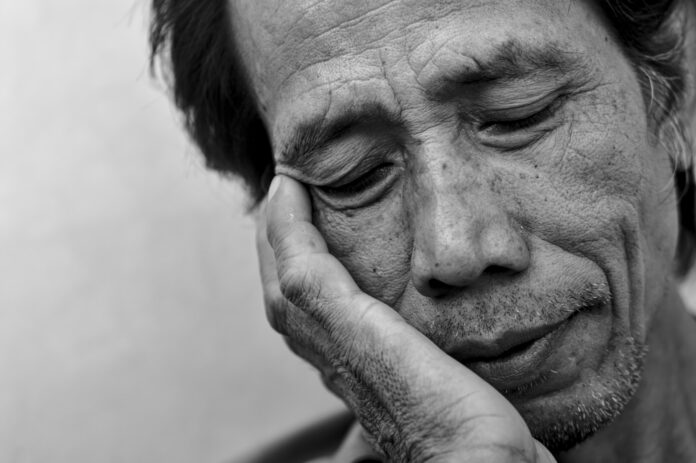
What is your body trying to tell you when anxiety, exhaustion, tension, or other symptoms become louder? In this episode of The Anxiety Guy Podcast, we explore how anxiety and burnout may be connected to prolonged activation, people pleasing, suppressed emotions, performance pressure, and repeatedly saying yes when something inside of you is saying no.
Ready to rebuild trust in your body? The Health Anxiety Recovery Program provides daily guidance to help you move away from symptom checking, reassurance seeking, and fear and toward greater trust in yourself and your nervous system. Start here.
Listen to the full episode below.
When the Body Says No but the Mouth Says Yes
Imagine waking up in the morning already feeling tired, heavy, tense, dizzy, or simply not as restored as you expected. Your mind may immediately begin looking for an explanation. Did I sleep badly? Did I do too much yesterday? Do I need more rest? Those questions can sometimes be useful, but there is another question worth asking: What did I override?
Maybe you spent yesterday agreeing to something you did not really want to do. Maybe you felt anger but stayed quiet. Maybe something felt unfair but you convinced yourself it was not worth mentioning. Maybe you kept performing, pleasing, smiling, or pushing forward while internally your body was bracing. Your body was communicating one thing while your behaviour communicated another.
Constantly overriding yourself can become biological work. When you are monitoring other people, controlling your expression, suppressing irritation, worrying about disappointing someone, trying to perform well, or forcing yourself to remain agreeable while another part of you feels completely differently, your nervous system is still working.
There can be tension, vigilance, emotional restraint, anticipation, and internal conflict even when very little physical activity is happening. This prolonged activation may also continue after the situation itself has ended, which helps explain why simply lying down or sleeping does not always feel as restorative as we expect.
What Is Your Body Trying to Tell You Before Symptoms Get Louder?
The body often communicates quietly before it communicates loudly. The first signal might be irritation, tightness, resistance, heaviness, a desire to leave, a need for space, or simply an internal feeling of “no.” Then the thinking mind arrives and explains it away. “Just be nice.” “Do not disappoint them.” “You should be able to handle this.” “Keep going.” “It is easier to say yes.” When this happens repeatedly, the original signal never really receives a response.
The resentment remains. The boundary is never expressed. The need for rest gets ignored. The anger is pushed down. The desire for connection, play, change, or fulfilment continues to wait.
Over time, the body may become harder to ignore. This does not mean every physical sensation has a hidden emotional meaning, and it certainly does not mean you should start obsessively analysing every symptom. That would simply become another form of anxiety monitoring. Instead, widen the lens.
Rather than immediately asking, “How do I make this symptom disappear?” ask, “What was happening around me and within me before my body became louder?”What did my body notice before my mind started negotiating with it? Where did I feel a no and say yes? Where did I push through? Where was I trying to please, impress, perform, or avoid disappointing someone?
Anxiety, Burnout, and the Cost of Constant Self Abandonment
One of the connections between anxiety and burnout that deserves more attention is how exhausting it can be to repeatedly behave in ways that conflict with what you genuinely feel. People pleasing is a good example. You are not simply saying yes.
You may also be monitoring the other person’s reaction, controlling your own emotional response, suppressing what you actually want to say, predicting possible conflict, and trying to remain pleasant throughout the entire interaction. On the outside, nothing dramatic appears to be happening. Internally, however, there may be considerable biological work taking place.
The same applies to performance.
Sometimes we genuinely want to participate in something, but we place so much pressure on ourselves to do it perfectly that the experience becomes exhausting. The body may begin resisting not because the activity itself is wrong, but because of the pressure attached to it. This is why the answer is not always to stop doing things whenever symptoms appear. Sometimes the most truthful response is rest. Other times it is speaking up. Sometimes it is saying no. And sometimes it is recognizing, “I actually want to do this, but I do not want to do it under this enormous pressure.”
What Did Your Body Notice Before Your Mind Explained It Away?
This is one of the most useful questions you can begin practicing. The body often responds before the analytical mind constructs a story around the experience. You may immediately sense anger, discomfort, excitement, fear, resistance, or a desire for something. Seconds later, your conditioned thinking takes over. You worry about being judged. You think about what you should do. You consider how other people might respond. You tell yourself to ignore what you felt.
Recovery can involve learning to notice that first honest response without automatically allowing old survival patterns to override it.
Listening to your body does not mean obeying every uncomfortable sensation. There is a major difference between being responsive to yourself and becoming controlled by symptoms. Sometimes the body needs rest. Sometimes fear simply does not want you to take a healthy risk. Sometimes you need a boundary. Sometimes you need movement, connection, play, honesty, or expression. The goal is not perfect interpretation. The goal is a more honest relationship with yourself.
Your Body Should Not Have to Scream to Get Your Attention
When your behaviour becomes increasingly aligned with what genuinely feels true, you begin giving your nervous system a different experience. You acknowledge anger rather than pretending it is not there. You say no when no is appropriate. You ask for help when you need it. You rest without turning rest into fear. You speak honestly. You stop automatically sacrificing yourself to keep everyone around you comfortable. And when something matters deeply to you, you allow yourself to move toward it without demanding perfect performance.
Each of these experiences carries a similar message: I am listening to myself now.
The body no longer has to work quite as hard to gain your attention because you are becoming responsive to the quieter signals. This is not about creating a stress free life. It is about reducing the unnecessary internal conflict that comes from repeatedly feeling one thing while forcing yourself to behave as though you feel something else.
So today, especially when you notice anxiety, exhaustion, tension, or another familiar symptom, try not to immediately turn it into another problem that needs solving. Ask yourself, “What is my body trying to tell me right now?” Then zoom out and ask the question that may reveal even more: “What has my body been trying to tell me all day?” Where did I override myself? Where did I brace? Where did I feel a no? Where did I need honesty, a boundary, rest, connection, movement, expression, or something genuinely fulfilling?
Finally ask yourself: Is there something truthful I need to say, do, change, or simply acknowledge? The purpose is not to fear your symptoms more. It is to live in a way where your body increasingly knows that it does not have to become louder before you are willing to listen.
Listen to the complete episode using the media player at the top of this page.
If health anxiety continues to keep you trapped in symptom monitoring, reassurance seeking, and fear of your own body, learn more about the Health Anxiety Recovery Program.
About Dennis Simsek
Dennis Simsek is the founder of The Anxiety Guy and host of the Health Anxiety Podcast Show. His work focuses on helping people understand and change the patterns that keep anxiety alive while developing greater trust in themselves, their bodies, and their capacity to participate fully in life.
More episodes: https://theanxietyguy.com/podcasts/
YouTube: https://youtube.com/@theanxietyguy1
Instagram: https://instagram.com/theanxietyguy
Facebook: https://facebook.com/theanxietyguy
Disclaimer: This article and podcast are for educational purposes only and do not constitute medical advice. Please consult your healthcare provider regarding specific medical or mental health concerns.
Related