Views
After losing nearly all my friends, I discovered how unmanaged bipolar symptoms were sabotaging my relationships — and how I learned to rebuild them.
A friend once asked me, “Julie, why don’t you write a book about bipolar disorder and relationships?”
“I already did that with my first book for couples where one person has bipolar,” I replied.
“I don’t mean couples, Julie!” he exclaimed. “I mean friendships. I can’t seem to keep any friends.”
I know what my friend — a man in his late thirties who struggles with bipolar disorder — meant by this statement. Like me, he wanted good relationships but often found that bipolar got in the way.
In the years after I was finally diagnosed with bipolar in 1995, I managed to lose almost all my friends because of my neediness, irritation, paranoia, medication side effects, and more.
In 2001, I hit rock bottom when I received a letter from my best friend (I’ll call her Melissa) that changed my life forever. It was terribly hard to read, but that letter ended up saving my future relationships.
Melissa and I had been friends since high school; I was always the driving force in our relationship. As my illness got progressively worse, I became weak while she became strong. She started sticking up for herself; I, on the other hand, began to sink into a hole of depression that seemed inescapable.
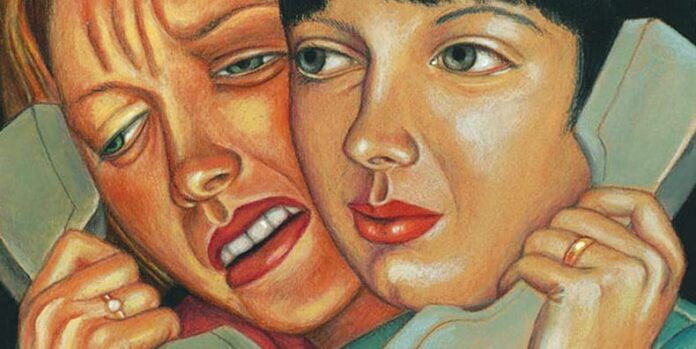
I called Melissa constantly and complained about my life. When she didn’t respond the way I wanted, I became paranoid and angry, telling her she wasn’t a good friend.
Realizing How My Behavior Was Hurting the People I Loved
Looking back on it now, I realize I had fallen prey to the typical bipolar “relationship killers” — neediness, selfishness, and paranoia.
One day, my friend, in a five-page, single-spaced letter, made it clear that she couldn’t take it anymore:
“… It seems to be a continual problem with us that you think I don’t spend enough time with you. What am I to do? I go long stretches of time without seeing lots of people, and they just don’t seem to have a problem with it. They are busy, too. They have lives. I guess I’m just tired after all these years of feeling like I have to continually defend myself, that I don’t give you what you need. I wish you could accept what I can give and not seem to continually feel that I’m not giving enough….”
I broke down in tears when I read Melissa’s letter. How had this happened? I was indignant, angry, and sad — I felt misunderstood and attacked. Didn’t she understand how terrible bipolar is? How could she be so insensitive? I had been the popular one in high school, surrounded by friends — and now I felt utterly alone.
I was mortified as I read on:
“… Julie, you are such a wonderful person. I could list 50 positive things about you. But I can’t be the primary support person in your life that you seem to continually want me to be. I don’t have anything left. I’m 36 and I don’t want to be the caretaker I was in my teens and twenties. I want to care for myself. That doesn’t mean that I’m a bad friend or a bad person….”
How I Fell Into the ‘Bipolar Trap’ Without Realizing It
At the time, I overlooked the words, “Julie, you are a wonderful person.” All I saw was the criticism. I was utterly unaware of the “bipolar trap” — allowing my mood swings to determine my behavior and, in the process, losing all sense of reason.
Indeed, because my depression made me needy, I looked excessively to others for help. Selfishly, I couldn’t focus on my friends’ lives — my despair was all-consuming. Finally, my paranoia became so intense — I couldn’t stop myself from sending long, rambling emails about how people didn’t really care for me.
The final blow came toward the end of Melissa’s letter:
“… I want you to have fun with my friends. One friend liked you a lot, but she was a bit concerned with the slew of illnesses you described. I know you want to be honest about your illness, but you also have to realize that [your fulsome descriptions] can scare people off on a first meeting. Sometimes I want to include you in things I do with friends, [but] they would prefer not to….”
The Letter That Broke Me — and Then Began to Heal Me
As I read this passage, I realized that few people really wanted my company. Honestly, I had no idea that bipolar’s mood swings could do this to a person — I was still blaming others for my unhappiness.
Concluding her letter, Melissa said that while she cared about me, she could no longer be friends. I replied with a long, miserable email about how she didn’t understand how hard life was for me — that she was being insensitive.
Eventually, most of my friends left me. Because my self-treatment plan was then at a beginning stage, I hadn’t made the connection between bipolar’s mood swings and my own behavior.
After reading Melissa’s letter over and over and weighing my options, I had a moment of clarity that I can vividly recall: I could stay as I was — miserable and friendless — or I could take advantage of this amazing gift my friend had unknowingly handed me.
With these reflections, I felt my hurt and my anger slip away. To get better, I would have to change every negative behavior Melissa had described. I had no idea how I was going to do this — the problem appeared insurmountable. Still, I made the important connection that if I could somehow control my bipolar disorder, I would become a better friend.
This meant finding a way to manage my symptoms. In this way, I could manage my behavior toward potential friends, even when I was experiencing mood swings. Furthermore, I realized that my self-treatment plan simply wasn’t working at that point. I needed to make a change if I was going to get better.
Addressing My Bipolar Symptoms to Fix My Behaviors
Confronting my shortcomings was one of the most painful things I’ve ever done. It made me realize that there was nothing wrong with my friends; rather, the problem was within me.
So I let go of my pride and got to work — I learned to manage the illness and my emotions to the point that I started to become a better friend.
It took me many years to truly change, but I kept going. I stopped talking so much and started listening.
I consciously tried not to dominate conversations with my health worries. By using the self-treatment plan that I developed and now discuss in my books, I began to recognize the signs of these “relationship killers” and limit how often they appeared.
As I began to better manage my illness, I saw the huge connection between the random emotions caused by untreated bipolar disorder and the real me — the good me — beneath all the symptoms. I taught myself to live by the new code I had created, not by the dictates of this illness.
Now — years after receiving that letter — I’m surrounded by friends I care about deeply. They often compliment me on my friendship skills. Sometimes I tell them about this letter, explaining that it’s still a struggle for me to be a good friend. And while I have certainly wrecked a few relationships over the years, I know I’ve come a long way.
Unfortunately, Melissa and I stopped seeing each other in 2001. She has no idea that she changed my life with her compassionate, kind, and truthful letter. Perhaps I should send her this column and let her know she is one of the main reasons I’m now able to write books that help others become better friends.
Tips for Being a Better Friend When You Live With Bipolar
- Listen more than you talk.
- Keep conversations balanced — don’t let your health concerns dominate.
- Shift from complaining to taking action.
- Avoid sending emails or making phone calls when you’re feeling unwell or emotionally needy — it rarely ends well.
- Learn about the “bipolar conversation” I discuss in all my books.
- Ask yourself, “Is this the real me or the bipolar me?” — and make sure the real you is the one showing up with friends.
- Give yourself time to grow. You can become a truly great friend in less than a year.
With time, patience, and persistence, you’ll find that managing bipolar and nurturing friendships aren’t separate journeys — they grow stronger together.
UPDATED: Originally printed as “The bipolar trap,” Winter 2008