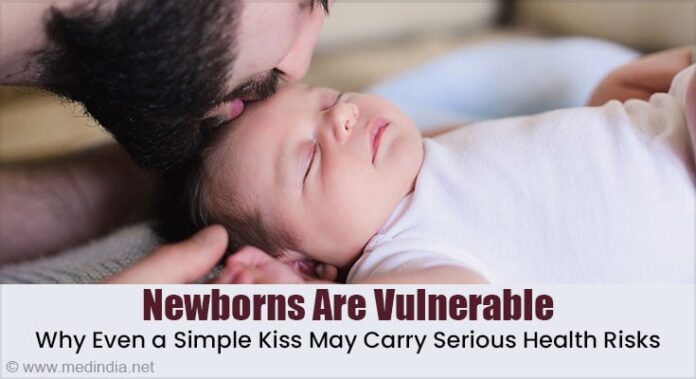
Kissing a newborn may seem harmless, but in certain cases, it can expose infants to serious infections like herpes.
- Kissing a newborn can transmit HSV-1, especially if the adult has an active cold sore
- Newborns are highly vulnerable due to immature immunity and a weak blood-brain barrier
- Though rare, neonatal herpes can lead to brain damage or life-threatening complications
A viral Instagram post by science communicator Hashem Al-Ghaili, followed by over 1.1 million users, has brought renewed attention to whether a simple kiss can be dangerous for newborns.
The post described the case of baby Breelyn, who reportedly developed neonatal herpes after being kissed by someone with an active cold sore, leading to HSV encephalitis, a severe brain infection associated with long-term neurological damage, seizures, and developmental challenges (1✔ ✔Trusted Source
New Parents and Newborns: Are Visitors OK?
Go to source
).
The post, which has gained significant traction online with thousands of shares, highlights a real concern—but one that requires proper medical context. Experts agree that while such outcomes are rare, the risk is real under specific conditions.
Can Kissing a Newborn Actually Spread Infections?
Kissing a newborn is not inherently harmful, but it can become risky if the person has an active infection—particularly herpes simplex virus type 1 (HSV-1), which commonly causes cold sores.
According to evidence referenced in the BMJ, HSV can be transmitted through close contact such as kissing. If passed to a newborn, the infection can have serious consequences, including long-term neurological damage and, in rare cases, death.
Clinical evidence and current pediatric guidance recognize that HSV-1 can be transmitted to newborns through close contact, including kissing, especially when an adult has an active cold sore. While such cases are uncommon, the risk is well established and taken seriously in neonatal care.
Importantly, the same case also showed that early diagnosis and treatment helped prevent severe complications, highlighting that timely medical care can improve outcomes.
Why Are Newborns More Vulnerable to Infections?
Newborns are particularly vulnerable because their immune system is still developing. They have limited ability to fight infections and rely on temporary maternal antibodies that decrease over time (2✔ ✔Trusted Source
Father-to-Newborn Transmission of Herpes Simplex Virus Infection: A Sweet but Bitter KissHerpes neonatal tras contacto con herpes labial paterno: dulce y amargo beso
Go to source
).
Medical experts note that newborns are at higher risk of infections from both bacteria and viruses and are more prone to severe conditions such as sepsis and meningitis. Even a fever in a baby under three months is treated as a medical emergency.
Another important factor is the underdeveloped blood-brain barrier, which normally helps prevent infections from reaching the brain. In newborns, this barrier is not fully mature, increasing the risk of infections spreading to the central nervous system.
Because of these factors, infections that may be mild in adults can become rapidly serious in infants.
What Happens When Newborns Get HSV Infection?
Neonatal herpes is a rare but potentially life-threatening condition. While it is most commonly transmitted during childbirth, it can also occur after birth through close contact, including kissing (3✔ ✔Trusted Source
Neonatal Herpes
Go to source
).
Once the virus enters a newborn’s body, it can spread quickly and affect multiple organs, including:
- The brain (causing encephalitis)
- Lungs and liver
- Skin and eyes
Symptoms may appear within the first few weeks of life and can include:
- Fever or low body temperature
- Poor feeding or difficulty waking
- Irritability or unusual crying
- Blisters on the skin, lips, or eyes
- Breathing difficulty or seizures
Without prompt treatment, the infection can lead to brain damage, organ failure, or death. However, early use of antiviral medications can significantly reduce complications.
How Can Parents Reduce Herpes Risk?
While neonatal herpes is rare, preventive steps are simple and effective—especially during the first few months when babies are most vulnerable.
Pediatric guidance recommends:
- Avoid kissing newborns, especially on the face or lips
- Do not allow contact with individuals who have cold sores, fever, cough, or any illness
- Wash hands thoroughly before touching the baby
- Avoid sharing utensils, towels, or personal items
Parents are also advised to limit visitors in the early weeks and consider delaying close contact until the baby’s immune system is stronger, often after 2–3 months.
Visitors should:
- Avoid getting too close to the baby’s face
- Follow strict hygiene practices
- Be up to date on vaccinations such as Tdap (whooping cough), flu, and COVID-19
In addition, avoiding crowded places like malls or public transport early on can help reduce exposure to infections.
Importantly, parents should feel confident setting boundaries with visitors, prioritizing their baby’s health over social expectations.
In conclusion, while kissing a newborn is usually safe, it can pose serious risks in the presence of infections like HSV-1. The concern raised online is not entirely unfounded—but it must be understood in context. With proper awareness, hygiene, and simple precautions, these risks can be effectively minimized.
Frequently Asked Questions
Q: Can kissing a newborn really cause infections?
A: Yes, kissing a newborn can transmit infections like herpes simplex virus (HSV-1), especially if the person has an active cold sore.
Q: What is neonatal herpes and how dangerous is it?
A: Neonatal herpes is a rare but serious infection that can affect the brain and other organs, leading to long-term complications or even death if untreated.
Q: What are the early signs of herpes infection in newborns?
A: Symptoms may include fever, poor feeding, irritability, skin blisters, breathing difficulty, or seizures and require immediate medical attention.
Q: Should visitors avoid kissing newborn babies?
A: Yes, especially if they are unwell or have cold sores. Experts recommend avoiding kissing and maintaining proper hygiene around newborns.
Q: How can parents protect their newborn from infections?
A: Parents should limit visitors, ensure hand hygiene, avoid contact with sick individuals, and follow vaccination and safety precautions.
References:
- New Parents and Newborns: Are Visitors OK? – (https://www.hopkinsmedicine.org/health/wellness-and-prevention/new-parents-and-newborns-are-visitors-ok)
- Father-to-Newborn Transmission of Herpes Simplex Virus Infection: A Sweet but Bitter KissHerpes neonatal tras contacto con herpes labial paterno: dulce y amargo beso – (https://www.sciencedirect.com/science/article/pii/S1578219016302694?)
- Neonatal Herpes – (https://my.clevelandclinic.org/health/diseases/neonatal-herpes-simplex)
Source-Medindia