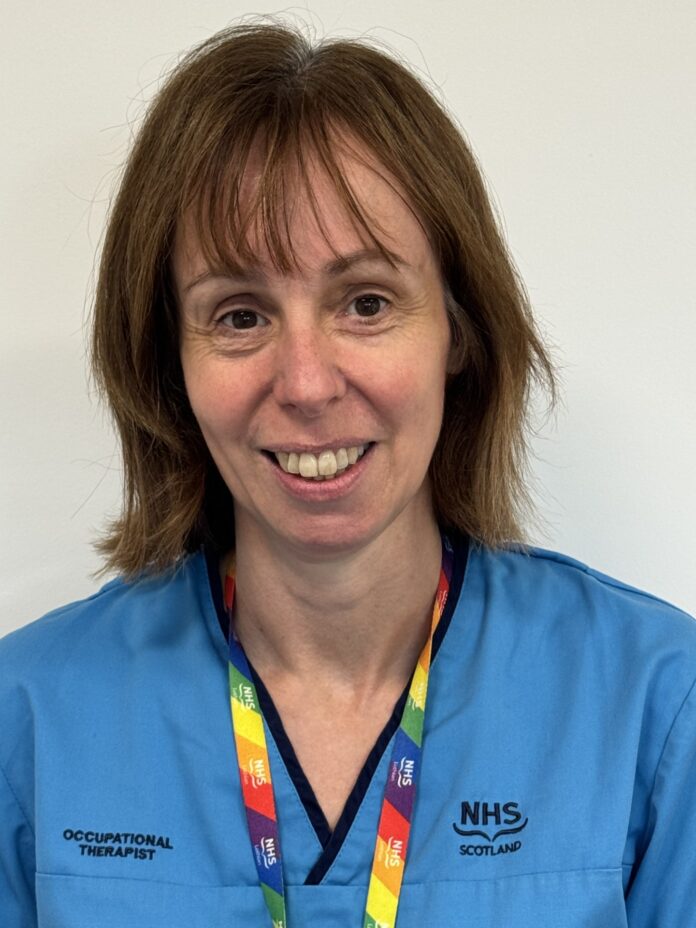
I have now been an occupational therapist for over 30 years, predominantly working with older people who have mental health conditions and dementia. When I was preparing this blog I started by thinking back to what my perceptions were of rehabilitation when I started my career and how this has changed over the years.
I clearly recall the interview I had to do when I applied to Queen Margaret College (as it was then). One of the questions asked was what I knew about occupational therapy and what did I think they would do with people. I remember talking about rehabilitation in relation to people recovering from stroke, heart attacks, fractures etc and getting people back to what they were previously able to do. At that time, it did not occur to me that people with dementia could also benefit from rehabilitation. I had thought that as a degenerative condition rehabilitation did not apply and would not be relevant or possible. I realise now how short-sighted and restricted this perspective was and was probably influenced by the stigma, discrimination and ageist views that pervaded how people with dementia were viewed and treated at that time.
Fast forward a few years and I now find myself starting to undertake a project in Lothian looking at rehabilitation and dementia and what allied health professions (AHPs) can offer. This is part of the Connecting people, connecting support framework which outlines the contribution AHPs can make to people living with dementia. So, what has changed and why do I now think that people with dementia should be able to access rehabilitation to help them with the diagnosis of dementia, but also to be able to access the same rehabilitation services for other health conditions that people without dementia can access?
One of the key factors that has influenced my views of the potential of rehabilitation is the positive impact I have seen in practice when input from occupational therapy has enabled someone with dementia the opportunities to engage with their world in the best way possible. This could be a large piece of work to facilitate someone being able to leave hospital and returning to live at home again, or it may be a briefer intervention, such as using a memory aid to reduce reliance on carers. The common themes though are working in partnership in a person-centred way to enable independence, increase wellbeing and reduce potential stress on carers.
My own practice area is within a hospital setting, working with people who are in the moderate to advanced stages of dementia. The occupational therapy team provide a range of evidence-based interventions to allow people with dementia the opportunities to be the best they can in an environment that can be unfamiliar and unsettling. This can include groupwork, for example, Cognitive Stimulation Therapy, kitchen skills or walking groups, all tailored to suit individuals. Individual sessions are also provided which may include meaningful activities to promote wellbeing and reduce distress or for people returning home environmental adaptations to make it easier to function safely and as independently as possible at home. We can also provide advice and support to family carers and formal caregivers on how to best engage with the person and how to adapt activities.
While there have been many improvements for people with dementia receiving AHP interventions to help them on their rehabilitation journey, we still have some way to go. We need to ensure that everyone who receives a diagnosis of dementia receives input from occupational therapists and other allied health professionals at the right time, in the right place and in a way that they can easily engage with.
Contributor: Morna Russell, Occupational Therapy Team Lead, NHS Lothian

References:
Connecting People, Connecting Support framework for the contribution allied health professions make to people living with dementia in Scotland.
Allied Health Professionals – Alzheimer Scotland
Since the publication of our first allied health professional dementia policy document in Scotland, Connecting People Connecting Support (Alzheimer Scotland 2017) we have debated, advocated and delivered dementia rehabilitation informed by three sources of evidence: research, clinical practice and the voice of lived experience. We shared in our second report (Alzheimer Scotland 2020) examples of dementia rehabilitation and in our third report (Alzheimer Scotland 2024) we highlight there is a rehabilitation gapthatmust be filled, with a need to increase awareness of what dementia rehabilitation is, how it has a positive impact on people with lived experience and also services, and there is a need to apply the evidence of dementia rehabilitation in practice. As an allied health professional dementia community, with our many partners, colleagues and friends, we are therefore going to share a number of blogs posts over the next 12 months on rehabilitation and dementia, answering the simple question
“What does rehabilitation mean to you?
You can read our first blog in the series here
You can read the second blog by Jenny, speech and language therapist here