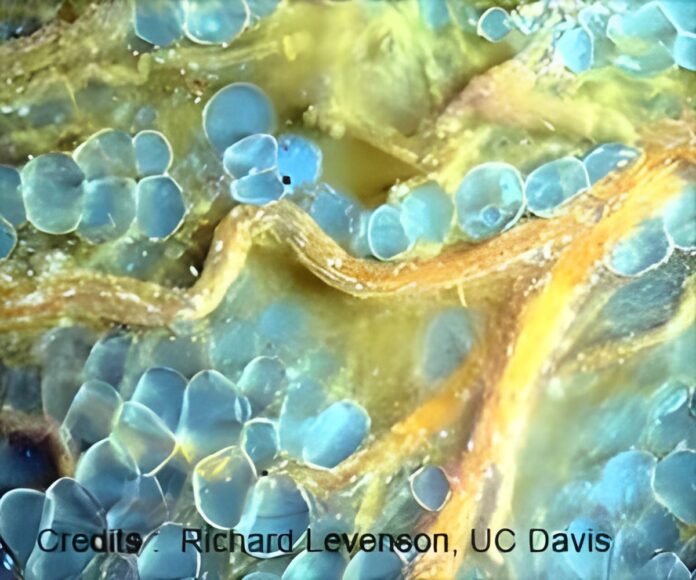
Your age may not tell the whole aging story. AI tissue clocks can estimate the biological age of individual organs from microscopic tissue images.
- Different organs can show different rates of biological aging
- AI tissue clocks estimated age from more than 25,000 tissue images
- Some organs showed accelerated aging as early as the 20s and 30s
A person’s age is usually described by a single number. New research suggests that number tells an incomplete story, because different organs within the same body can age at markedly different rates.
Researchers have developed AI-based tools called “tissue clocks,” which estimate the biological age of a specific organ directly from microscopic images of its tissue. (1✔ ✔Trusted Source
Histological aging signatures for monitoring tissue-specific aging and disease
Go to source
)
The findings are based on an unusually large dataset: more than 25,000 tissue images spanning 40 tissue types, drawn from nearly 1,000 individuals.
The results indicate that certain organs show signs of accelerated aging as early as a person’s twenties and thirties, while others remain relatively stable for decades before aging more abruptly.
What Are “Tissue Clocks” and How Do They Estimate Biological Age?
A tissue clock is an AI model that estimates a person’s age by looking only at the microscopic structure of their tissue. It does not use other clinical information.
To develop the model, researchers analyzed about 480 million individual image tiles from tissue slides of organs such as the:
- Brain
- Heart
- Lungs
- Pancreas
- Skin
- Intestine
Notably, the AI was not specifically trained to look for age-related features. Yet, the analysis found that age was the strongest factor affecting how the tissue looked, more than any other variable studied.
After training, the tissue clocks could estimate chronological age with an average error of less than five years. In several tissues, they also performed better than established DNA-based methods used to estimate biological age.
The finding fits with broader research on aging, which has identified nine interconnected cellular processes that contribute to age-related decline. These include:(2✔ ✔Trusted Source
What Is Biological Aging and How Is It Measured?
Go to source)
- DNA damage accumulating over time
- Telomere shortening, which affects the protective caps at the ends of chromosomes
- Senescent cells building up, which stop dividing but remain metabolically active and release inflammatory signals into nearby tissue
Tissue clocks appear to capture the visible structural effects of these underlying cellular changes.
Do All Organs Age at the Same Rate?
According to the study, aging does not proceed uniformly across the body. The researchers identified several distinct patterns:
|
Pattern Observed |
Description |
|
Early acceleration |
The lungs, kidneys, pancreas, and adrenal glands showed signs of accelerated aging as early as ages 20–40 |
|
Late-stage acceleration |
Certain tissues remained relatively stable before showing pronounced aging later in life |
|
Hormone-linked shifts |
The uterus displayed a marked increase in aging signals around the time of menopause |
|
Disease-associated acceleration |
Kidney failure was linked to accelerated aging signals across multiple tissues, not only the kidney; diabetes showed pronounced effects specifically in the pancreas |
A separate study conducted by researchers at the University of Melbourne, which assessed organ age in more than 100,000 adults using MRI brain scans and standard blood and urine tests, reported similar findings.(3✔ ✔Trusted Source
How old are your internal organs?
Go to source
)
According to that research, the aging of different organ systems is closely interconnected: if one organ system, such as the lungs, appears older than a person’s chronological age, related organs, including the heart, kidneys, muscles, and brain, are more likely to show advanced aging as well.
The same study identified the musculoskeletal system as a central hub within this network, whose biological age is influenced by the aging of most other organ systems.
Can Blood Tests Reveal the Biological Age of Internal Organs?
Tissue samples can be difficult and impractical to collect. Researchers therefore looked for a less invasive way to measure the biological age of individual organs.
By comparing gene activity in blood samples with tissue-based aging estimates from the same people, researchers developed a method to estimate an organ’s biological age gap using a standard blood test.
The blood-based method detected aging patterns linked to several diseases:
- Alzheimer’s Disease: The strongest aging signal was found in brain-related markers.
- Crohn’s Disease: Linked to accelerated aging signals across the gastrointestinal tract.
- Cystic Fibrosis, Vasculitis, Diabetes, and Stroke: Each showed a distinct organ-specific aging pattern.
The findings also match a separate large-scale study published in Nature Aging. Researchers in that study developed organ-specific aging clocks using blood proteins from more than 43,000 people.(4✔ ✔Trusted Source
Organ-specific proteomic aging clocks predict disease and longevity across diverse populations
Go to source
)
That study found:
- Accelerated brain aging was strongly linked to future dementia risk, even after accounting for genetic risk factors such as APOE4.
- Accelerated kidney aging was the strongest blood-based predictor of future chronic kidney disease.
- Accelerated intestine aging was the strongest blood-based predictor of future type 2 diabetes.
What Role Does Lifestyle Play in Age-Related Disease?
A review in Aging and Disease suggests that many conditions called “age-related” are not caused by aging alone. Lifestyle factors may also play a major role.(5✔ ✔Trusted Source
Aging and “Age-Related” Diseases – What Is the Relation?
Go to source
)These include conditions such as:
- Type 2 diabetes
- High blood pressure
- Heart disease
- Benign prostatic hyperplasia
The review found that these diseases remain less common in some traditional populations that maintain healthy diets and active lifestyles. However, rates can rise when people adopt a Western-style diet and lifestyle.
Several factors may speed up biological aging:
Can Biological Aging Be Slowed or Reversed?
The evidence suggests that biological age is not fixed like chronological age and may be influenced by lifestyle and medical interventions.
Small clinical trials have reported reductions in biological age after programs that included:
- Regular exercise
- Time-restricted eating
- Polyphenol-rich diets
- Better sleep
Drug-based approaches are also being studied. Senolytic drugs, which aim to remove aging or senescent cells while leaving healthy cells intact, are currently being tested in early human trials.
However, these approaches are still being researched. Tissue clocks and blood-based aging tests are also research tools rather than routine clinical tests.
Overall, the emerging evidence suggests that biological aging can be measured and may be modifiable, but more research is needed to determine whether these changes can translate into longer, healthier lives.
Frequently Asked Questions
Q: What are AI tissue clocks?
A: AI tissue clocks are computer models that estimate the biological age of tissue by analyzing its microscopic structure.
Q: How do tissue clocks measure organ age?
A: They examine microscopic images of tissue and identify structural patterns associated with age.
Q: Do all organs age at the same rate?
A: No. The study found that different tissues can show very different aging patterns.
Q: Which organs showed earlier signs of aging?
A: The lungs, kidneys, pancreas and adrenal glands showed signs of accelerated aging as early as the 20s to 40s.
Q: Can a person’s biological age differ from their actual age?
A: Yes. Biological age reflects changes in the body that may not match chronological age.
Q: Can a blood test estimate the biological age of organs?
A: Researchers are developing blood-based methods that may estimate organ-specific biological aging without needing a tissue sample.
Q: Does faster organ aging mean a person will develop a disease?
A: Not necessarily. The findings show associations between organ aging patterns and disease, but they do not mean accelerated tissue aging will definitely cause illness.
Q: Can biological aging be slowed?
A: Research suggests biological aging may be influenced by lifestyle and other interventions, but methods such as tissue clocks and many aging treatments remain largely research tools.
Q: Are AI tissue clocks available as routine health tests?
A: No. These tissue and blood-based aging clocks are currently research tools and are not established routine clinical tests.
References:
- Histological aging signatures for monitoring tissue-specific aging and disease – (https://www.nature.com/articles/s41591-026-04566-5)
- What Is Biological Aging and How Is It Measured? – (https://scienceinsights.org/what-is-biological-aging-and-how-is-it-measured/)
- How old are your internal organs? – (https://pursuit.unimelb.edu.au/articles/how-old-are-your-internal-organs)
- Organ-specific proteomic aging clocks predict disease and longevity across diverse populations – (https://www.nature.com/articles/s43587-025-01016-8)
- Aging and “Age-Related” Diseases – What Is the Relation? – (https://pmc.ncbi.nlm.nih.gov/articles/PMC12096902/)
Source-Medindia