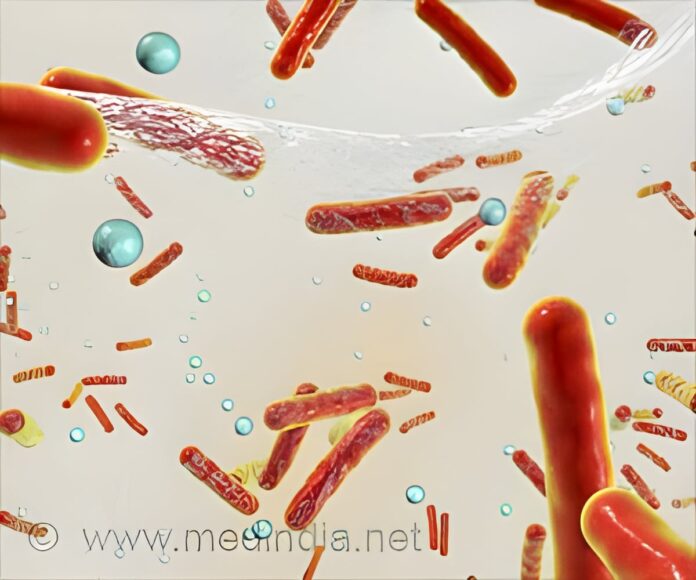
Scientists have discovered ultra-small RNA replicators called Obelisks hiding in the human microbiome, revealing a previously unknown RNA world.
- Obelisks are <1 kb RNA replicators with protein-coding genes and ribozymes
- Found in 50% of oral and 7% of gut microbiomes, indicating widespread presence
- Their impact on human health remains unknown but may influence microbes and immunity
For decades, scientists believed that the smallest known replicating genetic elements were viroids—tiny loops of RNA found only in plants.
These stripped-down molecules lack protective protein shells and don’t encode proteins, yet they can infect and cause disease. But a groundbreaking study by Zheludev et al., published in Cell, has overturned this long-held assumption.
The researchers discovered an entirely new type of RNA replicator known as Obelisks, secretly dwelling in the human-related microbiomes. These are small pieces of RNA containing protein-coding genes and self-cleaving ribozymes, implying complex replication capacities. Their discovery is the gateway to a huge, hitherto unknown RNA biosphere (1✔ ✔Trusted Source
A novel viroid-like RNA element “Obelisks”: a major breakthrough in the RNA World
Go to source).
TOP INSIGHT

Did You Know?
Obelisks infect 50% of human oral microbiomes, yet we never knew they existed. #rna #medindia
Obelisks: A Genome Smaller Than Life’s Known Limits
Obelisks are astonishingly tiny (less than 1 kilobase (<1,000 bases)), making them one of the smallest autonomous replicons ever found in animals. Despite their miniature size, they pack:
- Self-cleaving ribozymes
- A circular, rod-like RNA genome
- A new protein-coding gene family named “Oblins”
These features make them more complex than traditional plant viroids and similar in some ways to the Hepatitis Delta Virus, which also carries ribozymes and a protein-coding region.
How Were The Obelisks Missed for So Long?
Traditional methods for detecting viroids rely heavily on comparing new sequences against known databases. If something is too different, it simply goes unnoticed.
To avoid this blind spot, Zheludev’s team created a new computational approach called the Viroid Nominator (VNom). Instead of matching sequences to known ones, VNom looks for:
- Apparent circularity of RNA
- Presence of both positive- and negative-sense strands (a hallmark of replication)
This method allowed researchers to screen thousands of datasets from the Integrative Human Microbiome Project (iHMP) with much higher sensitivity. As a result, nearly 30,000 obelisk-like RNA circles were identified globally.
Computational biologist Simon Roux called the approach “really creative”, emphasizing how difficult it had been to detect such elements before.
Obelisks Are Everywhere—Even Inside Us
Obelisks turned up across multiple global ecosystems, but what shocked researchers most was their presence in human-associated microbes:
- 50% detection rate in the oral microbiome
- 7% detection rate in the fecal microbiome
These numbers imply that obelisks are not rare—they have simply been invisible until now.
One specific bacterium, Streptococcus sanguinis, commonly found in the mouth, was shown to host an obelisk capable of replicating inside it.
Matthew Sullivan, a microbiologist, remarked that although their impact on human health is still unknown, obelisks could potentially influence bacterial behavior and, indirectly, human biology.
A New Protein Family Emerges: The Oblins, Complex Than Classic Viroids
Unlike plant viroids—which encode no proteins—obelisks carry genes for previously unknown proteins, which researchers named ‘oblins’.
This puts obelisks in a special situation between viroids and small RNA viruses:
- Single form, such as viroids.
- But able to encode proteins, such as viruses.
- And possessing ribozymes, to permit RNA self-processing.
Some of these obelisks even have mutated hammerhead ribozyme motifs, implying that they are capable of cleaving themselves and possibly replicating in a complex manner.
Do Obelisks Affect Human Health?
Although there are no direct links between obelisks and human disease, there is evidence that other viroid-like circular RNAs may play important roles in biological processes. One notable example is the viroid of colorectal cancer, the CCAV, which was found in tumour tissues.
Wu et al. demonstrated the expression of CRC-associated viroid (CCAV) to be linked with immune dysfunction, viral infection and even tumorigenesis, so the replicas of circular RNA in humans may play a role in regulating cellular functions. These results pose some interesting questions about what the obelisks were.
It is also unclear if it may influence the stability of the human microbiome, whether the newly described Oblin proteins may change the host cellular functions or whether their presence may change the microbial metabolism or immune responses. Although all of these possibilities have not been proven, they can have serious implications, which should be investigated further.
What’s Next? Hunting the Rest of the Hidden RNA Universe
The landscape of viroid-like RNA agents is expanding rapidly, with recent metatranscriptomic studies revealing thousands of previously unknown circular RNA replicons across diverse ecosystems and increasing the known diversity of these elements several-fold.
Because Obelisks were uncovered using just one specialized analytical pipeline, many more likely remain undetected.
To fully explore this hidden RNA world, future research will need to focus on developing more advanced detection and bioinformatics’ tools, creating robust in vitro and animal models to study Obelisk biology, reconstructing their evolutionary origins, and examining how they interact with their bacterial hosts.
These efforts will be essential to understanding how obelisks evolved, how they replicate, and whether they play meaningful roles in microbial ecology or human health.
The Discovery Is Just the Beginning: A New Chapter in the Story of RNA Life Is On the Run
The discovery of obelisks is forcing scientists to rethink the limits of life’s smallest genomes. These tiny RNA circles, hiding in the human mouth and gut, expand the known diversity of replicating genetic elements and raising profound questions about evolution, microbiomes, and the boundary between living and nonliving systems.
As Simon Roux perfectly summarized it:
“We can see the picture of the long-term evolution of viruses on Earth start to slowly emerge.”
Obelisks are more than scientific curiosities—they represent an unexplored frontier in biology. Understanding them may reveal entirely new principles of molecular life, unlock novel biotechnological tools, and ultimately reshape our understanding of the microbial universe within and around us.
Reference:
- A novel viroid-like RNA element “Obelisks”: a major breakthrough in the RNA World – (https://pmc.ncbi.nlm.nih.gov/articles/PMC12226432/)
Source-Medindia