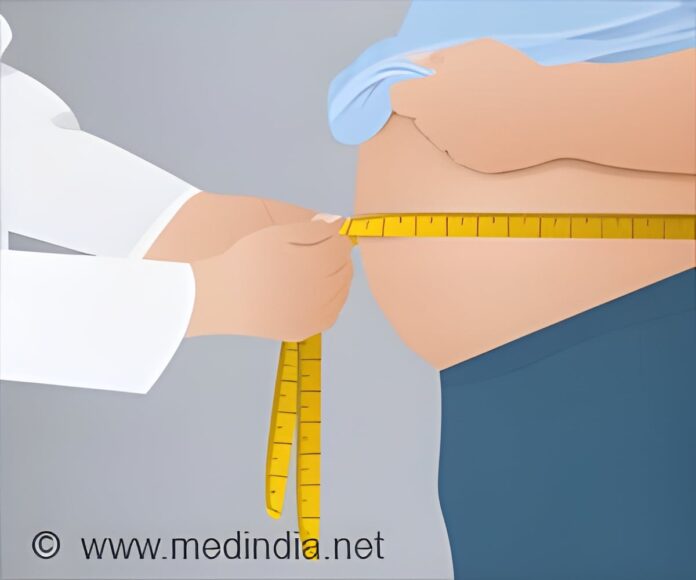
Patients losing more weight with incretin-based drugs showed reduced risks of obesity-related conditions, while weight gain increased health complications.
Greater weight loss after incretin-based treatment for obesity or diabetes was associated with lower risks of obesity-related conditions, while weight gain increased the likelihood of several complications. (1✔ ✔Trusted Source
Study shows for benefits on obesity-linked conditions of losing more weight with GLP-1 treatment
Go to source
).
New findings to be presented at the European Congress on Obesity 2026 in Istanbul, Turkey, from May 12-15, showed that both losing more weight versus less weight and losing some weight instead of gaining weight were linked to better clinical outcomes. The work was conducted by Professor John Wilding from the University of Liverpool, United Kingdom, and colleagues.
Randomized trials have previously shown that glucagon-like peptide-1-based treatments such as semaglutide and liraglutide, along with glucagon-like peptide-1 and glucose-dependent insulinotropic polypeptide dual agonists like tirzepatide, help reduce body weight and lower the risk of harmful clinical outcomes.
However, in real-world clinical settings, many patients discontinue glucagon-like peptide-1-based therapies, and weight changes vary considerably between individuals. The relationship between real-world weight change after starting these medications and later health outcomes has remained unclear, prompting further investigation.
Body Mass Index Tracking After Incretin Therapy
The authors used Optum Market Clarity, a United States-based electronic health record and claims database, to evaluate first-year body mass index changes following the initiation of glucagon-like peptide-1-based therapies, including liraglutide, semaglutide, and tirzepatide, between January 2021 and June 2024.
They also examined links between these body mass index changes and later clinical outcomes through June 2025. First-year body mass index change was measured by comparing baseline values with the average body mass index recorded between 275 and 455 days after treatment began.
The investigation further assessed the association between body mass index changes and the risk of developing osteoarthritis, chronic kidney disease, obstructive sleep apnea, and heart failure. Hazard ratios were estimated after adjusting for demographic and clinical factors. Patients who developed any of these outcomes before follow-up body mass index measurements were excluded from the analysis.
Obesity Drug Discontinuation and Health Outcomes
The analysis included 67,841 patients, representing 75.6% of the group, who started semaglutide treatment, while 15,661 patients, or 17.5%, received tirzepatide and 6,216 patients, or 6.9%, initiated liraglutide therapy.
At the beginning of treatment, the average age of participants was 57.5 years, and the mean body mass index was 34.7 kilograms per square meter. Additionally, 61% of participants had type 2 diabetes.
Overall, 50.1% of patients discontinued glucagon-like peptide-1-based therapy within one year, which was defined as a treatment gap of 60 days or longer without medication. Despite this, the analysis evaluated the entire group according to the amount of weight lost, regardless of whether treatment continued or was discontinued.
Higher Weight Loss Linked to Lower Disease Risk
During the first year after starting treatment, 27.0% of patients experienced body mass index reductions of less than 5%, while 22.4% achieved reductions between 5% and less than 10%. Another 14.1% lost between 10% and less than 15% of body mass index, and 15.8% achieved reductions of at least 15%.
In contrast, 20.8% of patients showed an increase in body mass index. During the following average follow-up period of 11 months, incidence rates per 1,000 person-years were 21.4 for osteoarthritis, 21.1 for chronic kidney disease, 20.3 for obstructive sleep apnea, and 3.9 for heart failure.
Compared with patients who experienced body mass index reductions between 0% and less than 5%, those who reduced body mass index by at least 15% had a 37% lower risk of osteoarthritis, a 30% lower risk of chronic kidney disease, a 69% lower risk of obstructive sleep apnea, and a 32% lower risk of heart failure. All findings were statistically significant except the heart failure result.
Weight Gain Increased Several Health Risks
Patients whose body mass index increased showed worse outcomes compared with individuals who lost between 0% and less than 5% of body mass index. The risk of osteoarthritis was 10% higher, although this trend was not statistically significant.
Chronic kidney disease risk increased by 14%, which was considered borderline significant. The likelihood of obstructive sleep apnea rose by 22%, while heart failure risk increased by 69%, with both findings reaching statistical significance.
The authors concluded that in this real-world analysis, where half of patients stopped glucagon-like peptide-1-based treatment within a year of starting therapy, failure to lose weight was linked to poorer clinical outcomes, whereas larger reductions in weight were associated with lower risks. They emphasized the potential clinical importance of achieving and maintaining weight loss after beginning glucagon-like peptide-1-based treatment.
In conclusion, greater weight loss after incretin-based treatment for obesity or type 2 diabetes was linked to lower risks of several obesity-related complications, while weight gain increased the likelihood of adverse health outcomes.
Reference:
- Study shows for benefits on obesity-linked conditions of losing more weight with GLP-1 treatment ( https://www.eurekalert.org/news-releases/1127136)
Source-Eurekalert