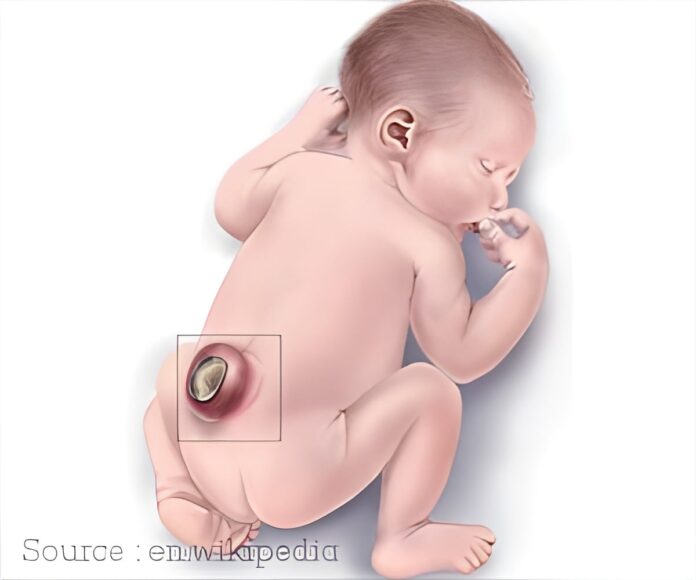
Infants with spina bifida often have undiagnosed sleep breathing problems, which may hinder cognitive development.
Children born with spina bifida, a spinal cord malformation associated with mobility problems and hydrocephalus, are known to carry elevated lifelong risks for cognitive challenges.
New research from multiple medical centers reveals that sleep-related breathing disturbances are common yet frequently overlooked in these infants, raising concern that such issues may further compromise neurological outcomes.
The findings suggest that identifying and treating these breathing problems early in life could meaningfully improve cognitive development.(1✔ ✔Trusted Source
Breathing disruptions during sleep widespread in newborns with severe spina bifida
Go to source)
TOP INSIGHT

Did You Know?
#Sleepbreathing disruptions begin right after birth in severe spina bifida and may silently derail #braindevelopment unless screened early.
#spinabifida #birthdefects #childhealth #prenatalcare #neuraltubedefects #medindia
Early Sleep Issues in Newborns with Myelomeningocele
The study focused on newborns who had undergone surgery for myelomeningocele, the most severe form of spina bifida.
While doctors have known that older children and adults with myelomeningocele often experience sleep disorders, this innovative research reveals that sleep problems begin much earlier than previously recognized and affect more than half of newborns with the condition.
The findings point to a significant opportunity for early intervention: identifying and treating sleep-disordered breathing in these high-risk infants might be an effective way to improve their cognitive development.
The study is published in Pediatrics.
Multidisciplinary Approach Reveals Hidden Risks
“The vast majority of these newborns with breathing problems would have been completely undetected without the comprehensive sleep studies performed by our multidisciplinary research teams before hospital discharge,” said Renée Shellhaas, MD, the David T. Blasingame Professor of Neurology at WashU Medicine and lead author of the study, who also treats patients at St. Louis Children’s Hospital.
“This research demonstrates how bringing together expertise from multiple specialties can identify critical but previously overlooked opportunities to improve outcomes for vulnerable infants.”
Some of the patients in the study were treated at St. Louis Children’s by WashU Medicine pediatric physicians. The hospital provides dedicated care for these patients though the Spina Bifida Clinic and now considers screening high-risk babies to identify newborns with sleep problems and provide early treatment.
WashU Medicine is also home to a high-volume center for in utero myelomeningocele repair through the advanced Fetal Care Centerin the Department of Obstetrics & Gynecology at Barnes-Jewish Hospital.
Understanding Myelomeningocele and Neurodevelopmental Impact
Myelomeningocele happens when the spinal column does not form properly during early fetal development and results in exposure of the spinal cord.
It affects around three out of every 10,000 babies born in the U.S. Surgery either while the fetus is still inside the womb or shortly after birth improves motor outcomes and reduces other complications, but patients remain at high risk of social and learning problems as they grow up, and many experience difficulties with memory, attention and information processing.
Older children who have had surgery to repair myelomeningocele as infants are prone to breathing problems during sleep, a condition known as sleep-disordered breathing.
This can take different forms, including obstructive sleep apnea, in which the airway is blocked, or central sleep apnea, in which the brain’s drive to breathe is abnormal.
If left untreated the cumulative effect of sleep disruption or intermittent low oxygen levels may lead to serious deficits in attention and executive function.
Clinical Knowledge Gap and New Evidence
“Sleep-disordered breathing is a significant contributor to behavioral problems and likely to cognitive deficits as well, but it has not been well studied or routinely screened for in newborns,” said coauthor Ronald Chervin, MD, the Michael S. Aldrich Collegiate Professor of Sleep Medicine at the University of Michigan Medical School.
“This study addresses a critical gap in our understanding of the prevalence and onset of these sleep and breathing disturbances, and raises the possibility of high-impact interventions that could improve long-term outcomes for these children.”
In collaboration with senior author John Barks, MD, a professor of pediatrics at the University of Michigan Medical School, the researchers worked with experts at nine centers across the U.S., each with large multidisciplinary research teams that were specially assembled for this research.
The unprecedented collaboration brought together expertise from neonatology, sleep medicine, neurosurgery, obstetrics, pediatric surgery, psychology, pediatric neurology and other specialties.
Over the course of the study these integrated teams measured breathing patterns, brain activity, muscle activity and heart rhythms of 173 newborns who had undergone myelomeningocele repair.
Preterm Infants at Highest Risk
More than half of the babies exhibited some form of sleep-disordered breathing, and babies born preterm were at highest risk, said Shellhaas. This represents an opportunity for early intervention that could benefit a large number of patients, given the effectiveness of current treatments to improve not just breathing but potentially brain function as well.
“What if early diagnosis and treatment of something as seemingly straightforward as sleep-disordered breathing could improve cognitive development for at-risk babies?” said Shellhaas.
“It changes everything for these babies. It changes everything for their families. This could be a sea change for the field.”
The research team is continuing to follow the study participants until age two to evaluate their sleep and their cognitive and physical development, which will provide crucial data about the long-term impact of early identification and treatment of sleep-disordered breathing.
Shellhaas said that newborns with myelomeningocele represent a test case for what she and her collaborators expect will be a broader effort to diagnose and treat sleep-related breathing problems in high-risk infants as a way to protect and enhance their neurodevelopment.
“We know that for otherwise healthy children, sleep-disordered breathing results in measurable differences in attention, behavior and quality of life,” said Shellhaas. “For children who have a high risk of sleep problems and who also have a high risk of developmental disabilities, this study identifies a relatively accessible and potentially powerful intervention that could meaningfully improve long-term outcomes.”
Reference:
- Breathing disruptions during sleep widespread in newborns with severe spina bifida – (https://medicine.washu.edu/news/breathing-disruptions-during-sleep-widespread-in-newborns-with-severe-spina-bifida/)
Source-WashU Medicine