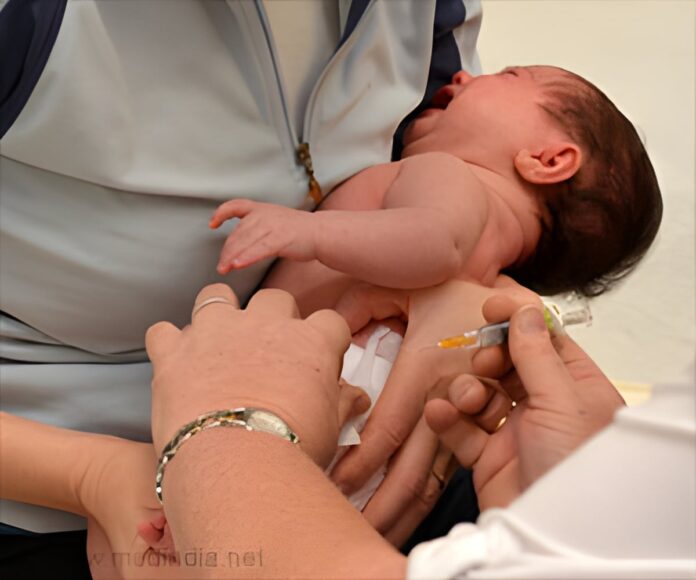
United Kingdom introduces a combined childhood vaccine to protect against chickenpox, measles, mumps, and rubella.
Children in the United Kingdom are set to be immunized against chickenpox at the same time as measles, mumps, and rubella, marking a significant change in the national vaccination program. ().
From Friday, the National Health Service across all four home nations will begin administering a combined vaccine to young children, offering protection against all four infections in one schedule.
TOP INSIGHT

Did You Know?
Chickenpox infects nine out of ten children by age ten, but countries using a combined vaccine have sharply cut cases and hospital visits.
#chickenpox #childhoodvaccination #medindia
Combined Childhood Immunization Rollout
The long-used measles, mumps, and rubella injection, which has been in place since 1988, is being replaced with a combined measles, mumps, rubella, and varicella vaccine that also guards against chickenpox, medically referred to as varicella.
Babies will be given two doses of this vaccine at twelve months and eighteen months of age to lower their chances of developing chickenpox, with general practitioner clinics beginning the first vaccination appointments on Friday.
Alignment With Global Vaccination Practices
This update brings Britain in step with countries such as the United States, Canada, Australia, and Germany, where the combined measles, mumps, rubella, and varicella vaccine has already been incorporated into standard immunization schedules.
In those countries, the approach has led to a sharp fall in chickenpox infections and related hospital admissions, demonstrating strong public health benefits.
Public Health Impact and Expert Reactions
Dr. Claire Fuller, joint medical director of National Health Service England, described the change as a major step forward, highlighting that it provides children with protection against chickenpox for the first time while strengthening the existing routine vaccinations designed to prevent serious illnesses.
Chickenpox remains a widespread childhood infection that spreads easily, with official data indicating that half of children contract it by the age of four and nine out of ten children experience it before reaching ten years of age.
Illness Burden and Family Disruption
Although chickenpox is often mild, it usually causes an itchy rash that can last up to two weeks, and children are advised to stay away from nursery or school until all spots have scabbed over, typically around five days after onset.
In some cases, the infection can lead to severe complications such as chest infections and seizures, which require hospital treatment and add pressure to healthcare services.
Previously, most parents who wished to vaccinate their children against chickenpox had to pay privately, usually spending around one hundred and fifty pounds, although the National Health Service did offer free vaccination to people in close contact with individuals at high risk of severe illness.
Health secretary Wes Streeting called the introduction of routine chickenpox vaccination a historic milestone, emphasizing that families have long dealt with the anxiety, disruption, and school absences caused by the disease.
Concerns Around Shingles
Helen Bedford, professor of children’s health at University College London, explained that adoption of this approach had been delayed in the United Kingdom because of concerns about the relationship between chickenpox and shingles.
After a chickenpox infection, the virus remains inactive in the nerves and can later reactivate as shingles, a condition considered particularly severe. There were worries that reduced circulation of the virus might remove natural immune boosting and lead to more shingles cases.
Shingles Vaccination Program Supporting Policy Change
She noted that the existence of a shingles vaccination program for older adults, combined with long-term experience from other countries using varicella vaccination, supported an evidence-based decision to proceed.
Following recommendations from the Joint Committee on Vaccination and Immunisation, which advises government ministers, the replacement of the measles, mumps, and rubella injection with the combined measles, mumps, rubella, and varicella vaccine is expected to save the National Health Service about fifteen million pounds annually and families around twenty-four million pounds through reduced medical visits and productivity losses.
Neil Gray, the Scottish health secretary, welcomed the move, describing it as an important advance in safeguarding children’s health well into adulthood and for future generations.
In conclusion, the introduction of the combined measles, mumps, rubella, and chickenpox vaccine marks a major advancement in child health protection, easing the burden of illness on families while delivering long-term public health and economic benefits across the United Kingdom.
Reference:
- Chickenpox vaccines for young children start across UK( https://www.bbc.com/news/articles/cgexe201n81o )
Source-Eurekalert