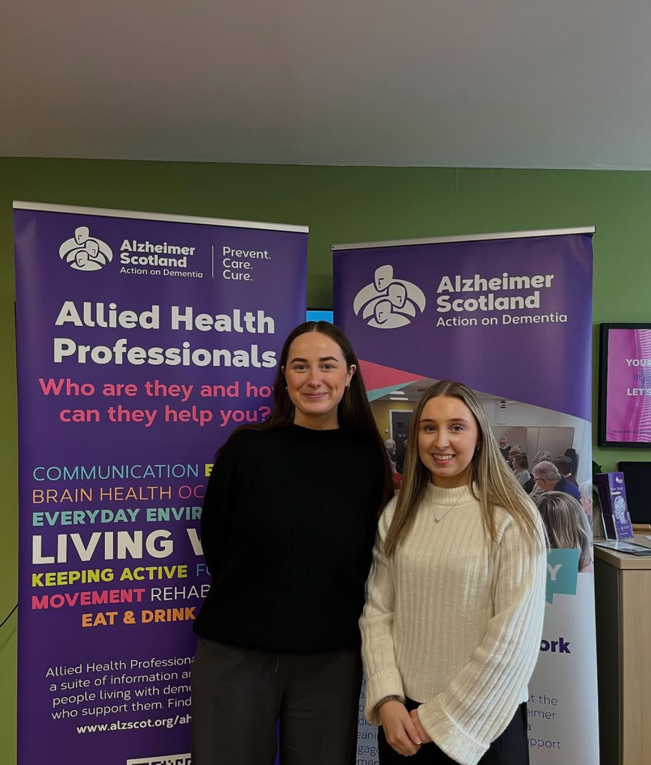
During our 10-week placement at Alzheimer Scotland as occupational therapy students, Queen Margaret University, we had various roles, from posting content on social media to increase awareness of the health benefits of occupation, to being actively involved in AHP student visits to increase understanding of the role of third sector and supporting services offered by Alzheimer Scotland including post diagnostic support. However, our key learning opportunity was working with the Active Voice members from the Scottish Dementia Working Group (SDWG) and the National Dementia Carers Action Network (NDCAN) to create a co-produced, peer led resource on travelling with dementia. The project involved creating a guide that outlined top tips and information for people living with dementia and their carers when travelling, whether by bus, train, ferry, taxi, car, or plane. We also felt it was important to include information on the various supports available to help make travelling easier.
Travelling holds a special significance for all of us, especially for those living with dementia. Travelling serves as an essential way to revisit familiar places, like a favourite nature walk, a cherished childhood spot, or a beloved holiday destination. It offers an opportunity to relive precious memories and boost mental well-being. Moreover, travelling can promote social connections—whether it’s making the journey to visit family or friends or sharing the travel experience with someone special. It helps everyone feel included. Additionally, travelling empowers individuals and reinforces the idea that dementia doesn’t define anyone; it serves as a reminder that life can still be fulfilling, active, and full of opportunity.
Both SDWG and NDCN recognised the resource needed to be updated, as the original Travelling with Dementia guide was created in 2016. Over the past nine years, we’ve seen major changes in society and technology that needed to be considered. It was also important that the voices of lived experience led this work, ensuring the updated resource highlights their most recent tips and advice for making travel more accessible, enjoyable, and stress-free. Their insights focus on how going out can support wellbeing, connection, and independence, offering practical suggestions to help people living with dementia and their carers feel more confident and relaxed when travelling. We now find ourselves in a post-COVID-19 world, which has transformed how we navigate public spaces; commonly, this has led to increased anxieties around travelling for us all. Additionally, technology has made significant advancements since 2016. Many travel services now rely on online bookings, digital tickets, and contactless payments. The updated resource provides helpful guidance on how to effectively navigate these digital systems, making it easier for people with dementia and their carers to access and use.
Being part of this project was a valuable experience and extremely relevant to us as occupational therapy students. The resource goes beyond just the different ways to travel but also explores the reasons behind why we travel. It aligns with the essence of occupational therapy, which is all about enabling participation, engaging in meaningful occupations, and supporting connections within the community. Travelling isn’t only about how we get there—it’s an activity that inspires all of us to explore and enjoy a sense of independence. Just because someone receives this diagnosis doesn’t mean their travel plans should come to a stop, and we aimed to reflect that within the project.
Working alongside both groups provided an opportunity to explore the value of occupation in practice. Travel, often considered a routine activity, becomes deeply meaningful when viewed through the lens of someone living with dementia. From an occupational therapy perspective, this project highlighted the importance of enabling and supporting meaningful engagement, even in areas that can feel complex or overwhelming.
Throughout this process, co-production was not just a concept—it was the foundation of everything we did. Our role was to help coordinate the group, facilitate discussions, and ensure that updates to the document were carried out, but the direction came entirely from the members of SDWG and NDCAN. We met every two weeks to discuss and review the content together. We listened actively, made suggested changes, and continuously reflected on how the document could better reflect the lived experiences of those it aimed to support. We also reviewed the previous version of the travel document and got feedback from other Active Voice members, which helped us understand what was already working and what needed improvement.
What stood out most was the sense of ownership and empowerment the group members had in shaping this resource. Their input wasn’t just valued—it was vital. Real stories, challenges, and practical solutions informed every addition, edit, and design choice. This approach ensured that the final document wasn’t just informative—it was authentic, relatable, and respectful of the people it was created for. It reminded us that the most impactful tools and interventions are those built alongside the people who will actually use them.
Being involved in this project gave us a valuable opportunity to work directly with people with lived experience. It challenged us to think critically, communicate clearly, and listen actively. These are skills that will continue to shape us as occupational therapy practitioners and strengthen our ability to deliver person-centred care.
The final document will have real impact. By offering practical advice and guidance, it makes the idea of travelling with dementia feel more manageable and less intimidating. It will help individuals feel safer, more confident, and more included in their communities. For occupational therapists, it becomes a resource we can share with people who we work with, opening doors to conversations about participation, identity, and autonomy. Ultimately, this project has been a powerful reminder that true collaboration leads to more meaningful outcomes.
We would like to express our gratitude to all the NDCAN and SDWG members we collaborated with on this project. It was an eye-opening and enjoyable experience, and we truly appreciated your valuable insights and the opportunity to work with you all.
By Emma Wall and Hannah Moore, Occupational Therapy students at Queen Margaret University, Edinburgh
