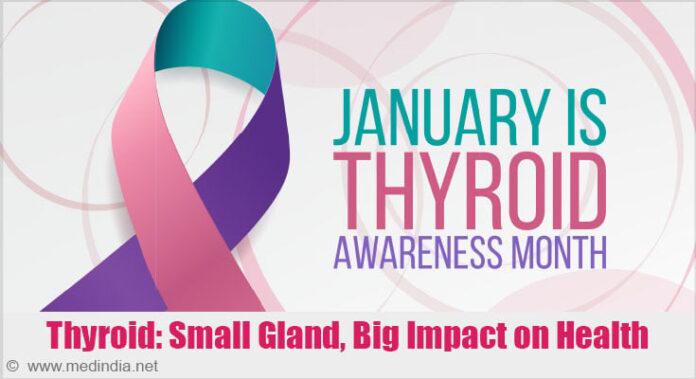
Thyroid Awareness Month reminds people how this small gland plays a big role in metabolism, hormones, and long-term health.
- Thyroid disorders affect millions, yet many remain undiagnosed
- Women’s thyroid health faces higher lifetime risk than men
- TSH blood testing enables early and accurate detection
Each year, Thyroid Awareness Month (January) focuses on increasing public understanding of thyroid health, early detection of thyroid disorders, and encouraging people to talk to their healthcare providers about symptoms and screening. The theme for Thyroid Awareness Month 2026 highlights early detection, symptom awareness, and proactive management of thyroid conditions (1✔ ✔Trusted Source
The American Thyroid Association (ATA)
Go to source
).
TOP INSIGHT

Did You Know?
>Millions live with undiagnosed thyroid disease that quietly affects energy, mood, and weight.
#thyroidawareness #hormonehealth #medindia
Importance of Thyroid Awareness Month
Thyroid disorders affect millions of people worldwide, yet many remain undiagnosed. An estimated 20 million Americans have some form of thyroid disease, and up to 60 percent of those are unaware of their condition. Women are five to eight times more likely than men to develop a thyroid problem, and one in eight women will develop a thyroid disorder during her lifetime.
History of Thyroid Awareness Month
Thyroid Awareness Month was established to raise awareness of thyroid health issues, promote earlier diagnosis and treatment, and reduce the burden of undiagnosed thyroid disease. January was chosen as a dedicated month to focus public attention on the importance of thyroid gland function and to encourage education, screening, and support for affected individuals.
What Is the Thyroid Gland?
The thyroid is a small, butterfly-shaped endocrine gland located in the front of the neck. It produces hormones (primarily T4 and T3) that regulate vital body functions such as metabolism, heart rate, body temperature, and energy use. These hormones affect nearly every tissue in the body and are essential for normal growth, development, and overall health.
Thyroid Awareness Month Facts
- Thyroid disorders are very common, with millions affected, yet many cases go undiagnosed.
- Women are significantly more likely to experience thyroid disease than men (about five to eight times more likely).
- Many people with thyroid disease may not recognize symptoms, which often mimic other conditions.
- Thyroid problems can affect people of all ages, including children and older adults.
- Early detection and treatment can improve quality of life and reduce complications.
Thyroid Disease and Mental Health: The Overlooked Connection
Thyroid hormones play a critical role in brain function, emotional regulation, and cognitive clarity. When thyroid hormone levels are too low or too high, people may experience symptoms such as anxiety, depression, irritability, low motivation, and brain fog. These symptoms are often mistaken for primary mental health conditions, delaying accurate diagnosis. During Thyroid Awareness Month, experts emphasize that persistent mood changes should prompt evaluation of thyroid function alongside mental health screening.
Common Thyroid Disorders You Should Know About
Hypothyroidism
Hypothyroidism occurs when the thyroid gland does not produce enough hormones. This slows many of the body’s functions, leading to symptoms such as fatigue, feeling cold, dry skin, constipation, and memory problems. It is often caused by autoimmune disease (like Hashimoto’s thyroiditis), surgery, radiation, or iodine deficiency. Treatment typically involves daily hormone replacement to restore normal hormone levels.
Hyperthyroidism
Hyperthyroidism results from excess thyroid hormone production, accelerating body processes. It can cause rapid heartbeat, weight loss, nervousness, heat intolerance, and sleep disturbances. The most common cause is Graves’ disease, an autoimmune condition. Treatment may include medication, radioactive iodine, or surgery to reduce hormone production.
Thyroid Nodules and Goiter
Thyroid nodules are lumps within the thyroid gland that may be benign or, less commonly, cancerous. A
Thyroid Cancer
Thyroid cancer involves malignant growth within the thyroid tissue. Although less common than other thyroid conditions, it can often be treated successfully, especially when detected early. Types include papillary, follicular, medullary, and anaplastic thyroid cancer.
Thyroiditis
Thyroiditis refers to inflammation of the thyroid gland, which can cause temporary hyperthyroidism followed by hypothyroidism. It may result from infections, autoimmune processes, or postpartum changes. Symptoms vary depending on hormone levels and disease stage.
Thyroid Health Across Life Stages
Thyroid health requirements vary across different stages of life, particularly during hormonal change. Adolescence, pregnancy, postpartum recovery, and menopause are times when thyroid dysfunction is more likely to surface or worsen. Symptoms during these phases are often attributed to normal hormonal shifts, stress, or aging, which can delay detection. Awareness efforts highlight the importance of considering thyroid testing when symptoms persist or interfere with daily life at any age.
Thyroid Disorders, Fertility, and Pregnancy Health
Thyroid function is closely linked to reproductive health, fertility, and healthy pregnancy outcomes. Both hypothyroidism and hyperthyroidism can interfere with ovulation, increase the risk of pregnancy complications, and affect fetal development if left untreated. Thyroid Awareness Month reinforces the need for timely screening before conception or early in pregnancy, especially for individuals with symptoms, autoimmune conditions, or a family history of thyroid disease. Early diagnosis allows for safe management that supports maternal and fetal health.
Screenings for Thyroid Dysfunction
Screening typically involves a simple blood test measuring Thyroid-Stimulating Hormone (TSH). This test is an early and sensitive indicator of thyroid function. Abnormal TSH levels may prompt further tests for thyroid hormones (T4, T3) to diagnose conditions like hypothyroidism or hyperthyroidism.
When Talking to Your Doctor
When discussing thyroid health with your doctor, consider mentioning:
- Any symptoms you’re experiencing (e.g., fatigue, weight changes, mood shifts)
- Family history of thyroid disease
- Changes in energy, heart rate, or temperature tolerance
- Any lumps or swelling in your neck
- Request a TSH blood test if you have persistent symptoms
How to Celebrate and Observe Thyroid Awareness Month
- Educate your community by sharing credible information about thyroid health and symptoms.
- Encourage friends and family, especially women, to get thyroid screening if they have symptoms or risk factors.
- Wear symbolic colors or ribbons to show support and start conversations about thyroid health.
- Host or attend virtual events, webinars, or support group meetings on thyroid awareness.
- Share your own or others’ experiences to help reduce stigma and encourage proactive health care.
Frequently Asked Questions
Q: What are common symptoms of hypothyroidism?
A: Common symptoms of hypothyroidism include fatigue, weight gain, cold sensitivity, dry skin, constipation, and memory problems caused by low thyroid hormone levels.
Q: How is hyperthyroidism diagnosed?
A: Hyperthyroidism is diagnosed using blood tests that measure Thyroid-Stimulating Hormone (TSH), free T4, and T3 levels to detect excessive thyroid hormone production.
Q: What is a thyroid nodule and when should I worry about thyroid cancer?
A: A thyroid nodule is a lump in the thyroid gland that should be evaluated for thyroid cancer if it grows, feels hard, or shows suspicious features on ultrasound.
Q: What are the differences between hypothyroidism and hyperthyroidism?
A: Hypothyroidism involves low thyroid hormone levels that slow metabolism, while hyperthyroidism involves high thyroid hormone levels that speed up body functions.
Q: How often should thyroid function screening be done?
A: Thyroid function screening using a TSH blood test should be done when symptoms appear or at regular intervals for people with risk factors such as family history or autoimmune disease.
Reference:
- The American Thyroid Association (ATA) – (https://www.thyroid.org/media-main/press-room/)
Source-Medindia