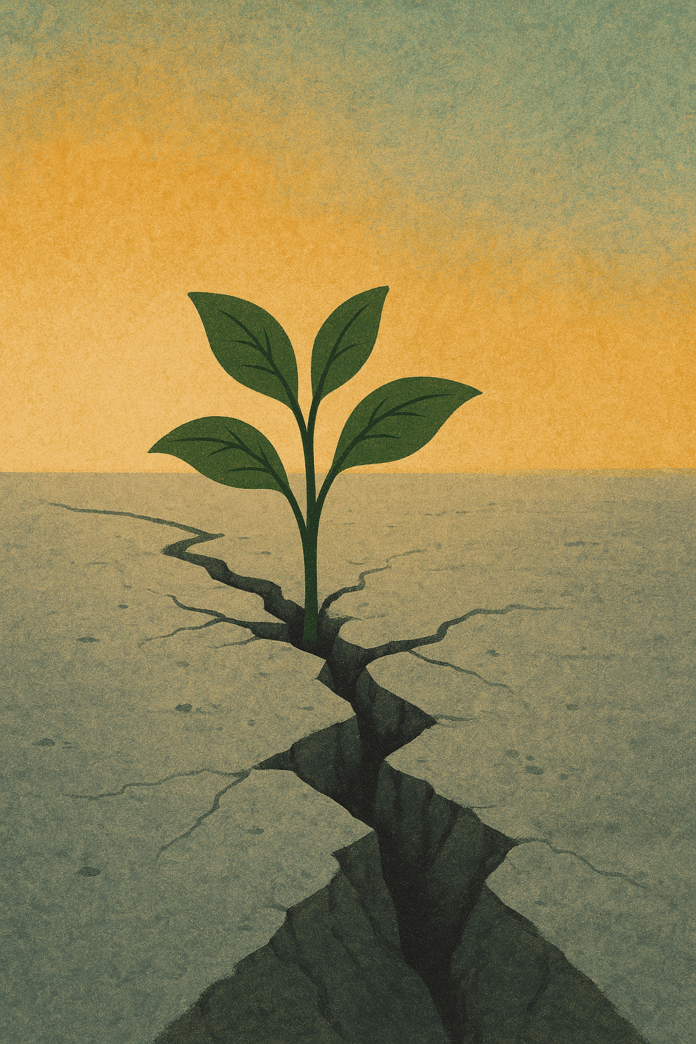
When life delivers news that changes everything, perhaps a serious health diagnosis for yourself or someone you love, fear and uncertainty can feel overwhelming. Yet even in the hardest moments, it is possible to find strength, meaning, and hope.

I know this because I’ve lived it. When a doctor told me I had breast cancer, I panicked, as anyone would. Over time, I learned to cope, ask for help, and keep moving forward. The concept of post-traumatic growth, finding new strengths and meaning after hardship, gave me hope when I needed it most.
This challenging experience inspired me to refocus my energy on a meaningful path forward. I’ve always been passionate about supporting diverse scientists, but I felt that I had limited influence as a scientific leader. To pivot my career, I earned a master’s degree in positive psychology from the University of Pennsylvania and then a coaching certification.
Looking back, my diagnosis brought urgency to the desire for more purpose-driven work. I’m now a leadership coach. I help academic and industry scientists build resilience and communicate more effectively. I also sought a way to publish the science behind what helped me.

I designed Thriving Through Adversity: A Journal to Support Mental Well-Being When Facing a Serious Health Crisis to guide readers through a difficult health journey. Combining evidence-based positive psychology practices with reflective journaling, it can help readers process emotions, build resilience, and discover moments of calm and purpose. I believe it can help individuals and their loved ones face crises similar to the ones I faced.
What This Journal Offers
This journal puts important concepts from positive psychology into practice.
Discover Post-Traumatic Growth: Post-traumatic growth doesn’t mean the pain disappears or that the hardship was good. It means you may discover new strengths, deeper connections, or a clearer sense of purpose through your journey.

Expressive Writing and Health Tracking: Journaling about your experiences can reduce stress and foster meaning-making. The Thriving Through Adversity journal format created includes space to track symptoms, treatment notes, and questions for your doctors, which can help you feel prepared and supported.
Prompts for Gratitude and Positive Emotions: Practicing gratitude can shift focus toward what is still good in life and improve overall well-being. Prompts in the journal lead you to activities such as listening to your favorite song or watching a funny movie that help cultivate positive emotions day by day.
A Supportive, Meaningful Gift
 With guided reflections and practical tracking tools, Thriving Through Adversity makes a thoughtful gift for anyone navigating illness, whether as patient or caregiver.
Start Today
Write down three things you’re grateful for, a question you want to ask your doctor, or one kindness you have done for another person this week. Small, intentional practices rooted in science can help you find calm, strength, and even meaning during life’s hardest moments. Use Thriving Through Adversity on your journey as a source of hope and resilience.
References
Kallander, L. (2021). Thriving Through Adversity: A Journal to Support Mental Well-Being When Facing a Serious Health Crisis. Thriving Through Adversity Coaching.
Foundational source for post-traumatic growth:
Tedeschi, R. G., & Calhoun, L. G. (2004). Posttraumatic Growth: Conceptual Foundations and Empirical Evidence. Psychological Inquiry, 15(1), 1–18. https://doi.org/10.1207/s15327965pli1501_01
Support for using writing for meaning making::
Zheng, L., Lu, Q., & Gan, Y. (2019). Effects of expressive writing and use of cognitive words on meaning making and post-traumatic growth. Journal of Pacific Rim Psychology, 13, e5.
Support for ways gratitude and other interventions help people newly diagnosed: :
Moskowitz, J. T., Carrico, A. W., Duncan, L. G., Cohn, M. A., Cheung, E. O., Batchelder, A., Martinez, L., Segawa, E., Acree, M. & Folkman, S. (2017). Randomized controlled trial of a positive affect intervention for people newly diagnosed with HIV. Journal of Consulting
and Clinical Psychology, 85(5), 409. DOI: 10.1037/ccp0000188
Foundational for gratitude:
Emmons, R. (2013). Gratitude Works!: A 21-Day Program for Creating Emotional Prosperity. Jossey-Bass.
Seligman, M. E., Steen, T. A., Park, N., & Peterson, C. (2005).
Positive Psychology progress: empirical validation of interventions. American Psychologist, 60(5), 410.
Image Credits
Illustrations in this article other than the book cover were created with the assistance of AI (ChatGPT, OpenAI). These images are provided for use only in connection with this article’s publication and syndication. Please do not reuse them separately or out of context.