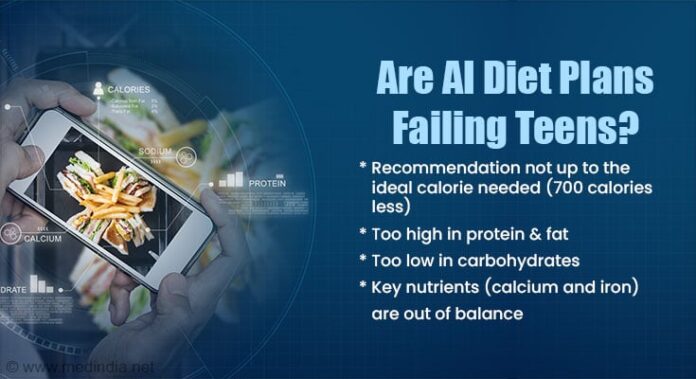
AI meal plans for teens tend to miss the perfect balance needed for healthy growth.
- AI diet plans often undercut calorie needs, affecting teen energy and focus
- Macronutrient imbalance shows higher protein and fat, but lower carbohydrates
- Experts caution that AI lacks the clinical precision needed for adolescent utrition
A new study published in Frontiers in Nutrition raises concerns about how artificial intelligence tools are being used to create weight loss meal plans for teenagers. Researchers compared AI-generated diets with those prepared by a dietitian and found clear gaps in nutritional balance (1✔ ✔Trusted Source
Artificial intelligence diet plans underestimate nutrient intake compared to dietitians in adolescents
Go to source
).
As more young people turn to AI for quick health advice, the study highlights why medical nutrition therapy still needs human expertise.
AI Diet Plans Fall Short On Calories And Nutrients
The study analysed multiple AI-generated meal plans for teenagers and compared them with dietitian-designed plans.
Researchers found that AI diet plans consistently provided far fewer calories than needed and showed major imbalances in key nutrients.
- Around 700 calories lower than recommended
- Higher protein and fat content than guidelines
- Significantly lower carbohydrate intake
- Wide variation in essential micronutrients like calcium and iron
These gaps were seen across all tested AI tools, with no single model consistently matching professional standards.
Why Macronutrient Balance Matters In Teen Years
Teenagers are in a critical phase of growth and development, where the body needs a steady supply of energy and nutrients.
The study found that AI plans often shifted diets toward high protein and fat while cutting down carbohydrates, disrupting macronutrient balance.
“Following such unbalanced or overly restrictive meal plans during the teenage years may negatively affect growth, metabolic health, and eating behaviors,” said Dr Ayşe Betül Bilen, the study’s lead researcher.
How This Could Show Up In Everyday Life
A teenager using an AI tool might get a meal plan that looks healthy, but in reality lacks enough calories for daily activities.
For example, a student preparing for exams or sports practice may feel tired or unfocused because their energy intake is too low.
In another case, a teen trying to lose weight quickly may follow a high-protein, low-carb plan suggested by AI, without realising it may not support long-term health.
Why Teens Are Turning To AI For Diet Advice
The study notes that many adolescents use AI tools because they are easy to access and provide instant answers.
In some cases, young people rely more on online tools than healthcare professionals for nutrition guidance, especially when access to dietitians is limited.
However, youngsters have to note that AI systems are designed to generate responses that sound helpful, not necessarily clinically accurate.
Why These Findings Matter In Daily Life
This research highlights a simple but important point.
Convenience does not always equal correctness when it comes to health decisions.
For teenagers and families, relying only on AI for diet planning could mean missing out on essential nutrients during a critical life stage.
What This Means Going Forward
The study suggests that AI can still play a role in nutrition education, but only as a supportive tool.
It should not replace professional guidance, especially for growing adolescents who need carefully balanced diets.
As AI tools continue to evolve, improving their accuracy and alignment with medical guidelines will be key.
Even small food choices can shape long-term health in meaningful ways. Consider seeking professional guidance that truly supports your teen’s growth and well-being.
Frequently Asked Questions
Q: Can AI create accurate weight loss meal plans for teenagers?
A: Current evidence shows AI meal plans may not meet calorie and nutrient needs for adolescents.
Q: Why are AI diet plans not suitable for teens?
A: They often underestimate energy needs and disrupt macronutrient balance, which is essential for growth.
Q: What risks do low-calorie AI diet plans pose for teenagers?
A: They may affect energy levels, growth, and overall metabolic health.
Q: Should teenagers use AI for nutrition advice?
A: AI can be used for general guidance, but should not replace professional dietitian advice.
Q: What is the safest way to plan a teen weight loss diet?
A: A dietitian-designed plan that considers growth and individual needs is the most reliable approach.
Reference:
- Artificial intelligence diet plans underestimate nutrient intake compared to dietitians in adolescents – (https://www.frontiersin.org/journals/nutrition/articles/10.3389/fnut.2026.1765598/full)
Source-Medindia