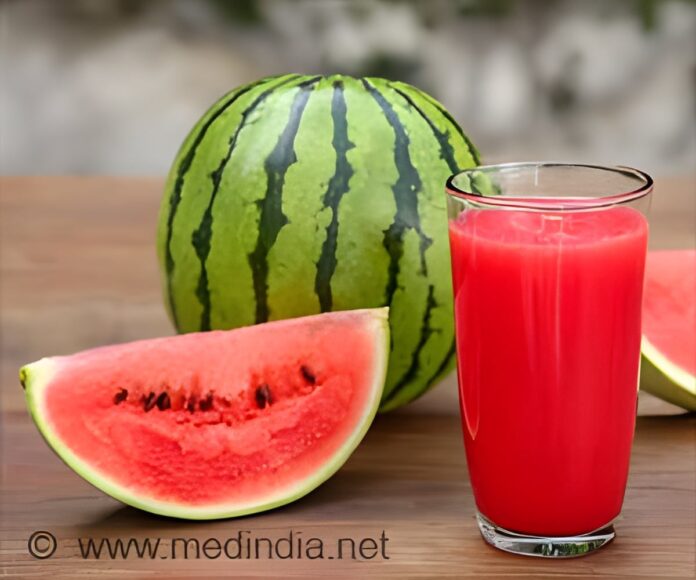
Scientists say watermelon contains nutrients that may help improve heart health, blood circulation, and overall diet quality.
Scientists say watermelon is more than just a refreshing summer fruit. Studies show it may help improve heart and blood vessel health because it contains important nutrients and natural compounds.
L-Citrulline: Watermelon’s Heart-Healthy Compound
Watermelon is rich in vitamins, antioxidants, and a special amino acid called L-citrulline.
This compound helps the body produce nitric oxide, which relaxes blood vessels and improves blood flow (1✔ ✔Trusted Source
Current Evidence of Watermelon (Citrullus lanatus) Ingestion on Vascular Health: A Food Science and Technology Perspective
Go to source
).Better blood flow may help lower blood pressure and reduce the risk of heart disease.
How Watermelon Supports a Healthier Heart and Diet
Researchers found that people who ate watermelon often had healthier diets overall. They consumed more fibre, potassium, vitamin C, and lycopene while eating less added sugar and unhealthy fats.
Studies also showed that watermelon supplements and juices helped some adults lower blood pressure and reduce stiffness in their arteries (2✔ ✔Trusted Source
Watermelon Intake Is Associated with Increased Nutrient Intake and Higher Diet Quality in Adults and Children, NHANES 2003-2018
Go to source).
Scientists believe these benefits are especially helpful for people with obesity, high blood pressure, or other heart disease risks.
Powerful Nutrients Found in Every Part of Watermelon
Different parts of the watermelon also provide health benefits. The red flesh contains antioxidants like lycopene; the rind has high amounts of L-citrulline; and the seeds contain proteins and healthy fats.
Researchers explain that lycopene and other antioxidants in watermelon help protect the body from oxidative stress and damage caused by harmful molecules called free radicals. These antioxidants may also help improve endothelial function, which is important for healthy blood vessels and proper circulation.
Watermelon seeds are also considered nutritious because they contain proteins, healthy fats, minerals, and phenolic compounds. These nutrients may support overall health and provide additional antioxidant benefits (3✔ ✔Trusted Source
Watermelon Nutritional Composition with a Focus on L-Citrulline and Its Cardioprotective Health Effects-A Narrative Review
Go to source).
Watermelon Rind May Become a Future Health Supplement
Scientists also discovered that watermelon rind contains even more L-citrulline than the red pulp. Because of this, researchers are studying ways to use watermelon rind in powders, juices, and health supplements instead of throwing it away as waste.
Some studies involving adults with pre-hypertension and obesity showed improvements in blood pressure and arterial stiffness after several weeks of watermelon supplementation. Researchers believe the increase in nitric oxide production may be one reason for these positive effects.
Conclusion
Researchers say watermelon is a low-calorie fruit with high water content, making it helpful for hydration and healthy eating habits. Because it is naturally sweet and refreshing, it may also help people choose healthier foods instead of sugary snacks and drinks.
Although the results are promising, researchers say more studies are needed to fully understand how watermelon can help improve long-term heart health fully. Scientists hope future research will discover the best amount of watermelon needed to provide the greatest cardiovascular benefits.
References:
- Current Evidence of Watermelon (Citrullus lanatus) Ingestion on Vascular Health: A Food Science and Technology Perspective – (https://pmc.ncbi.nlm.nih.gov/articles/PMC9318495/)
- Watermelon Intake Is Associated with Increased Nutrient Intake and Higher Diet Quality in Adults and Children, NHANES 2003–2018 – (https://pmc.ncbi.nlm.nih.gov/articles/PMC9692283/)
- Watermelon Nutritional Composition with a Focus on L-Citrulline and Its Cardioprotective Health Effects—A Narrative Review- (https://pmc.ncbi.nlm.nih.gov/articles/PMC12566930/)
Source-Medindia