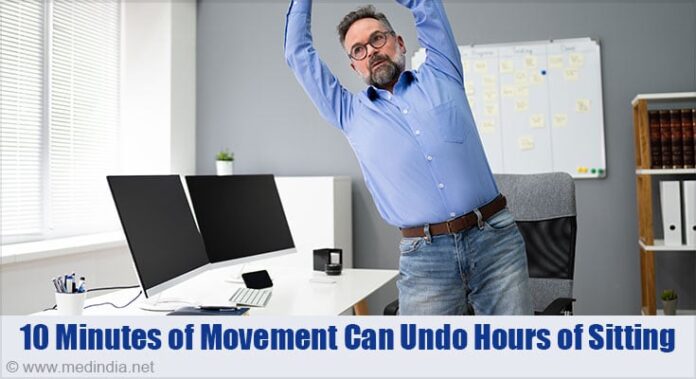
With desk jobs and screen time rising, staying active has become harder. Micro-workouts may offer a practical way to maintain movement through the day.
- Micro-workouts can help reduce stiffness and joint pain caused by prolonged sitting in office workers
- Breaking long sitting periods with brief activity improves blood sugar control and supports metabolic health
- Even 1–2 minute bursts of daily activity can lower cardiovascular and overall mortality risk
Sitting for long hours at work can lead to back pain, knee stiffness, and reduced mobility. Short, simple movement breaks during the day can help prevent these issues and keep the body active (1✔ ✔Trusted Source
Micro-Workout: A Paradigm Shift in Effective Exercise/Physical Activity for Health and Longevity
Go to source
).
Micro-workouts focus on fitting exercise into small time windows, making them especially useful for office workers, students, and anyone unable to commit to long gym sessions.
In today’s routine, many people spend hours seated—working, studying, or scrolling—often without realizing how little they move. Even those who exercise occasionally may still face the effects of prolonged inactivity, as long sitting periods can offset some benefits of workouts.
To address this, Delhi-based nutritionist and senior fitness trainer Mitushi Ajmera suggests a more realistic approach to staying active. She explains, “A micro workout is any brief bout of exercise lasting about 5 to 15 minutes.” She further adds, “Instead of relying on one long session, movement can be split into short bouts across the day, making fitness more doable, sustainable, and effective.”
Why Sitting for Long Hours Is Hard on Your Body
Remaining seated for extended periods affects both the musculoskeletal system and metabolism. Over time, this can lead to stiffness in the back and knees, reduced flexibility, and slower blood circulation. It also affects how the body regulates sugar.
One key mechanism involved is insulin sensitivity, which refers to how effectively the body uses insulin to manage blood glucose levels. When activity levels drop, insulin sensitivity decreases, increasing the risk of conditions such as type 2 diabetes (2✔ ✔Trusted Source
Breaking Sitting Streaks
Go to source).
Research has consistently shown that breaking up long sitting periods with short activity improves blood circulation and helps the body process glucose more efficiently. This is why even brief movement during the day can have measurable health benefits.
What a 10-Minute Micro-Workout Actually Looks Like
Micro-workouts are designed to fit into short breaks between tasks rather than requiring a dedicated hour-long session.
According to Ajmera, these workouts can be structured in simple ways. A longer routine can be divided into three to five smaller sessions across the day, or a single short session can combine a quick warm-up with a few minutes of focused activity.
In a typical 10-minute routine, a person may begin with light movements to loosen the body, followed by short bursts of activity such as squats, stair climbing, or brisk walking. Even performing one exercise for a few focused sets can be effective when done consistently.
These sessions can also include mobility and stretching movements to reduce stiffness, especially for those sitting for long hours. Some people may add a light session in the evening to relax muscles and improve recovery.
The idea is not intensity alone, but regular interruption of inactivity.
Can Short Workouts Really Replace Longer Exercise?
Global recommendations suggest that adults should aim for at least 150 minutes of moderate activity or 75 minutes of vigorous activity per week, along with strength training. However, a large proportion of people are unable to meet these targets due to time constraints (3✔ ✔Trusted Source
Physical activity
Go to source
).
This is where micro-workouts offer an alternative.
A 2025 review published in the European Journal of Medical and Health Sciences by Dr. Shigenori Ito highlights that even very small amounts of activity can improve health outcomes. The research showed that individuals who performed short bursts of vigorous movement—lasting just one to two minutes, repeated a few times daily—had significantly lower risks of cardiovascular disease and overall mortality (1✔ ✔Trusted Source
Micro-Workout: A Paradigm Shift in Effective Exercise/Physical Activity for Health and Longevity
Go to source).
Another analysis of multiple studies found improvements in cardiovascular fitness, blood pressure, blood sugar levels, and cholesterol markers with short-duration, high-intensity activity.
One important measure here is VO2 max, which reflects how efficiently the body uses oxygen during exercise and is closely linked to heart health. Even brief, repeated activity has been shown to improve this parameter.
That said, micro-workouts may not completely replace structured exercise for goals such as muscle building or significant weight loss. Instead, they serve as a practical way to maintain baseline fitness and reduce health risks when longer workouts are not feasible.
Why Micro-Workouts Work Best for Modern Lifestyles
The biggest advantage of micro-workouts is flexibility. They remove the need for a fixed schedule or dedicated workout time, which is often the biggest barrier for people.
Ajmera emphasizes this point, noting that exercise can be distributed throughout the day—a short strength session, a brief cardio burst, and a quick mobility break—rather than relying on one continuous session.
Physiologically, frequent movement supports circulation, digestion, joint mobility, and energy regulation. More importantly, it helps counter the harmful effects of prolonged sitting.
Micro-workouts are particularly useful for office workers, students during exam periods, beginners starting their fitness journey, and older adults who may find long sessions tiring.
Frequently Asked Questions
Q: What are micro-workouts?
A: Micro-workouts are short exercise sessions lasting 5–15 minutes, performed multiple times a day.
Q: Are micro-workouts effective for desk job workers?
A: Yes, they help reduce stiffness, improve circulation, and counter the effects of prolonged sitting.
Q: What exercises can be included in a micro-workout?
A: Simple activities like squats, stair climbing, brisk walking, and stretching.
Q: What is insulin sensitivity?
A: It refers to how effectively the body uses insulin to control blood sugar levels.
Q: Can micro-workouts replace gym workouts?
A: They help maintain fitness but may not fully replace structured workouts for all goals.
References:
- Micro-Workout: A Paradigm Shift in Effective Exercise/Physical Activity for Health and Longevity – (https://eu-opensci.org/index.php/ejmed/article/view/42275)
- Breaking Sitting Streaks – (https://diabetes.org/health-wellness/fitness/break-sitting-streak)
- Physical activity – (https://www.who.int/initiatives/behealthy/physical-activity)
Source-Medindia