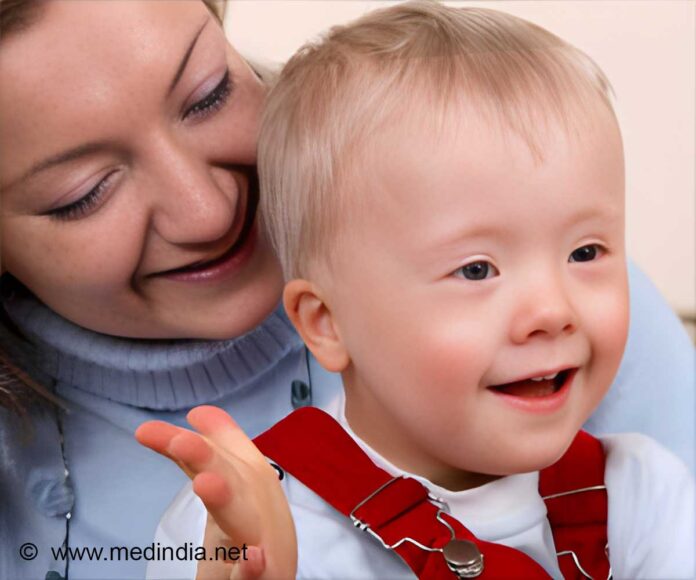
Study explores mothers’ personal experiences with prenatal screening for Down syndrome in maternity care settings.
In Great Britain, all pregnant individuals receiving antenatal care are offered prenatal screening for Down syndrome (DS). The aim is to provide clear, unbiased information to help them make informed reproductive choices. However, the personal experiences of parents of children with DS who have undergone this screening are seldom explored in depth. ()
Published in the American Journal of Medical Genetics Part A, this largest-of-its-kind study from the UK has revealed serious gaps in the way expectant mothers are supported through prenatal screening for Down syndrome. Showing that many have been left to navigate overwhelming decisions without sufficient information, discussion or emotional support.
The U.K.’s Prenatal Screening Gap: Study Reveals Inadequate Support for Expectant Parents
Tamar Rutter, PhD Candidate, University of Warwick and lead author of this study, commented: “Prenatal screening is often how parents first learn about the possibility of their child having Down syndrome, and our research shows the lasting personal impact of the way screening results are communicated to them. At the same time, we found that many expectant parents received limited support to meaningfully consider whether or not to have screening, highlighting the need for care which truly promotes informed choice.”
The study surveyed over 300 mothers of children with Down syndrome to review the information they received about screening, their experiences of being offered screenings and receiving screening results or of declining screenings.
One mother, Natalie, whose son Henley was born in 2021, described the pregnancy as “so stressful, with so much negativity, doom and gloom.” She received a high chance result for Down syndrome at 13 weeks. Over the course of her pregnancy, Natalie was offered termination on four separate occasions – often in the absence of balanced information or compassion.
“The fetal medicine doctor told us our baby would have a poor quality of life and that we should consider the impact on our family. They told us he would be a burden. Henley is now 14 months old. He’s already defied so many of the predictions. He didn’t need any ventilation, and we went home five days after birth” (see Natalie’s full story in notes to editors).
Mothers Report Gaps in Down Syndrome Screening Support
For mothers of a baby with Down syndrome in this study, 44% reported receiving neither written nor online information about DS screenings, with 37% reporting insufficient opportunity to discuss screening with healthcare professionals before making their decision. Results given by phone left one mother feeling ‘abandoned with the news’ with ‘no idea where to go next’ and 62% of mothers left the process feeling that they had not received enough information about DS.
Advertisement
Screening was seen as a routine part of antenatal care despite being optional, with 83% of mothers having this impression and 54% of mothers reporting that they ‘went along with’ initial screening without giving it much thought. 73% reported not feeling pressured despite the routinization, but a minority still felt pressurized to have screening.
An anonymous mother reported that: “The possibility of being pregnant with a child with Down syndrome was always framed negatively by professionals; for example, the loaded word ‘risk’ was always used rather than the neutral terms of ‘chance’ or ‘probability.”
Another anonymous mother said: “I felt pushed into the screening by midwives who kept commenting on me being older and higher risk”.
Experiences were far from all negative, as the majority (85%) understood the screening was optional, 79% understood that the non-invasive prenatal screening test (NIPT) could not definitely confirm that their baby had DS, and 72% reported having enough time to decide whether to have a screening test. Several mothers highlighted the excellent conversations they had had with healthcare professionals.
Natalie and Henley’s story echoes the wider findings of the study as not all their experiences were negative: a neurosurgeon at Birmingham Children’s Hospital reassured the couple that many of the earlier predictions could not be known until after birth, and perhaps not for years.
This research was supported by Down Syndrome UK and Nicola Enoch, Founder and CEO of Down Syndrome UK, said: “I started this charity after my own poor maternity care experience. Sadly, 21 years later, discrimination and ignorance prevail in maternity care. This research is a wake-up call. Expectant parents deserve clear information, time to reflect, and the reassurance that all outcomes are valued. The current system is failing too many families.”
“We’re calling on the NHS and training bodies to introduce a national pathway to support our expectant parents and compulsory education around supporting them. We have to challenge and change the outdated attitudes and assumptions towards Down syndrome, and to listen and learn from the experiences of our families.”
Reference:
- Down Syndrome in Maternity Care: Mothers’ Experiences of Prenatal Screening – (https://onlinelibrary.wiley.com/doi/10.1002/ajmg.a.64206)
Source-Eurekalert