I’m currently a fourth-year Speech and Language Therapy student at the University of Strathclyde and this experience formed my Impact Project. Going into it, I expected to learn more about dementia (which I definitely did), but I didn’t quite anticipate how engaging, reflective and enjoyable the process would be.
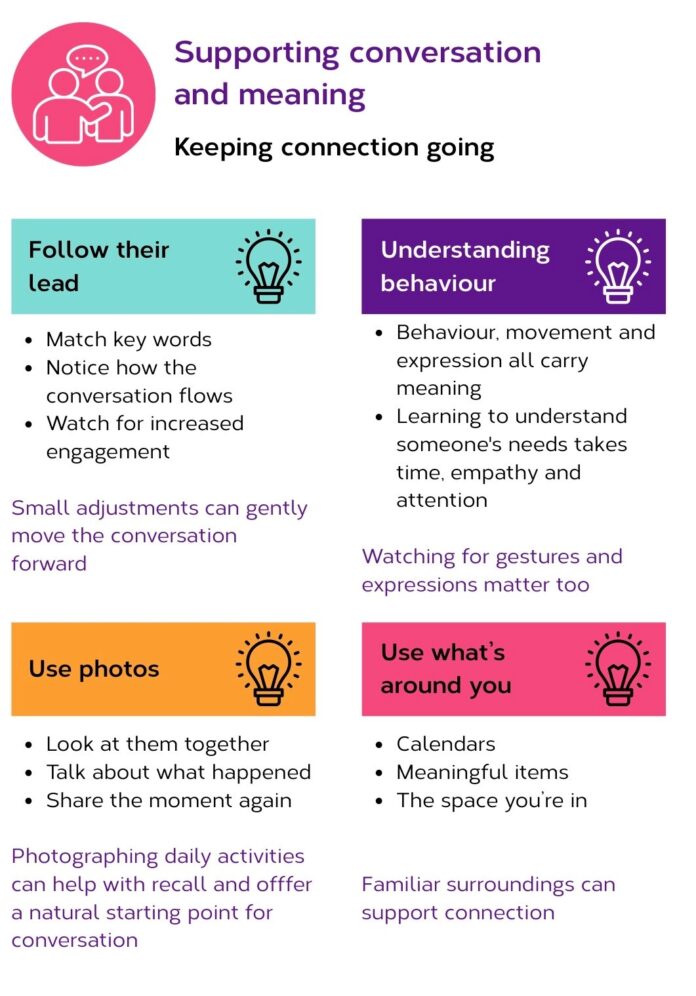
My role involved creating a leaflet and a series of posters specifically aimed at giving practical tips on how to communicate with someone living with dementia. It really pushed me to think about how we communicate information in a way that is accessible, clear and helpful for people living with dementia and their families.
Something else that really made this experience so positive was the support I had along the way. I was so lucky to be guided by skilled occupational therapists and speech and language therapists throughout the project. Anytime I felt a bit stuck or unsure, they were always there to offer feedback, answer my questions, and point me in the right direction.
One of the biggest things I’ve taken from this experience is just how much thought and care is needed when supporting someone with dementia. It’s not just about understanding the condition itself but understanding the person, their communication needs and the people around them. Working on this project has helped me to appreciate that in a much deeper way.
I also enjoyed how creative the whole process was. As speech and language therapy students, we spend so much time focusing on theory, evidence and clinical skills but this project gave me the chance to learn in a completely different way. Designing a leaflet and posters meant I had to translate what I’d learned into something practical and meaningful. Which felt very rewarding.
I can already see how this experience will benefit my future practice. Dementia care is such an important area and having this early exposure has given me a really strong foundation. It’s helped me understand how small changes in communication and our environment can have a big impact on someone’s quality of life. You can find the communication leaflet here and the leaflet will be shared soon at www.alzscot.org/ahpresources.
Overall, this project has been such a valuable part of my final year. It’s deepened my knowledge, challenged me creatively. I feel grateful to have had the opportunity to work alongside Alzheimer Scotland and I know this is something I’ll carry forward into my future career as an speech and language therapists.
Alzheimer Scotland is a fantastic organisation, and I would highly recommend working with them
Contributor. Aiobh Hendron, 4th year speech and language therapy student, Strathclyde University
Enjoyed this blog? Tell us more. We love feedback.
Please spend 1 minute completing this short anonymous feedback form to allow us to make our blog posts even better in 2026. Thank you
AHP Let’s Talk About Dementia Blog Feedback Form – Fill out form