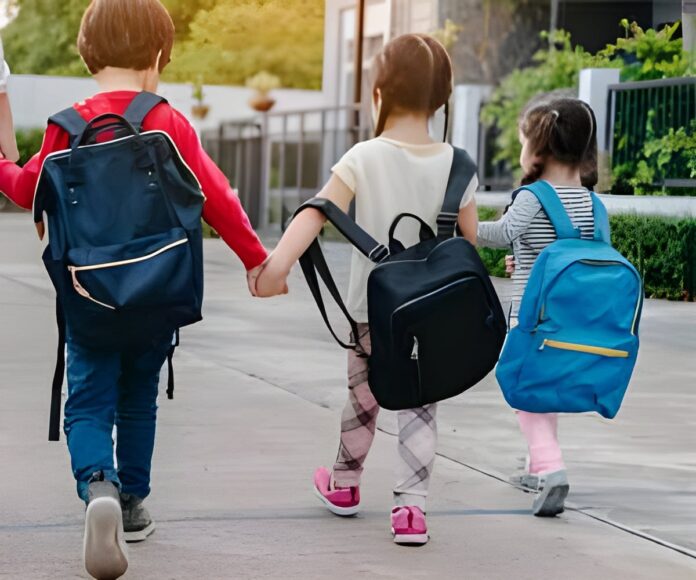
Simple school routines and healthy habits can help children feel happier, calmer, and more confident throughout the year.
- Healthy sleep routines and balanced nutrition can improve school performance and emotional wellbeing
- Open communication may help children manage school anxiety and adjust more confidently
- Consistent study habits and parental support can encourage better learning and daily organization
Starting a new school year can feel exciting, stressful, and emotional for both children and parents. Changes in schedules, routines, and responsibilities often require time and preparation before school officially begins. Creating healthy habits early can help children feel more confident, focused, and emotionally prepared for classes. Parents also play an important role in supporting smoother school transitions through communication and consistency. Here are some back-to-school tips for kids that can make the adjustment easier for families.
Experts from pediatric and child health organizations recommend preparing children gradually instead of waiting until the final days. Small daily changes often feel less overwhelming than sudden shifts in sleeping or study schedules. Emotional support and healthy routines may also improve classroom performance and overall well-being significantly (1). Preparing early can reduce anxiety and encourage a more positive start to the academic year. Consistency often creates a stronger sense of comfort and security for children.
Healthy Sleep Routine Before School Starts
One of the most important back-to-school habits involves establishing a healthy and consistent sleep schedule. Many children develop irregular sleeping patterns during vacations because of relaxed routines and later bedtime habits. Gradually adjusting bedtime and wake-up times before school begins can help reduce morning struggles later. Sleep supports memory, concentration, mood, and overall physical health during important developmental years (2). Establishing a healthy sleep routine for school children can improve daily functioning.
Children who get adequate sleep often perform better academically and emotionally during demanding school schedules (3). Reducing screen time before bedtime may also help improve sleep quality naturally for many children (4). Parents can create calming bedtime routines involving reading, dim lighting, and quiet activities before sleep. A predictable nighttime routine often helps children feel more relaxed and prepared for school mornings (5). Healthy sleep habits benefit both learning and emotional regulation.
School Nutrition Tips for Better Focus and Energy
Balanced nutrition plays a major role in supporting attention, learning ability, and energy levels throughout the school day. A healthy breakfast may help children stay focused during morning classes and academic activities (6). Meals containing protein, fiber, and healthy fats often provide more stable energy compared to sugary foods. Packing nutritious snacks and lunches can also support better concentration and mood.
Hydration remains equally important because even mild dehydration may affect concentration and physical performance negatively (7). Parents can encourage water intake by providing reusable water bottles during school hours regularly. Including fruits, vegetables, nuts, and whole grains may also support overall growth and development. Healthy eating habits learned during childhood may continue benefiting health later in life. Small dietary improvements often make noticeable differences in energy and focus.
Managing Back-to-School Anxiety in Children
Some children may feel nervous or anxious before returning to school after holidays or long breaks. Concerns about academics, friendships, teachers, or social situations can create emotional stress in many students. Parents should encourage open conversations and allow children to express worries without judgment or pressure. Listening calmly may help children feel supported and emotionally understood during transitions.
Visiting the school beforehand or reviewing the daily schedule together may help reduce uncertainty and fear. Younger children often benefit from reassurance about routines, pickup times, and classroom expectations before school begins. Parents should also monitor for signs of severe anxiety, sleep changes, or social withdrawal that persist over time. Seeking professional guidance may be helpful if emotional difficulties become overwhelming. Emotional well-being deserves equal attention alongside academic preparation.
How to Create Better Study and Homework Habits
Creating structured homework routines can help children stay organized and reduce last-minute academic stress regularly (8). Designating a quiet and distraction-free study space may improve concentration and productivity during homework sessions. Consistent timing for homework and revision often helps children develop stronger time management skills gradually. Parents can guide children without completing assignments for them unnecessarily.
Limiting distractions from television, gaming, and mobile devices may also improve focus during study hours significantly. Encouraging regular breaks can help maintain attention and reduce frustration during longer assignments or projects. Positive encouragement often motivates children more effectively than constant criticism or pressure. Supporting independence while remaining available for help creates a healthier academic environment at home. Small habits built early can strengthen lifelong learning skills.
School Safety and Hygiene Habits Every Child Should Know
Teaching children basic hygiene and safety habits remains important during every school year and daily routine. Regular handwashing can help reduce the spread of infections and support better overall health in classrooms (9). Children should also understand the importance of covering coughs and avoiding sharing personal items unnecessarily. Carrying hand sanitizer and tissues may also support healthier habits during school hours.
Parents should ensure backpacks are not excessively heavy because overloaded bags may contribute to back and shoulder discomfort. Wearing properly fitted shoes and carrying ergonomic backpacks may improve physical comfort throughout the school day. Reviewing road safety and transportation rules also remains important for children traveling independently. Practical safety habits help children feel more confident and responsible in daily situations. Healthy routines often support better school experiences overall.
Why Parent Involvement Matters During the School Year
Parental involvement can positively influence children’s emotional confidence, classroom participation, and academic motivation over time (10). Staying informed about school activities, schedules, and teacher communication may help parents support learning more effectively. Children often feel encouraged when parents show interest in their education and achievements regularly. Even small conversations about school experiences can strengthen trust and emotional connection at home.
Maintaining realistic expectations is also important because every child learns and adapts differently during the academic year. Celebrating effort instead of focusing only on grades may help children develop healthier self-confidence gradually. Supporting balance between academics, physical activity, rest, and recreation remains equally important. Positive family involvement often creates a stronger foundation for both learning and emotional wellbeing. School success is influenced by both academic and emotional support systems.
Frequently Asked Questions
Which doctor should parents consult for school-related anxiety in children?
Parents can consult a pediatrician or child psychologist for emotional and behavioral concerns.
How many hours of sleep do school children usually need?
Most school-age children generally require nine to twelve hours of sleep daily.
Can breakfast improve school performance?
Yes, a balanced breakfast may support concentration, memory, and energy during classes.
How can parents reduce back-to-school stress?
Gradual routine adjustments and open communication may help reduce school-related anxiety.
Why is hand hygiene important in schools?
Good hand hygiene may help reduce the spread of infections among children.
References:
- Irregular sleep and event schedules are associated with poorer self-reported well-being in US college students
(Fischer D, McHill AW, Sano A, Picard RW, Barger LK, Czeisler CA, Klerman EB, Phillips AJK. Irregular sleep and event schedules are associated with poorer self-reported well-being in US college students. Sleep. 2020 Jun 15;43(6):zsz300. doi: 10.1093/sleep/zsz300. PMID: 31837266; PMCID: PMC7294408.) - Sleep as a Developmental Process: A Systematic Review of Cognitive, Emotional, and Behavioral Outcomes in Children Aged 6-12 Years
(Félix A, Candeias A. Sleep as a Developmental Process: A Systematic Review of Cognitive, Emotional, and Behavioral Outcomes in Children Aged 6-12 Years. Clocks Sleep. 2025 Nov 14;7(4):66. doi: 10.3390/clockssleep7040066. Erratum in: Clocks Sleep. 2026 Feb 27;8(1):10. doi: 10.3390/clockssleep8010010. PMID: 41283315; PMCID: PMC12641626.) - Association Between Sleep Quality and Academic Performance Among Undergraduate Medical Health Sciences Students: A Cross-Sectional Study
(Hassan S, M Alqahtani N, M Alshahrani S, A Alhefzy A, Alharthi O, Alharbi M. Association Between Sleep Quality and Academic Performance Among Undergraduate Medical Health Sciences Students: A Cross-Sectional Study. Cureus. 2025 Sep 3;17(9):e91548. doi: 10.7759/cureus.91548. PMID: 41049972; PMCID: PMC12494368.) - Screen time and sleep in children
(Gomes K, Goldman RD. Screen time and sleep in children. Can Fam Physician. 2024 Jun;70(6):388-390. doi: 10.46747/cfp.7006388. PMID: 38886082; PMCID: PMC11280700.) - Benefits of a bedtime routine in young children: Sleep, development, and beyond
(Mindell JA, Williamson AA. Benefits of a bedtime routine in young children: Sleep, development, and beyond. Sleep Med Rev. 2018 Aug;40:93-108. doi: 10.1016/j.smrv.2017.10.007. Epub 2017 Nov 6. PMID: 29195725; PMCID: PMC6587181.) - The effects of breakfast on behavior and academic performance in children and adolescents
(Adolphus K, Lawton CL, Dye L. The effects of breakfast on behavior and academic performance in children and adolescents. Front Hum Neurosci. 2013 Aug 8;7:425. doi: 10.3389/fnhum.2013.00425. PMID: 23964220; PMCID: PMC3737458.) - Influence of parental structure and chaos on homework anxiety in elementary school students: the mediating role of homework motivation
(Li J, Ding Y. Influence of parental structure and chaos on homework anxiety in elementary school students: the mediating role of homework motivation. Front Psychol. 2024 Oct 7;15:1399507. doi: 10.3389/fpsyg.2024.1399507. PMID: 39434910; PMCID: PMC11491404.) - The Hydration Equation: Update on Water Balance and Cognitive Performance
(Riebl SK, Davy BM. The Hydration Equation: Update on Water Balance and Cognitive Performance. ACSMs Health Fit J. 2013 Nov;17(6):21-28. doi: 10.1249/FIT.0b013e3182a9570f. PMID: 25346594; PMCID: PMC4207053.) - Hand Hygiene Practices in School Populations: Assessing Their Impact on Infectious Disease Outbreaks
(Singh N, Silburn A, Moore N. Hand Hygiene Practices in School Populations: Assessing Their Impact on Infectious Disease Outbreaks. J Paediatr Child Health. 2026 Mar;62(3):334-354. doi: 10.1111/jpc.70311. Epub 2026 Feb 10. PMID: 41664625; PMCID: PMC12976192.) - Parent involvement and children’s academic and social development in elementary school
(El Nokali NE, Bachman HJ, Votruba-Drzal E. Parent involvement and children’s academic and social development in elementary school. Child Dev. 2010 May-Jun;81(3):988-1005. doi: 10.1111/j.1467-8624.2010.01447.x. PMID: 20573118; PMCID: PMC2973328.)
Source-Medindia