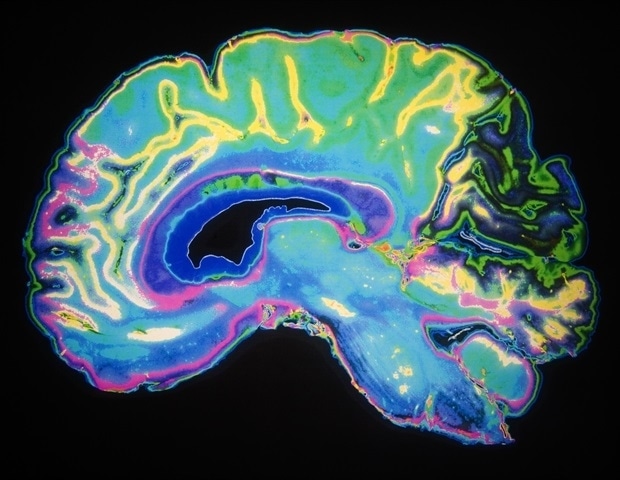
Every animal that has ever been studied closely, from the fruit fly to the philosopher, surrenders each day to a state that looks, from the outside, like a small rehearsal for death. A new Perspective published in the peer-reviewed journal Brain Medicine asks why, and answers with a synthesis rather than a single experiment. Drawing together decades of work in neuroimaging, electrophysiology, and computational modeling, the authors propose that sleep is best understood not as rest, not as housekeeping, but as a system-level resilience mechanism that keeps the brain, a network of roughly 86 billion neurons, from drifting into states it cannot escape.
Three words that are not synonyms
Much of the confusion about sleep, the authors suggest, comes from collapsing three ideas into one. They pull them apart. Stability is the capacity to hold a functional state under small fluctuations. Robustness is the capacity to keep working despite noise, drift, or partial damage.
Resilience is the larger and stranger property, the ability to absorb a shock, reorganize from the inside, and recover adaptive performance over time. It is resilience, the authors contend, that sleep is really protecting. Why has a behavior so costly, so dangerous in a world full of predators, survived hundreds of millions of years of evolution unless it buys the brain something it cannot get any other way?
“We wanted to move past the idea that sleep is simply a battery recharging overnight,” said Professor Xiaohui Wang of the Changchun Institute of Applied Chemistry, Chinese Academy of Sciences, one of the corresponding authors.
When you look at the brain as a complex dynamic network, sleep starts to resemble something a careful engineer would design on purpose, a scheduled window for the system to repair and reorganize itself.”
Xiaohui Wang, Professor, Changchun Institute of Applied Chemistry, Chinese Academy of Sciences
What the night actually does
The Perspective treats the two great phases of sleep as a division of labor. During NREM sleep, and especially the slow-wave stage, the brain falls into high-amplitude, low-frequency rhythms below one hertz. Modularity increases. Entropy drops. Synaptic strengths, inflated by a long day of learning, are quietly renormalized so that the network does not saturate. REM sleep does close to the opposite. The electrical signature desynchronizes, theta and gamma rhythms climb, and the brain pushes toward global integration and exploration, loosening circuits that have grown too rigid.
The handoff between these phases, the authors note, is where something curious happens. The brain reaches its greatest metastability, its readiness to slip between states, precisely at the transitions. Does the sleeping brain, then, do its finest work not inside a stage but in the seams between them?
Underneath all of this runs a more physical chore. During deep NREM sleep, the glymphatic system widens the spaces between cells and flushes metabolic waste, including the amyloid-beta protein that shadows research on Alzheimer’s disease. The wiring is being washed while it is being retuned.
“A network that only optimizes can paint itself into a corner,” said Longwei Yang, the lead author. “What sleep appears to protect is the ability to get back out.”
Does a machine need to dream?
Here the Perspective makes its boldest turn. Artificial neural networks, the authors observe, suffer from troubles that rhyme with biology, namely catastrophic forgetting, overfitting, and network saturation. Trained on one task after another, such systems tend to overwrite what they already knew. Biological brains manage continual learning more gracefully, and the authors argue that sleep is part of the reason.
The parallels are not loose analogy. The authors point to concrete work. Tadros and colleagues built a Sleep Replay Consolidation algorithm that allowed artificial networks to retain old skills while learning new ones. Golden and colleagues reported similar gains in spiking neural networks given sleep-like offline reactivation. Watkins and colleagues found that continuously trained networks ran away into pathological activity until oscillatory noise, a stand-in for slow-wave rhythms, restored order.
“The striking thing is the convergence,” said Professor Haohong Li of Zhejiang University School of Medicine, the other corresponding author, whose research centers on sleep homeostasis and neural oscillations. “Replay, renormalization, pruning, and noise injection turn up as solutions in both brains and machines. We are not claiming that a server farm sleeps. We are saying that any learning system running in a changing world may need structured offline phases to remain resilient.”
From this convergence the authors extract a design principle. Alternate replay-dominant, NREM-like periods with reorganization-dominant, REM-like ones, then judge the result by how quickly the system recovers after it is perturbed rather than by raw accuracy alone.
Where the argument earns its keep, and where it does not
The clinical resonance is hard to miss. Disorders marked by network fragility, among them Alzheimer’s disease, schizophrenia, and epilepsy, tend to travel with disrupted sleep architecture. [Review Finding] If sleep is the resilience engineer of the brain, then fractured sleep may be both symptom and accomplice, and interventions that strengthen slow-wave activity, such as targeted auditory stimulation, might do more than improve a single night of rest. Could restoring the shape of sleep one day count as restoring the recoverability of the network itself?
The authors are careful about the boundaries of their own case. This is a Perspective, a synthesis of existing evidence and not a fresh experiment, and they say so plainly. They frame the resilience account as a generator of testable predictions rather than settled fact. Manipulating sleep-like phases should speed recovery after disruption, shift criticality metrics in specific directions, and steer replay toward the most brittle subnetworks.
Whether the principle holds across the full menagerie of biological and artificial architectures remains, in their words, an open question. The authors also disclose that they used the language model DeepSeek to refine the clarity of the manuscript, while cautioning that the engineering shortcuts inside such models are not equivalent to the layered, multistage dynamics of biological sleep. They report no conflict of interest.
What lingers is the reframing. We tend to picture sleep as the hours when nothing happens. The argument here is that the nothing is the work.
Source:
Journal reference:
Yang, L., et al. (2026) Sleep as a system-level resilience mechanism in complex dynamic networks: Insights from biological and artificial systems. Brain Medicine. DOI: 10.61373/bm026p.0045. https://genomicpress.kglmeridian.com/view/journals/brainmed/aop/article-10.61373-bm026p.0045/article-10.61373-bm026p.0045.xml.